


 Shkruar nga Pamfleti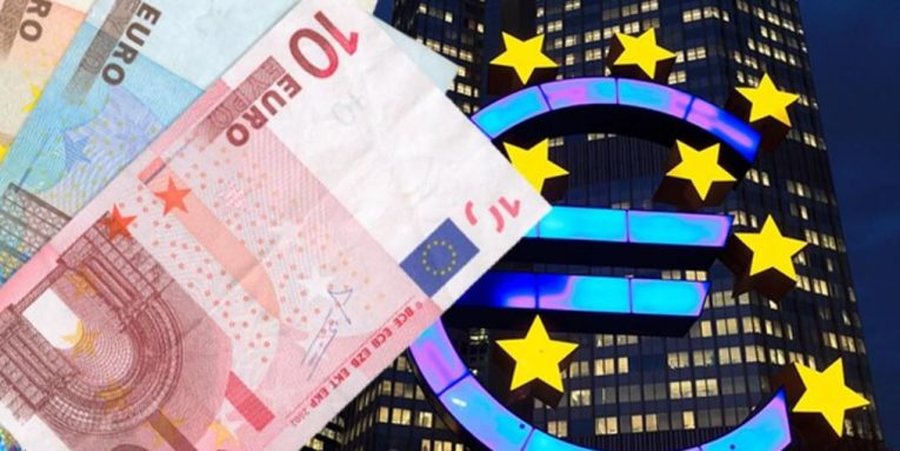
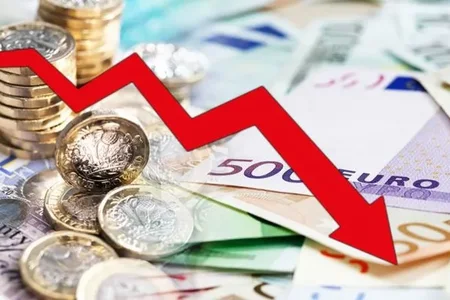
The European currency, the euro, continues to slide. Today it was exchanged in the foreign exchange market for 103 ALL. But how long is this process expected to last and when can this currency be strengthened in the market?
Invited to "Money Report", the economics specialist, Teuta Nunaj, says that this free fall is based on the market and as long as the Bank of Albania does not take the initiative to intervene to buy amounts of currency in the market, the European currency will continue to fall even further.
" The exchange rate of the euro has fallen since April of this year, that is, a noticeable drop. And what I have supported in my analysis is that, only if we had the intervention of an external force, outside the market, as was the case of the purchase of the euro by the Bank of Albania, then we can have a change of course. By taking no action, then this free fall in this case would continue. This is part of the market's expectation that there are no factors that would stop this free fall ," she said.
Answering the questions of journalist Genta Dobra, the specialist said that with the devaluation of the euro, exporters are the most affected. She said that this target's production costs are in euros and as a result their commercial exchanges are not promising.
" The winners are far greater in this case than the losers. The biggest losers are the experts, who in these cases will have to, and I believe they have started the process of changing the contracts for the next year, since the exchange rate of the euro is very sensitive," she said .
In her projections, the expert underlines that this downward panorama of the euro will not change, at least as long as there is no intervention by other forces outside the market.
" These levels do not have to change. There are two reasons. First, we will not have any intervention from the Central Bank to increase the exchange rate in favor of the euro in this case, this would make it more helpful for the exporting part, but the bank itself has stated through the Governor that it has no plans intervention as market movement is a normality. On the other hand, we have the government, which in this case can intervene through its financial policies to somehow soften this difference that existed, but since the government is from this side that benefits from this, it does not even have access to ideas for to effect a change and no longer interfere. The other side that is the winner in this case are the companies that import the products. This is a new market normal," she said.
As for the situation in the eurozone, in the EU countries, which have a common currency, the euro, there seems to be a "decline" of the economy. For this, Nunaj underlined that this contraction is small, while seen in a long-term perspective, it is proving that the rate of decrease is "modest", taking into account the challenges faced by the world economy from the pandemic, to the war and the Russia-Ukraine conflict.
"If we are going to analyze the eurozone. Here, in this case, we will separate the economy in the EU and the economy of the eurozone, since there are two areas, since not all countries that are part of the eurozone are part of the EU and vice versa. The eurozone is the area where the euro operates, we have a currency in many countries, we are dealing with a contraction at a very low level and this means that this economy is going through big problems. The effects of the recent crisis, Russia-Ukraine, have started to fade and the markets are more stabilized, and this has led to a decrease in the inflation rate in the Eurozone. Stabilization of the markets will also stabilize the Albanian market" , said Nunaj


Lini një Përgjigje