


 Shkruar nga Blendi Kajsiu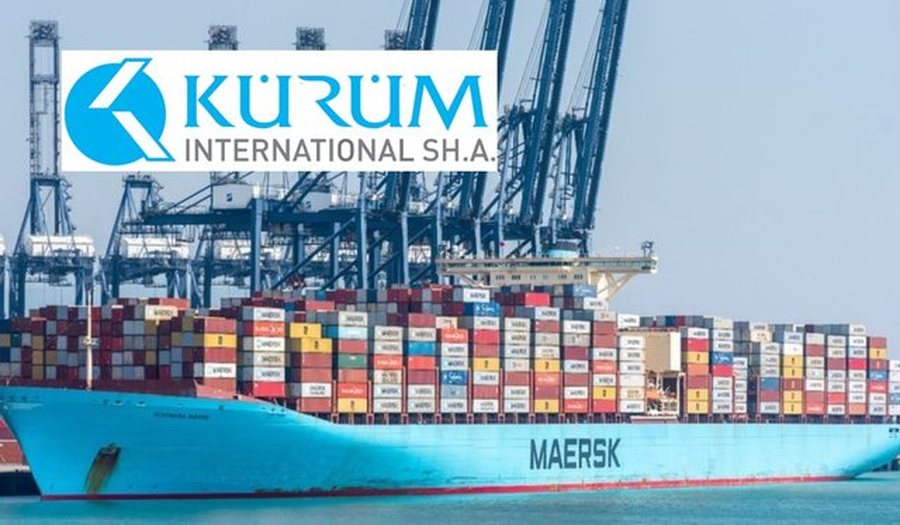
Imagine what would happen to the image of Albania if in the future it is discovered that in the framework of the import of harmless waste, toxic waste has entered our country that has been buried or burned near the tourist areas, which already extend throughout the Albanian territory.
Our political scene is full of absurdities. We have a prime minister who claims that Albania is democratized only in an authoritarian way, destroying the last flame of pluralism, political competition and democracy within the ruling party. Until now, this philosophy has produced the One's governance model that Albanians know well, but not democratically. It still remains a mystery how the establishment of the Rama dictatorship today within the SP will generate the democratization of Albania tomorrow.
Even more so when democracy has long been erased not only as a concept but also as a memory among other Albanian political parties that do not have the importance of the Socialist Party. Especially in the conservative PD, which was re-founded by the founder to move towards the past, leaving behind the future. The issues that concern the DP today have to do with the murders of January 21 in 2011, the privatization of the partisan sports club in 2008 or the 1997 elections. It is no wonder that tomorrow, when the 2025 parliamentary elections approach, attention he wanted to focus on the establishment of the DP in 1991-1992. This is the absurdity of a party that advances into the past to serve as its leader's museum.
In spite of the many absurdities that play in our political scene, there is no greater absurdity than the continuous efforts of Albanian governments to import garbage, or "waste", as they affectionately call it. Since the Nano 2 Government in 2004, the Berisha 3 governments in 2011, the Rama 1 government in 2016 and up to the Rama 2 government today in 2024, there are two decades that our governments insist on importing garbage.
The absurdity of this insistence lies in the danger posed both to the environment and to our economy by importing waste. The combination of our limited, and often corrupt, administrative capacity with the difficulty of monitoring waste (to determine whether or not it is hazardous) makes importing waste a ticking time bomb that when it explodes will not only harm the environment but and Albanian tourism.
Of course, the Rama government will "clarify" us at this point that there is no room for panic because it is about the import of a limited number of non-hazardous waste. It is the same "clarification" that the Berisha government gave us yesterday, and the day before that the Nano government. And it is true that point 3 of Article 73 of the draft law on Integrated Waste Management proposed by the Rama government states that "only certain categories of non-hazardous waste are allowed to be imported into the territory of the Republic of Albania".
The problem is that, as environmental experts have been warning us for years, the import of waste is very difficult to monitor successfully. First, because it is not easy to separate hazardous waste from non-hazardous waste, or waste that can be recycled from that which cannot be recycled.
To understand this, it is enough to look at the scandal that broke out with the blockage of the cargo that left the port of Durrës towards Thailand. We still don't know for sure today if the cargo that was trapped is toxic waste, ash produced by Kurum's furnace filters, or if we are simply dealing with iron hydroxide or oxide (rust) being exported as a mineral.
Something that at first glance seems simple to determine requires investigation by specialized international bodies and laboratory analyzes that have not been done (and I don't know if they can be done) by the Albanian customs. In other words, if we allow rust to be imported as a non-hazardous waste today, tomorrow it is very easy for someone claiming to be importing rust to bring toxic furnace ash to bury in our country.
And this is the second challenge presented by the import of waste; monitoring them after they enter the Albanian territory. Additional administrative capacities, or institutions, are needed to guarantee that the imported waste goes to the declared destination and does not end up in landfill or incineration. These institutions must have not only the capacity but also the appropriate honesty to guarantee that a non-hazardous waste that is imported for recycling does not turn out to be a hazardous waste that is buried in our territory, contaminating the land, water and air.
The scandal of the incinerators showed that our public administration, where there are undoubtedly capable and honest people, does not yet have the necessary capacities to properly manage the waste that we ourselves produce. Therefore, it makes no sense to charge this administration with an additional task, the control of the waste coming from abroad.
I want you to believe the Socialist Party when it says that the whole corrupt affair of the incinerators, which would solve the problem of our garbage, was done under the nose, or behind the back, of the prime minister, maybe a little naive. But who guarantees us that tomorrow under the nose, or behind the back of the same prime minister (that the SP already does not have), toxic waste packaged as non-hazardous waste will not enter Albania?
Under these conditions, it makes no sense to propose laws that allow the import of waste from abroad when the government has not yet solved the problem of waste produced internally. The risk that such an import carries cannot be justified by any economic logic, especially in a country like Albania that has declared tourism as a priority.
Imagine what would happen to the image of Albania if in the future it is discovered that in the framework of the import of harmless waste, toxic waste has entered our country that has been buried or burned near the tourist areas, which already extend throughout the Albanian territory. Such a scandal would blow up our entire tourism brand as a place with virgin nature and quality organic food.
The skeptical reader will rightly tell me that such a scandal can happen even in the absence of the law. If we take into account our limited customs and monitoring capacity, often as a result of the penetration of corruption in our public administration, it is not surprising that hazardous waste is brought into our country even without an import permit.
The problem is that the approval of Article 73 of the draft law presented by the Rama government, allowing the import of waste into the territory of Albania today, facilitates even more the explosion of a toxic scandal tomorrow. Not only as a result of the known weaknesses of our public administration, but also because organized crime is often involved in the business of waste and garbage. It is enough to look at the scandals with waste management by the mafia in neighboring Italy, or by Cosa Nostra in New York City in the USA.
Under these conditions, the risk posed by the importation of waste, however harmless it may be classified by the government, is enormously greater than the economic benefit it produces for a small handful of businesses. Especially in a country like Albania that has declared tourism as an economic engine. For this reason, the Rama government's proposal to import waste from abroad is absurd.



Lini një Përgjigje