


 Shkruar nga Frrok Çupi
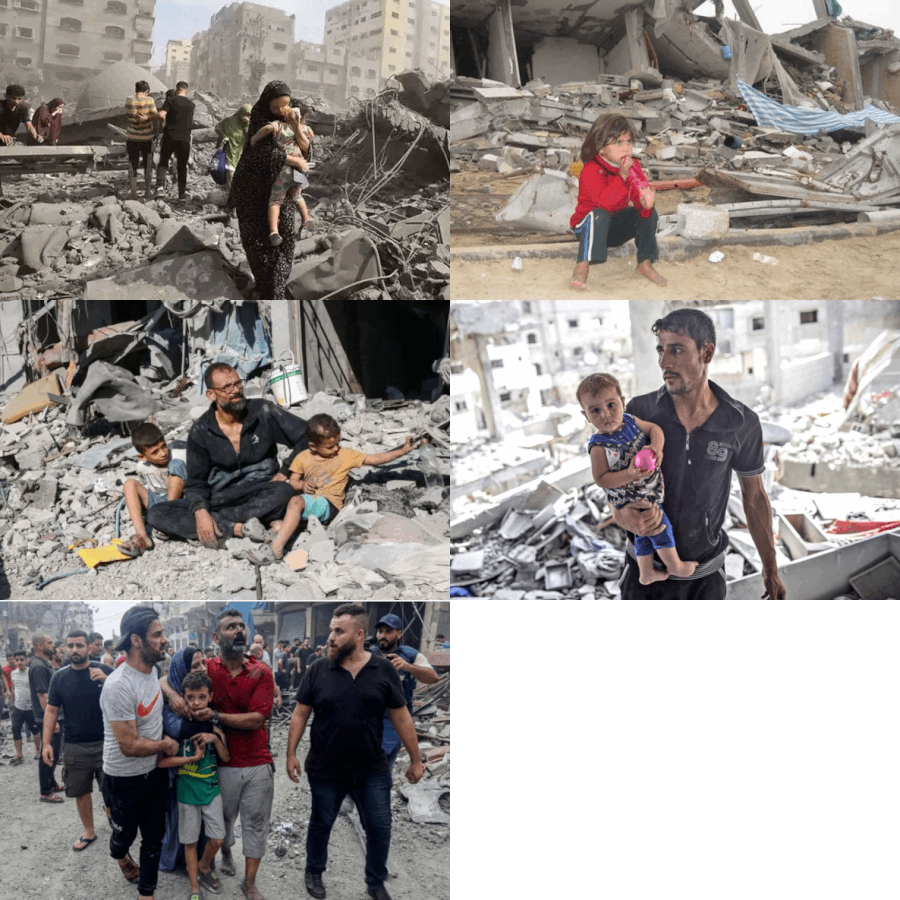
These are immersed in 'government family' corruption and the crime of murder. They have never apologized to the nation for the hundreds of serious wounds they have caused. The investigation and trial of the corrupt family started from the suburbs, since the son-in-law is in prison; others come after. Berisha himself is wanted in front of the Prosecutor, but they cover him with troops... The sight of Berisha being covered by the troops of the MPs, who show their ugly faces on the stairs on the second floor of the state headquarters, reminds you of the images of the Islamic clashes in Gaza. There is a war going on in Gaza now.
The event that is related to the idea of these, happened exactly in the arena from where they expect 'new' now. A man, exhausted from life, had been sitting on a sofa in the middle of the cold for several days and nights. He did nothing but call and ask 'what are you waiting for'. These are not sitting on the sofa, they are not even homeless... on the contrary, they are the richest people in the country, not working and sitting on the couch of politics and corruption. Yesterday and the day before yesterday, they got up from the sofa directly to the windows of the Assembly headquarters, the building that used to be the Central Committee of the 'mother party'. They made holes for him, sometimes like a weasel and sometimes like an ostrich, and climbed to the windows of the second floor to make the last request.
They are waiting in all directions, not only from Tehran, where the boy who in 1979 took all the media of the world was sitting. It was a wild winter for Iran, 1979, when Khomeini's Islamic Republic was being installed.
The Iranian sat on the sofa, day and night waiting for something, but did not speak.
These here know very clearly what they expect. They wait for what they cannot get here in the country. They have long since lost power and at the same time citizen trust. Their leader has been declared 'familially corrupt' by the United States. Those who follow him, sometimes climb the window, sometimes become a flesh shield to avoid appearing before the Justice; these are immersed in 'government family' corruption and the crime of murder. They have never apologized to the nation for the hundreds of serious wounds they have caused. The investigation and trial of the corrupt family started from the suburbs, since the son-in-law is in prison; others come after. Berisha himself is wanted in front of the Prosecutor, but they cover him with troops... The sight of Berisha being covered by the troops of the MPs, who show their ugly faces on the stairs on the second floor of the state headquarters, reminds you of the images of the Islamic clashes in Gaza. There is a war going on in Gaza now.
When it comes to 'Gaza', these people there are waiting for what they are waiting for to come. The unrest in the Middle East and in Kosovo have always been a coincidence and hope for Berisha's movements. This time he is waiting for news both from Gaza and beyond, in the Islamic world, where he has been invested since the time he played as President. The day when Berisha left power in 1997, there were over 90 Islamic terrorist cells of Al Qaeda, etc. in our country.
Now, from the war in Gaza, they expect the weakening of the West. The weakening of America brings 'good news' to save Berisha. These wait. Previously, they waited a long time for 'good news' from the Russian-Ukrainian front. Every war around, they think brings America and Europe to its knees. Bringing enemies to their knees brings them hope. From Kosovo, they expect that the Westerners will not succeed in the Agreement with Serbia. News 'under the knee' from the government of Pristina brings for them the motive that in a chaos between Pristina and Belgrade, they will benefit themselves. Enough for Europe and America to come out lost from the Balkan table, or in front of Moscow.
… These have several windows where they keep their eyes open for 'good news'. Otherwise, they have no escape from their evil deeds. They never seem to ask themselves, 'Will these things happen, or not?' Even the man, who was waiting under a building in Tehran, began to cry: 'What did I expect and what happened to me... What did I expect and what...?.
One morning, Western journalists who were waiting for his answer like water, turned to him: 'Tell me, the devil took it... what did you expect? What brought you?'.
The man put his hands into fists for something and spoke:
- I was waiting for my mother to die and my father to get married.... But my father died...
It happened once and has not been forgotten.
France to adopt new immigration law
Me një ligj të ri të imigrimit, Franca do të ashpërsojë trajtimin e azilkërkuesve. Në të njëjtën kohë, projektligji parashikon që punëtorët e paligjshëm në profesionet deficitare të kenë mundësinë e qëndrimit. Ministri i Brendshëm francez Gérald Darmanin e paraqiti projektligjin në Senat në Paris. Senati i së djathtës konservatore, dhoma e dytë e Parlamentit, filloi menjëherë debatin mbi projektin. Qeveria e kishte paraqitur projektligjin në shkurt dhe më pas e kishte ngrirë sërish, sepse reforma e pensioneve dominoi debatin dhe gjithsesi nuk dukej shumicë mbështetëse në horizont. “Ka të bëjë me dhënien e një statusi ligjor njerëzve që kanë jetuar dhe punuar këtu prej vitesh (…)”, tha kryeministrja Elisabeth Borne për France Inter. Kjo është një “masë e arsyeshme”, shtoi ajo. Projektligji premton të jetë një provë cfilitëse, pasi kampi politik i Presidentit Emmanuel Macron nuk ka më një shumicë absolute në Parlament për të miratuar projektin shumë të diskutueshëm pa mbështetjen e forcave të tjera politike. “Do të kërkojmë shumica”, theksoi Borne, e cila kritikohet kritikuar për kthimin në përdorimin e nenit 49.3 të Kushtetutës. Ky nen lejon që një ligj të miratohet pa votim përfundimtar nga Parlamenti francez. Projektligji i imigracionit është projekti i dytë i madh reformuesi mandatit të fundit të presidentit Emmanuel Macron, pas reformës së pensioneve, e cila u realizua mes protestave të forta.
Çfarë bëjnë republikanët?
Mbështetja e pritur e konservatorëve Républicains për nismën legjislative është ende e paqartë. Marrja e një qëndrimi të qartë ndaj emigrantëve është vërtet në përputhje me linjën e republikanëve, të cilët e kanë prej kohësh këtë çështje ndër prioritetet e tyre. Megjithatë, halë në sy për ta është është garantimi i dokumenteve të qëndrimit për emigrantët e paligjshëm që punojnë në profesione në të cilat kërkohen punonjës. Ata besojnë se kjo hap një derë tjetër për emigracionin e paligjshëm. Megjithatë, gjatë prezantimit të projektligjit, ministri argumentoi se emigrantët tashmë në vend duhet të kenë kushte të sigurta dhe të mira pune. Firmat që bëjnë biznes në kurriz të emigrantëve të paligjshëm duhet të ndalohen. Ekonomia që po rimëkëmbet dhe rënia e papunësisë do të thotë se shumë sektorë në Francë po kërkojnë me këmbëngulje punonjës. Emigracioni shihet si një zgjidhje, por industria dhe qeveria nuk i kanë përcaktuar përmasat e tij.
Kritika e organizatave për mbrojtjen e të drejtave të njeriut
Human rights organizations warn that the planned law could limit the rights of immigrants. In the future, persons who, when they arrived in France, were minors under the age of 13, or even foreign parents whose children have French citizenship, may be deported. According to the children's aid organization UNICEF, this rule may conflict with the UN Convention on the Rights of the Child. The planned reduction in medical care has also been criticized. In the future, only emergency medical assistance will be guaranteed to immigrants, emphasized the Minister of the Interior Darmanin. Some organizations have also criticized the fact that children born in France no longer automatically acquire French citizenship at the age of 18. In addition, young people born in France who have been sentenced to a minimum of six months in prison will not be granted French citizenship. The signatories of an appeal addressed to the government emphasize that these measures make integration difficult and echo the demands of the extreme right. Last year, about 137,000 people applied for asylum in France, roughly the same number as before the coronavirus pandemic. The majority came from Afghanistan, followed by Bangladesh, Turkey and Georgia. About 11,400 people were deported, including about 3,600 foreigners who had committed criminal offences. Nearly 4,000 people left the country voluntarily or as part of a subsidized return program.



Lini një Përgjigje