


 Shkruar nga Sadri Ramabaja
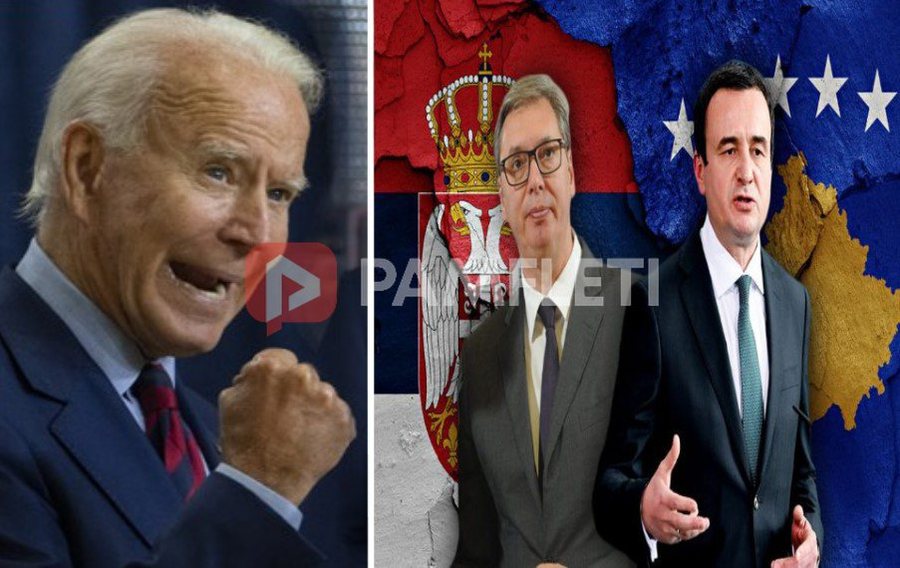
The north of Kosovo and the conflict with Serbia return to the epicenter of American attention. Why is the integration of the north of Kosovo treated as a complex and challenging issue in the geopolitics of the Balkans?
The impression of the abandonment of Kosovo by the US no longer looks simply like a bluff of the Serbian special war units, with which the Albanian opinion is bombarded by the media and the opposition, but also by the Prime Minister of the Republic of Political Albania, Edi Rama.
The American geopolitics in the confrontation between the "Serbian World" and the Albanians in the Balkans have generated extraordinary turns. The United States has been engaged with increased intensity in the region since the outbreak of war in the
former Yugoslavia in the 1990s. In this geopolitical confrontation, there have been two sides of the axis: the "Serbian world", which represents Serbian interests and influence in the region , and the Albanian community, the nucleus of which, meanwhile, I would like to conceive of as the Albanian Federation. Meanwhile, the return of American geopolitics to Southeastern Europe should have the primary goal of ensuring good neighborliness between two peoples with tragic histories and rivers of blood between them: the Albanian people and the Serbian father, who since the formation of the modern Serbian state (1878) at the center of his political philosophy is expansion.
The United States has engaged in various support for both sides, intertwined with its strategic interests in the region. In the early 1990s, the US supported Kosovo in its efforts to restore the autonomy suspended on March 23, 1989, helping to lobby the Albanian cause and raise international awareness of human rights violations. The LDK was an appropriate instrument for this political agenda. But, as time proved, this agenda failed.
However, the American aid deepened with the intervention of NATO in 1999, when the KLA overturned the possibility of keeping Kosovo within Serbia, even with the return of autonomy. NATO's intervention hastened the end of the war and the deployment of the KFOR (Kosovo Security Force) force to ensure stability in the region and prosperity towards the declaration of independence on February 17, 2008.
Over time, US policy in the region has changed and evolved. Similarly, US support for Kosovo has transformed into a more moderate and balanced commitment to various geopolitical interests and developments in the region. This has sometimes led to tensions that are de facto a byproduct of the American reflection on the "Serbian world".
The outbreak of the war in Ukraine and the return of geopolitics in the Balkans has brought significant changes in the political dynamics and security in the region. After the disintegration of the former Yugoslavia and armed conflicts in the 1990s, with emphasis after the start of the war in Ukraine, geopolitics has returned to the Balkans with an increased interest from international actors.
The Balkan region remains strategically important to many world powers due to its geographical position, natural resources and its important connections with Europe, Asia and Africa. These geopolitical interests have influenced the interventions and policies of the great powers in the region, creating a complicated political and security context. Even over the years, there have been various geopolitical interventions by international actors in the Balkans. The United States, the European Union, Russia, Turkey and other powers that have had their own special interests in the region and have influenced political and economic developments. These interventions were carried out through political lobbying, economic support, military interventions and initiatives of a diplomatic nature with a cultural background, respectively with a religious background.
However, the USA, despite the current positioning based on geopolitical interests, remains the main ally of our Nation and, consequently, of Kosovo.
In addition to the interests of the great powers, the Balkans have also been a challenge to fulfill their own geopolitical goals. Some states of the region have had aspirations for membership in the European Union and NATO, while others have built special relations with other states, such as Turkey, Russia or the states of the Middle East.
The return of geopolitics in the Balkans has influenced the internal politics of the states of the region, creating ethnic, political and territorial tensions. Geopolitical complications have also brought challenges to regional stability and cooperation, calling into question the processes of conflict resolution and the creation of a stable and peaceful region. It is important to note that the influence of geopolitics in the Balkans is not a static process, but changes according to new developments in the international scene and the politics of the region.
During the Obama era, the impression was created in political circles that the US had gradually withdrawn as a security provider for Southeast Europe, at least for some time. This was also the view of the former Macedonian foreign minister, Nikolas Poposki, who had emphasized to the Austrian daily Der Standard. [1]
Macedonia and Kosovo together can be considered as typical examples of the "Great Game", respectively of the return of geopolitics in the Balkans that has been observed for some time. According to Le Monde Diplomatique in June 2016, Washington had the largest embassy in the Balkan region, in Skopje. However, only a few years later, the sister of the one that has the residence in the former Skopje Castle, in the Arbëria neighborhood in Pristina, would also be built in Pristina.
Macedonia and Kosovo, as two of the smallest countries in Europe, with a population of almost two million each, are considered the "control tower of the Balkans", as the war in Kosovo [1997–1999], the armed conflict, made clear. in Macedonia [2001], but also the refugee crisis of 2015.
But despite the fact that the "Albanian issue" remains a burning issue even to this day, it is not the only unresolved problem in the Western Balkans. Of a more specific nature is the "Serbian issue", which recently, from the notion of "Greater Serbia" known since the beginning of the modern Serbian state through the Naçertania of Garašanin, has been promoted as an issue of the "Serbian World".
In the service of the idea of the "Serbian world, in the meantime, the Serbian academic, Vasilije Krestić, despite being a broken old man - has entered the tenth decade of his life, on behalf of ASHAS, has prepared a "non-paper", which for the object of treatment is precisely the Association of Municipalities with a Serbian majority, as a first step towards the "Serbian World".
This document was published on February 7, 2023.
In the last part of the text, the real purpose of the author and the institution, in whose name this document is published, is revealed.
"Despite the fact that our country, in the effort to preserve its vital national interests, is currently in a complex situation, and to some extent even unenviable, from the point of view of foreign policy, both globally and in the regional one. Serbia, as the most economically powerful state and culturally, the most fundamental state of the Western Balkans, has a number of comparative advantages that should be put at the service of the escalating and well-thought-out realization of the strategy of the Serbian national program, namely the ideal of " To the Serbian world", in which case the initiation and strengthening of unity and trust between all dispersed Serbs is a necessary condition for the further affirmation of Serbian influence in the regional and wider international frameworks.
Therefore, it is not surprising that some segments of society have identified, in the state-forming phrase "Serbian world", the potential for the emergence and development of a kind of 21st century Načertanieja. Despite the distance of time, in the symbolic aspect this is a very important moment for the birth of these ideas, bearing in mind that history teaches us that the most important national ideas appeared in challenging and difficult times for everyone, that is, for the Serbian state and people". [2]
Quite naturally, after reading even just this sequel to this document, which has a total of five pages, the legitimate question arises: does Western diplomacy in the "Serbian World", as in the beginning of the 20th century, in Yugoslavia, see the right instrument? for the reconciliation of Southeast Europe?!
Therefore, ideas for a kind of "Anschluss" of the federal entity of the Serbs in Bosnia — Republika Srbska, Serbia, remain on the agenda both in Belgrade and Banja Luka. There, a referendum called by President Milorad Dodik on a controversial national holiday long ago sparked heated debate about alleged Serbian separatism. The same players in the "Great Game" are active behind the scenes: Russia is on the Serbian side, whose national flag flies at rallies, while the US has so far supported the Bosnian central government in Sarajevo, which categorically rejects any thought of detachment.
North of Kosovo — the Gordian knot of geopolitics in the region
There are many reasons why the North of Kosovo is considered a "Gordian knot" of geopolitics in the region.
First, the composition of the current population: The demographic map of northern Kosovo throughout the 20th century has undergone complete transformations. In all the waves of colonization, Belgrade still had the city of Mitrovica and the north of Kosovo as a whole in the center of attention. If on the eve of liberation from the Ottoman Empire, this part of the Kosoëvs Vilayet was mainly inhabited by Albanians, then it was significantly colonized. Meanwhile, the large deportation of Albanians, even after liberation, on February 3 and 4, 2000 [over 15,000 Albanian citizens], overturned the demographic reality in the most sensitive way possible. Today, the Albanian element in the north is symbolic, as was proven in the last elections.
The second one is related to the geostrategic influence: the North of Kosovo has an important geostrategic position. It is located on the border with Serbia and has direct connections with Sandžak and beyond with Bosnia. This means that the control of the north of Kosovo has important implications for regional security and stability.
Third, political and territorial clashes: The North of Kosovo is the part of Kosovo where there have been major political and territorial clashes. These clashes include the division of the city of Mitrovica and efforts to create an independent Serbian political entity in the area.
Due to these factors, the control of the north of Kosovo has become a sensitive and complicated issue for all interested actors in the Balkan region. Geopolitics in this area involves major challenges related to security, human rights, and regional stability. Finding sustainable and acceptable solutions for all parties is a great challenge for diplomacy and regional and international politics.
See for this, the north of Kosovo and the clash with Serbia meanwhile are at the epicenter of American attention, if we consider the geopolitical interests of the USA in the Balkans. The United States has been engaged in efforts to mediate and resolve the ongoing conflict between Kosovo and Serbia.
The US interest in this conflict has been manifold.
First, they have supported the peace process and stability in the region, seeing it as an essential element for security and European integration. The US helped create the Kosovo Security Force (KSF) and was part of the UN mission in Kosovo (UNMIK), as well as supporting Kosovo's independence in 2008.
Second, the US has had and has a strategic interest in the region.
Despite the legal right that the government of Kosovo has, meanwhile it is facing increasing pressure from the West. The USA and the EU insistently demand that the Albanian mayors of the four municipalities no longer enter the municipal offices, or leave them, and that the Special Police units leave the north. The government of Kosovo, underlines the well-known German analyst Adelheid Wölfl, "does not want to surrender to the pressure of the Western embassies, because it wants to show that the north of Kosovo is also part of the Kosovar territory. This is precisely what is called into question by the appeals of the Western ambassadors. In particular, US representatives in the Balkans, such as the US ambassador to Serbia, Christopher Hill, have been positioning themselves behind Vucic for months and have criticized Kosovo's Prime Minister Albin Kurti. The US is abandoning one of its most important democratic allies in the region, perhaps the most pro-American country in the world, Kosovo, and supporting the autocratically ruled pro-Russian Vucic regime.” [3]
The impression of the abandonment of Kosovo by the USA no longer looks simply like a bluff of the Serbian special war units, with which the Albanian opinion is bombarded by the media and the opposition, but also by the Prime Minister of the Republic of Political Albania, Edi Rama.
Time will quickly prove whether this fact is a bluff or a political war between two state-building concepts that are based on the interests of two nations: the Albanian and Serbian nations.
The Balkans, and especially Kosovo, is an important space for the stability of Southeast Europe and for the fight against violent extremism. The emergence of Serbian fascism even in the face of KFOR forces in the north of the Republic, on May 29, proved that the most pronounced commitment of the USA is immanent.
However, American geopolitical influence in the Balkans has changed over the years. In some cases, there have been attempts to stop the full return of Russia's interventions and to stop the promotion of its interests in the region, affecting Serbia's relations with Kosovo. Competition and rivalry between the US and Russia have been evident in Balkan politics and have accentuated ethnic and political divisions in the region. Meanwhile, efforts to completely separate Serbia from the sphere of Russian interests have also produced ambiguity not only among the Albanian academic world, but also beyond.
See for this, the return of American geopolitics to the clash between northern Kosovo and Serbia continues to be an important challenge for international actors. Efforts to normalize relations between Kosovo and Serbia are still in progress, and the role of the US continues to be important in supporting the dialogue and reaching a stable and acceptable solution for both parties. Can this be achieved without the democratization of Serbia, it is hard to imagine.
Në këtë përballje konceptesh politike e interesash gjeopolitike, integrimi i veriut të Kosovës padrejtësisht trajtohet si çështje komplekse më shumë se në realitet ai është dhe sfiduese në gjeopolitikën e Ballkanit. Përgjejgës për këtë është kryekreje intenca e Beogradit për aneksimin e veriut. Pozicioni i Shteteve të Bashkuara të Amerikës ndaj kësaj çështjeje ka evoluar me kalimin e kohës. Megjithatë, në vitet e fundit, SHBA-ja ka reflektuar një ndryshim në qasje ndaj çështjes së veriut të Kosovës. Në vend të përkrahjes së plotë për integrimin e veriut të Kosovës, politika e SHBA-ve ka shkuar drejt përkrahjes së dialogut dhe normalizimit të marrëdhënieve mes Kosovës dhe Serbisë pa ushtruar presionin e duhur ndaj Beogradit zyrtar. Sidoqoftë, administrata e re e SHBA-së ka inkurajuar bashkëpunimin rajonal dhe rikthimin e veriut të Kosovës në kuadër të integritetit territorial të Kosovës. Përveç kësaj, SHBA-të kanë inkurajuar qasjen evropiane në zgjidhjen e kësaj çështjeje dhe ka përkrahur dialogun nën përkujdesjen e Bashkimit Evropian.
Por qasja europiane, që ndërkohë sinjifikohet në marrëveshjen e 27 shkurtit që u arritë disi të cilësohet si marrëveshje e rakorduar, pavarësisht se pala serbe refuzoi ta nënshkruante, nga ana e Beogradit ka tendenca të rihapet.
Qasja e diplomacisë amerikane dhe përgjithësisht asaj perëndimore ndaj veriut të Kosovës ndërkohë është një çështje e diskutueshme dhe nuk mund të reduktohet në një vlerësim të thjeshtë si “e gabuar” apo “e drejtë”. Kjo çështje është në thelb egzistenciale për Republikën, prandaj Prishtina zyrtare duhet të ketë në konsideratë edhe diversitetin e interesave gjeopolitke në rajon.
Një pjesë e opinionit perendimor dhe jo vetëm, ka përvetësuar gjykimin se diplomacia perëndimore ka qenë e përqendruar shumë në pavarësinë dhe integrimin e Kosovës si një shtet i plotë, duke lënë pas dore përkatësinë etnike të veriut të Kosovës. Disa kritikë kanë argumentuar se ky qëndrim ka pasur pasoja negative për komunitetin serb në veri, duke e getoizuar pa nevojë atë dhe shtyrë në ndeshtrasha të mëdha që ishin dhe mbesin pengesa reale për integrim në institucionet qendrore të Kosovës. Shih për këtë, ndërkohë, u shpërfaq edhe më hapur qortimi ndaj përpjekjeve të qeverisë për shtrirjen e sovranitetit të Republikës edhe në veri!
Si u minua integrimi real i veriut?
Përmes imponimit të marrëveshjeve të dëmshme për Kosovën, prej asaj të 19 prillit 2013, e me theks asaj 2015-ës, e deri tek kjo e fundit e 27 shkurtit 2023, që u arritë në Bruksel, diplomatët perëndimorë kanë argumentuar se qasja e tyre ka qenë e motivuar nga synimi për të siguruar stabilitet, paqe dhe bashkëjetesë të qëndrueshme mes komuniteteve në Kosovë. Ata pretendojnë se ky pozicionim ka qenë në përputhje me objektivin për ndërtimin e institucioneve të forta dhe gjithëpërfshirëse, duke synuar të integrojnë veriun e Kosovës në strukturat shtetërore të Kosovës dhe të sigurojnë që të gjitha komunitetet të kenë të drejta dhe përfaqësim të barabartë, pa çka se ai integrim ishte tepër sipërfaqësor dhe linte shumë për të dëshiruar. Kjo u pa në dhjetor të vitit që lamë pas, kur me një komandë nga Beogradi, Lista Srbska lëshoi institucionet dhe fill pas saj hoqën uniformën edhe mbi 500 policë serb, ndërkaq bojkotuan institucionet e drejtësisë edhe gjyqtarët e prokurorët serb. Me këto ngjarje u pa katërcipërisht se procesi i integrimit i tillë siç ishte realizuar pas marrëveshjes së prillit 2013, duke imponuar një lloj të bashkëqeverisjes me Lisëtn Serbe, që d.t.th me Serbin, de fakto kishte minuar integrimin real të veriut!
Modelet europiane të integrimit – dalje nga rrethi vicioz
Dalja nga ky qerthull nënkupton aplikim të një modeli europian të integrimit të minoriteteve. Këshilli i Përbashkët i Komunave Serbe (Zajedničko veće opština — ZVO), përmbledh komunat ku jetojnë serbët në lindje të Kroacisë, është modeli të cilin kryeministri i Kosovës, Albin Kurti, e ka dhënë si propozim në Bruksel për Asociacionin e Komunave me shumicë Serbe.
Modeli kroat [4] shihet si ideal për Kosovën edhe nga eksperti kroat për çështje të Ballkanit, Davor Gjenero. Së pari, ky model u ndërtua në Kroaci gjatë procesit të ripajtimit paqësor në Kroaci dhe integrimit të komunitetit minoritar serb në trupin politik të Kroacisë. Së dyti, mendoj se arsyeja se pse modeli kroat është zgjidhja më e frytshme për Kosovën është fakti se situata në Kosovë dhe Kroaci në të 90’at janë të ngjashme. Edhe në Kosovë edhe në Kroaci kemi pasur situatën ku projektet nacionaliste serbe kanë bankrutuar që ishin bërë përmes agresionit ushtarak. Dhe, ishte e domosdoshme për të gjetur një lloj modeli për zgjidhjen e problemeve të luftës. E treta çështja e përbashkët është fatki se edhe në Kosovë edhe në Kroaci serbët janë rreth 5 përqind të banorëve. Dhe përfundimisht edhe në Kosovë edhe në Kroaci kemi pasur të bëjë me një pjesë goxho të vogël të territorit shtetëror që në mënyrë koherente është banuar nga komuniteti serb, në Podunavlje në Kroaci dhe në veri të Kosovës”.[5]
Por ndërveprimi i Këshillit Nacional të Serbëve në Kosovë duhet të vijë në kontekstin e respektimit të sovranitetit dhe integritetit territorial të Kosovës, si dhe të përputhet me synimet për integrimin evropian dhe multietnicitetin e vendit.
Pranimi i dobësive dhe sfidave të diplomacisë perëndimore në veriun e Kosovës është i rëndësishëm, ndërkaq synimi duhet të jetë të gjindet zgjidhje e pranueshme për të gjitha palët. Dialogu i vazhdueshëm dhe bashkëpunimi i ngushtë me aktorët lokalë pasi ata të jenë liruar nga strukturat e policisë fashiste të dirigjuara nga presidenti serb, janë thelbësore për të arritur progres në këtë drejtim dhe për të siguruar një përballje më të mirë me sfidat komplekse të rajonit.
Përkëdhelja që i bëhet presidentit serb Aleksandar Vuçiç nga ana e SHBA-ve është një aspekt i politikës së tyre të gjeopolitikës në Ballkan. Ndikimi i kësaj përkëdheljeje për paqen në rajon është i diskutueshëm dhe kompleks për t’u vlerësuar. Më 3 qershor, Derek Chollet, këshilltar i Departamentit të Shtetit të SHBA-së, në një twiter të tij shkruante:
“Inkurajova presidentin serb Vuçiq dje për të kërkuar qetësi mes serbëve të Kosovës, për të ndërmarrë hapa për të ndihmuar në zbutjen e krizës në veri të Kosovës dhe për t’u kthyer në rrugën e normalizimit dhe angazhimit konstruktiv në Dialogun e lehtësuar nga BE-ja.”
Këtë stil të komunikimit Vuçiqi më shumë e merr si inkurajim për ecje drejt krijimit të “Botës serbe”!
Duke përkrahur ose përkdhelur liderët politikë në rajon, siç është rasti me Vuçiçin, disa aktorë ndërkombëtarë shpresojnë të forcojnë stabilitetin dhe të inkurajojnë bashkëpunimin e palëve në zgjidhjen e çështjeve të ndryshme.
Përpjekjet për të imponuar një lloj normaliteti ndërfqinjësor mes Kosovës dhe Serbisë dhe zgjidhje të pjesshme të çështjes, duke shmangur domosdoshmërinë e njohjes së realitetit politik nga ana e Serbisë, po shihet se nuk japin produktin real të paqes së drejtë dhe të qndrueshme.
Lufta për çlirimin e Kosovës kishte në themel edhe elementet e luftës antikoloniale. Paqen në rajon mund ta kemi të garantuar vetëm atëherë kur Serbia e ka të qartë se Trepçën tashmë e ka të humbur, vetëm atëherë kur Beogradi të mos ketë guximin as të mendoj të jap urdhër për marshim të ushtrisë drejt kufijve të Kosovës. Pranimi i disfatës nga ana e Serbisë, d.t.th realisht fundi i luftës.
Në fund të fundit, pretendimi i Serbisë për ta aneksuar veriun, protestat aktuale në veri, në thelb janë vazhdim i luftës që përfundoi me kapitullimin e Serbisë më 9 qershor 1999 në Kumanovë.
Çfardo përpjekje për ta joshur Serbinë duke ia tumirë kërkesat e saj për autonomi të veriut, si trajtë e butë e aneksimit të përkohëshëm, derisa do të krijoheshin rrethanat për ripushtim të plotë, nuk do të nënkuptojë fundin e luftës; për sa kohë që një pjestarë i vetëm i njësive elitare të shërbimeve serbe është në territorin e Kosovës, siç u dëshmua më 29 maj në përplasjen me forcat e KFOR-it në Zveçan, Beogradi nuk heq dorë nga përpjekjet e tij irracionale për të ripushtuar Kosovën, respektivisht për të aneksuar veriun.
Me këtë akt kundër trupave të KFORit, sikur ju plotësua kërkesa Kremlinit, shprehet publicistja amerikane Ivana Stradner, për ta shpërfaqur NATOn ashtu si ai dëshiron: “si të ishte një tigër prej letre.” [6]
Megjithatë, është e rëndësishme të theksohet se përkdhelja e një lideri politik nuk paraqet kurrfarë garancioni për paqen në rajon. Gjeopolitika e Ballkanit është e ndërlikuar dhe ka shumë çështje të ndjeshme etnike, historike dhe politike që janë në lojë. Për të arritur paqe të qëndrueshme në rajon, është e nevojshme të angazhohen të gjithë aktorët e interesuar dhe të kryhen përpjekje të përbashkëta për zgjidhjen e mosmarrëveshjeve, pa cenuar demokracinë dhe përspektivën europiane të rajonit.
Diplomacia perendimore ndërkohë duke vazhduar ta trajtojë presidentin serb si të vetmin lider serb me të cilin mund të vazhdojë projektin e integrimit të rajonit në BE, ka lënë anash trajtimin serioz të shkeljeve bazike të të drejtave të njeriut, demokracisë, sundimit të ligjit dhe respektit të fqinjësisë së mirë, pikërisht nga kjo Serbi që udhëhiqet nga Vuçiqi.
Heshtja e pakuptimtë për më shumë se 48 orë ndaj aktit agresiv që bëri Serbia përmes kidnapimit të tre policëve kosovarë, është shenjë dobësie pikërisht e diplomacisë perendimore. Me këtë akt pinjolli i Milosheviqit, partneri i mirë i ambasadorit Hill, presidenti serb, duke i kryer një shërbim Putinit, testoi NATO-n dhe thelloi talljen para së gjithash me perendimin. Për të arritur një paqe të qëndrueshme në rajon, është e nevojshme të veprohet në drejtim të zgjidhjes së çështjeve të pazgjidhura, para së gjithash kërkohet të përmbyllet procesi i shtetformimit të Kosovës. E ky hap kërkon qasje të re, vendim politik të artikuluar drejt e pa dykuptimësitë standarde të BE-së, që ia bën të qartë Beogradit se, rikthimi i Serbisë në Kosovë, por as projekti për aneksimin e veriut, nuk kalon dot. Ndërkaq rikthimi i luftës qoftë në Kosovë apo në Bosnjë, është një skenar i tmerrshëm që nuk do të sillte asgjë të mirë për rajonin në tërësi. Pasojat e një konflikti të tillë do të ishin katastrofike dhe do të shkaktonin humbje të mëdha njerëzore, dëme materiale dhe shkatërrim të infrastrukturës.
Ky skenar do të përkeqësonte situatën dhe do të ndikonte negativisht jo vetëm për të ardhmen e rajonit, por edhe për vetë prezencën e SHBA-ve në Europë.
Përfundim
Këtu më poshtë po sjell disa sugjerime për veprime urgjente që do të mund të ndihmojnë në ndalimin e Serbisë nga aventura për ta aneksuar veriun e Kosovës, qoftë përmes krijimit të imponuar të autonomisë territoriale si fazë kalimtare, qoftë përmes luftës dhe aneksimit të veriut:
1. Diplomacia aktive: Diplomacia duhet të jetë e përfshirë në përpjekjet për të gjetur zgjidhje të qëndrueshme dhe të pranueshme për të gjitha palët. Dialogu dhe negociatat duhet të jenë mjetet kryesore për të adresuar mosmarrëveshjet dhe për të arritur marrëveshje të përbashkëta.
2. Mbështetja ndërkombëtare: Komuniteti ndërkombëtar duhet të mbështesë Kosovën dhe të japë sinjale të qarta se ndarja territoriale dhe rikthimi i veriut të Kosovës me luftë nuk do të pranohet. Nëse Serbia vazhdon të eksplorojë mundësinë e një konflikti ushtarak, duhet të ketë një reagim të fortë dhe të qartë nga komuniteti ndërkombëtar.
3. Garancioni real nga Perendimi: Kosova mund të jetë tutje gjeneroze në raport me ca kërkesa më të arsyeshme të aleatëve tanë, por ato duhet të jenë të balancuara dhe të kenë në mes garancionin e fortë.
Një model europian i Asociacionit, konform marrëveshjes së 27 shkurtit e rakorduar në Bruksel, do të mund të tumirej nga pala kosovare, vetëm atëherë kur Perendimi ofron siguresë të qartë – garancion real, që nënkupton veprim të njëkohëshëm: aderim të Kosoëvs në NATO dhe realizim të asociacionit në përputhje me kushtetutën e vendit. Prandaj anetaresimi i Kosoëvs ne NATO përmes një procesi te pershpejtuar dhe te garantuar, është dalja reale nga ky qark i mbyllur.
4. Dialogu mes palëve: Kosova dhe Serbia duhet të vazhdojnë dialogun në kuadër të procesit të normalizimit të marrëdhënieve ndërmjet tyre. Marrëveshja e Brukselit e arritur më 27 shkurt duhet të realizohet në tërësinë e saj. Kjo do të thotë të përfshihen në negociata të ndershme dhe të vlerësojnë mundësitë për kompromis, modelet e ndryshme europiane, duke respektuar integritetin territorial dhe sovranitetin e Kosovës.
5. Forcimi i institucioneve shtetërore: Kosova duhet të vazhdojë me përpjekjet për të forcuar institucionet shtetërore dhe sundimin e ligjit në veriun e Kosovës. Kjo do të krijojë një atmosferë të favorshme për komunitetin serb dhe do të ndihmojë në ndalimin e përpjekjeve për të shfrytëzuar tensionet për qëllime të dobëta politike. Me këtë akt i ipet fund iluzioneve serbe të ushqyera ndër vite për gjoja mundësinë e aneksimit të veriut.
6. Promovimi i bashkëpunimit rajonal: Në bashkëpunim me aktorët rajonalë dhe ndërkombëtarë, duhet të inkurajohet bashkëpunimi ekonomik dhe i ndërsjelltë mes vendeve të rajonit. Krijimi i Tregut Unik kombëtar mes dy republikave tona — Shqipërisë politike dhe Republikës së Kosovës, do të ishte një hap tepër i rëndësishëm në këtë plan.
7. Federata Shqiptare — ledh i hegjemonisë serbe në rajon: Rishikimi, respektivisht hartimi i strategjisë nacionale, që do të nënkuptonte ecje graduale drejt krijimit të Federatës Shqiptare, si faktor që përshpejton dhe garanton paqen në rajon, duke e shndërruar kështu Federatën Shqiptare edhe si nyje të fuqishme të bashkëpunimit transatlantik./Pamfleti
____________________________
1. https://www.ipg-journal.de/regionen/europa/artikel/die-rueckkehr-der-geopolitik-auf-dem-balkan-1764/
2. Citim sipas: https://www.koha.net/veshtrime/381079/bota-serbe/
3. Adelheid Wölfl: https://www.derstandard.at/story/3000000174864/aleksandar-vucic-erhoeht-den-druck-au
4. See: https://www.gazetatema.net/rajoni/fare-eshte-asociacioni-kroat-modeli-qe-propozoi-kurti-ne-bruksel-i388502
And: https://fuen.org/de/members /Serbian-National-Council-in-Croatia
5. https://nacionale.com/politike/modeli-croat-qe-paraqiti-kurti-eksperti-nga-zagrebi-mund-te-jelle-patriotizem-kushtetues-te-serbet-eshte-ideal
6. Ivana Stradner: https://nypost.com/2023/06/14/why-is-biden-appeasing-a-putin-pawn-as-nato-forces-are-attacked/



Lini një Përgjigje