


 Shkruar nga Ilir Yzeiri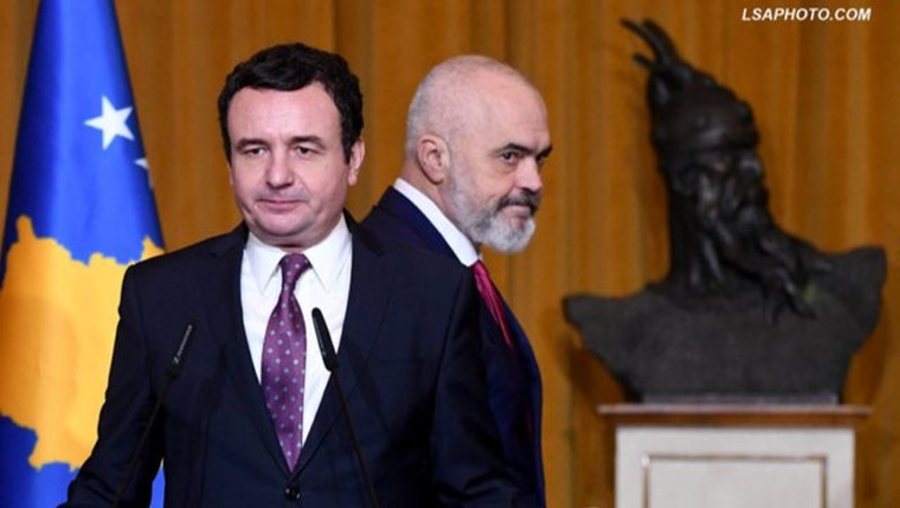
Even today, the events that are happening in Kosovo have highlighted not a common general opinion, but an old vice of ours: division and division.
In the distant year 1936, in its first issue, the magazine "Bota e Re", in the article "Forty opinions in Albania", wrote: "Albania does not have a general opinion, as England has, for example, France, Italy, Greece and Turkey, but there are all kinds of opinions and views that have more to do with elements, with sects, with class, with groups, with provinces, with ages, with cultures and others that do not agree in any one way with the other".
Even today, the events that are happening in Kosovo have highlighted not a common general opinion, but an old vice of ours: division and division. The government of Kosovo and its followers think differently about what is happening in the North of Kosovo, and the official Tirana thinks differently. This is not the occasion to make history, because in all these days, most of the analyzes have mostly dealt with the incurable defect of some Albanian politicians who confuse historical times and live in the folkloric past.
Today, Albanians, on both sides of the border, but those who live in Kosovo the most, need to live in a free state and benefit as much as possible from the advantages brought by the alliance with the countries that historically they turn out to be more progressive. In their history, the Albanians proved with facts that Europe corrected the historical mistake and the right that the Albanians had not won when the Ottoman Empire collapsed and Kosovo was separated from the mother trunk, they won it later, when NATO and the US- they bombed Serbia and gave Independence to Kosovo.
Now we have two states with one nation. Official Tirana, as Bugajski pointed out, seems to have gained more weight and has offered itself several times as a promoter of resolving disputes in the Balkans, promoting initiatives such as the "Open Balkans" which Pristina has not recognized. Rama's last initiative to draw up a draft for the Association, drawn up by foreign experts, did not go down well in Pristina and was also rejected in Belgrade.
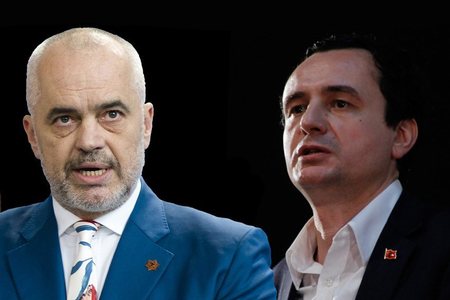
It seems that the foreign policy of Albania and Kosovo are moving on two different tracks. Rama promotes initiatives that want to turn the Balkans into a union of free countries, while official Prishtina and Albin Kurti, especially, demand that reciprocity be established in relations especially with Serbia and that Serbia finally give up sabotage and non-recognition of Kosovo. At first glance, everyone is right. Albania also has the right to promote the initiatives of peace and economic exchange and the creation of a development zone in the Balkans, rising above the old hatred, but Pristina also has the right to ask Serbia for reciprocity and to be treated as a sovereign country. .
However, in order to realize both the wishes of Tirana and those of Pristina, the parties must convince the Western chancelleries and their actions must be harmonized with the Euro-Atlantic frameworks. For this, the only weapon we have is diplomacy and words, not actions. Actions can come to an end when the words have become legal acts recognized and approved by our Euro-Atlantic partners. If today Kosovo risks sanctions from the EU and the USA and if today Kosovo is being presented as the cause of the anger of the Western allies, who may even question what they gave Kosovo years ago, this is not only a problem of Pristina.
This is the problem of the government of Tirana and Edi Rama and the government of Kosovo and Albin Kurti. They lost the chance to build a common idea about the fate of Albanians in the Balkans. In this case, it would be good if our historical past and the narrative built on it, serve us to better understand what the philosophers say: "Know thyself!". If we read this maxim carefully, then we will understand that in the course of centuries, we have not won any battle that we started to defend ourselves and our territory. Only with allies, yes. That's why it's good not to forget the expression: "Know thyself!" »




Lini një Përgjigje