


 Shkruar nga Gjergj Erebara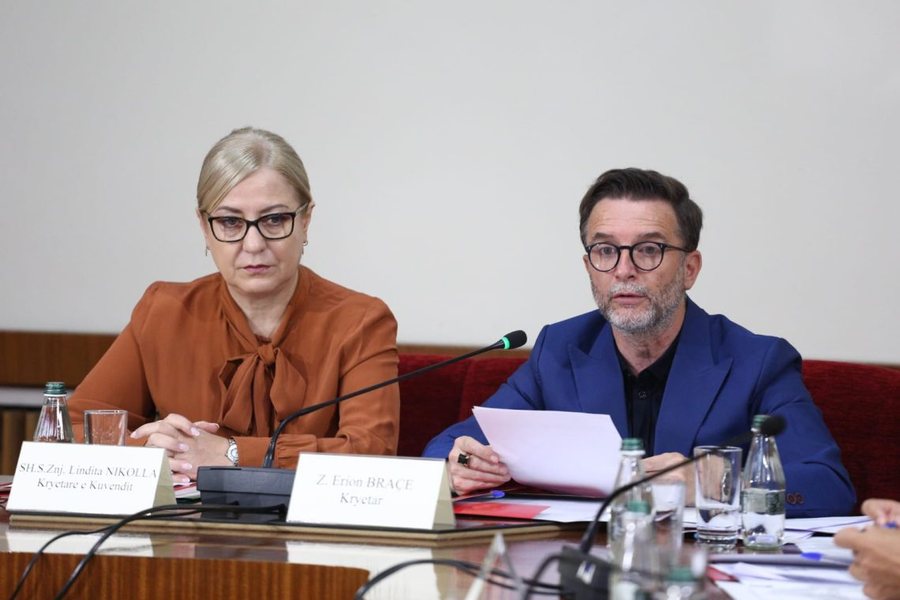
Today in Tirana, socialist MPs established a so-called special parliamentary commission against disinformation and foreign interference. This commission should not serve to avoid attention to the real media problems sanctioned by the European Commission and the OSCE/ODIHR election observation missions.
The socialist deputies of the Albanian Parliament established, without the participation of the opposition, a commission that has set itself a great task, to fight, consulting with the USA, NATO, the EU, the media, rights organizations, etc. etc., "disinformation [SIC] and other forms of foreign interference in the country's democratic processes". Let's wish them success. Let's also accept as sincere the statement of the chairman Erion Braçe that the commission does not intend, in the name of the war of disinformation, to fight the freedom of the media, although the presence of obviously false news in the pro-government media about "ruble portals" ” is a concrete reason for concern. It's just that once we accept the sincerity of the socialists in this work, we have to ask, for ourselves and for the socialists, why, some very clear and easily implemented recommendations, repeatedly given by the progress reports of the European Commission and equally repeatedly, from the monitoring reports of the election processes by the OSCE/ODHIR, have been forgotten in order not to be addressed by the deputies strongly concerned about issues of disinformation, this mysterious phenomenon, the definition of which is still a matter of great debatable.
Let's start with the progress reports of the European Commission. For anyone who has forgotten, the reports are published every year and contain a list of requirements that Albania must meet in order to prepare itself to join the EU. If you do not meet these requirements, then normally you cannot join. Regarding media freedom, last year's report states: Albania must: 1. "ensure zero tolerance for threats as well as efficient legal prosecution in cases of attacks against journalists, including through full decriminalization of defamation; 2. Address the high concentration of media ownership and significantly increase the transparency of media funding, including revising the legal requirements for public advertising, in line with European standards. 3. To improve working conditions for journalists, especially through strengthening the protection of labor rights and social rights of Albanian journalists and ensuring the consistent application of the Labor Code.
From these five requests, the deputies of the Parliament of Albania have not bothered to deal with even a single one, although some of these do not go beyond simple legal changes, which can be done with a show of hands in a plenary session , without the need for lengthy processes, calls to the USA, NATO, EU, etc., and without consuming unnecessary time. For example, the decriminalization of defamation requires nothing more than the repeal of Articles 119 and 120 of the Criminal Code to solve the problem noted by Brussels officials and OSCE/ODIHR experts. It's just that apparently the deputies who have taken it upon themselves to fight the mysterious enemy of disinformation, either don't know how to read the progress report, or simply don't feel like meeting the conditions for European integration.
The other simple issue that socialist and democratic MPs need to address is about state advertising. State advertisements are currently given to pro-government media based on a decision of the Berisha government in 2008. This decision practically makes it possible for the government to give money to the media, without competition and without transparency. Citizens find it very difficult to understand whether a material appearing in the media is a government propaganda advertisement or an independent informative chronicle. Unlike the repeal of articles 119 and 120 of the criminal code, this requires comparatively more work. It is required that the government be forced to apply the law on public procurement in the purchase of advertising space in the media, and therefore, it requires that citizens be able to distinguish that, in fact, a chronicle about agriculture is an advertisement paid for by their taxes and not a chronicle of independent journalism. Again, if we take into account that the European Commission has made the same requests in the reports of 2022, 2021 and earlier, logic would have it that the time was very ample for the parliament to solve this problem.
Other problems set as conditions by Brussels are not exactly easy to solve as they affect concrete interests. However, they are not difficult either. For example, limiting the concentration of media ownership is done by legal changes in the media law, limiting individuals to have 100% personal or family-owned licensed audiovisual companies as well as separating the ownership of broadcast media from programming producers, i.e. , starting with the public broadcaster, separating as a public company the unit that manages the digital terrestrial broadcasting platforms from the public company that produces media content, reducing the selling price of channels for private content producers and, above all, ensuring that these public enterprises are managed by professionals and not by rank-and-file militants of the ruling party.
As for the OSCE/ODIHR recommendations, the MPs have the longest list of recommendations and can start working immediately, both through the Media and Disinformation Committees. It is required that citizens, especially during election campaigns, but also outside of them, be able to distinguish when a television chronicle is produced by a journalist and when it is produced by a press office. This requires nothing more than a change in the Electoral Code to oblige television stations to, whenever they broadcast a ready-made chronicle, put a label on it to say: this chronicle was prepared by this or that political party.
It is further required that public institutions be public and non-partisan. That the information released by these institutions is factual and not propaganda, or that politicians are open to answering journalists' questions, including the so-called "provocative questions".
The fact that socialists have decided to consume their time, as well as the time of the public, with research on the very mysterious, but not so real phenomenon of disinformation, should not serve to forget these other jobs, not at all mysterious, very concrete and where and where more important for the European integration of the country. / BIRN


Lini një Përgjigje