


 Shkruar nga Oliver Moody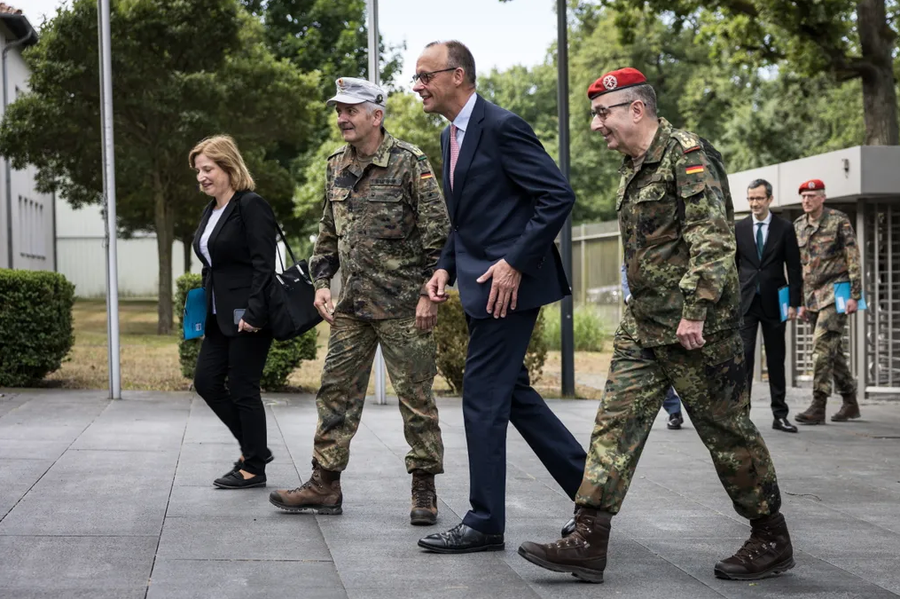
After decades of quiet, Berlin is hastily reactivating Cold War plans to cope with a possible large-scale conflict. The new strategy aims to transform the country into a NATO logistics hub, where civilian hospitals and the rail network must be ready to cope with hybrid sabotage and the massive influx of wounded from the eastern front...
Russia launches a full-scale war against NATO, and German armed forces are at the heart of the action from the very first hours. A 4,800-strong mechanized infantry unit attacks from a forward base in Lithuania, before another 15,000 rapid reaction force troops are rushed to the front within days.
Over the coming weeks, tens of thousands of Allied soldiers arrive at German North Sea ports to be transported eastward via roads and railways battered by Russian sabotage, cyberattacks, and possibly long-range missile strikes.
Soon, hundreds of wounded people a day will be transported for treatment, filling Germany's hospitals on a scale reminiscent of the darkest days of the coronavirus pandemic.
This is the worst-case scenario for which Lieutenant General Gerald Funke, head of the German Armed Forces Support Command (UstgKdoBw), is preparing his country, predicting that this could happen within 2 or 3 years.
He tells the Sunday Times: "Whereas in Afghanistan we had an unfortunately high but manageable number of casualties, now I have to plan for the possibility of 1,000 casualties a day. The closer you look at this scenario, the more complex the situation becomes and the harder it is to imagine..."
With 55,000 troops at his disposal - a force larger than most European national armies - the 3-star general is responsible for a new, vast apparatus that includes everything needed to keep the war effort alive behind the front lines.
Tasks range from evacuating and treating the wounded and managing resources from the private sector, to delivering supplies and reinforcements to the battlefield.
Funke's main task is to ensure that the "logistics platform" at the heart of European NATO continues to function, even if the death toll rises, there are power outages, rail lines are paralyzed, or Russian agents cause chaos everywhere.
"At the moment what worries me is hybrid warfare: sabotage, Russian sleeper cells, targeted attacks. I cannot rule out the use of long-range missiles, but I think the hybrid threat is extremely high."
Për ne është jetike që ta ruajmë Gjermaninë si qendër logjistike dhe të menaxhojmë linjat e furnizimit sa më mirë që të jetë e mundur. Kjo do të thotë që nëse shkatërrohet një rrugë, ne duhet të kemi mundësinë të përdorim të tjera”- shprehet Funke.
Gjenerali, 61 vjeç, iu bashkua ushtrisë gjermane in vitin 1983, gjatë kulmit të tensioneve bërthamore në Luftën e Ftohtë, kur Bashkimi Sovjetik po përgatitej për një sulm parandalues gjatë stërvitjes së NATO-s “Able Archer”.
Që nga ajo kohë kanë ndryshuar shumë gjëra. Vija e frontit, e cila dikur kalonte përmes mesit të Gjermanisë, tani është gati 1600 km në lindje, përgjatë kufijve të Polonisë, shteteve baltike dhe Finlandës.
Teknologjitë si dronët, armët kibernetike dhe lufta elektronike e sofistikuar kanë transformuar ritmin dhe shtrirjen gjeografike të konfliktit. Megjithatë, po bëhet një punë shumë e madhe për të riaktivizuar “reflekset” e NATO-s dhe Gjermanisë për Luftën e Ftohtë, sidomos në drejtim të mobilizimit të popullatës, autoriteteve civile dhe sektorit privat.
“Duhet thënë qartë se pa mbështetjen civile brenda një koncepti të mbrojtjes totale, ne nuk do të ishim in gjendje të mbroheshim”- deklaron Funke. Para vitit 1990, Gjermania Perëndimore nuk kishte vetëm rekrutim të detyrueshëm ushtarak dhe gjysmë milioni njerëz nën armë, por edhe plane jashtëzakonisht të detajuara për çdo pjesë të ushtrisë dhe shoqërisë civile.
“Në atë kohë secili prej nesh e dinte saktësisht se ku do të pozicionohej në rastin e një lufte mbrojtëse. Madje tek gropa më e thjeshtë. Planet ishin shumë të sakta. Nuk kishim thjesht një ide të turbullt të tipit “jam diku pranë Kasselit”, por e dinim fshatin dhe cepin e pyllit ku do të qëndronim.
Tashmë kanë nisur diskutimet për ta rikthyer këtë qasje të Luftës së Ftohtë, duke u përgatitur maksimalisht për çdo gjë që mund të vijë. Trupat e mia po stërviten në Lituani me të njëjtat njësi, në mënyrë që ta njohin portin e Klaipedës, terrenin, kompanitë kritike dhe vendet ku mund të ngrenë baza për trajtimin e të plagosurve”- tregon ushtaraku i lartë gjerman.
Komanda e Funke-s, e krijuar gjatë riorganizimit të plotë të ushtrisë gjermane vitin e kaluar, po harton një version modern të sistemit të Luftës së Ftohtë për rekuizitimin e kamionëve, vagonëve, ushqimit dhe personelit në shkallë kolosale.
“Nëse trupat britanike do të lëviznin nëpër Gjermani, ato do të vinin përmes porteve si Emden ose Bremerhaven, dhe prej andej do të udhëzoheshin drejt krahut lindor. Gjatë rrugës, ato do të kenë nevojë për karburant, ushqim, pushim dhe trajtim mjekësor. Për të gjithë këtë proces të qendrës logjistike, ne do të mbështetemi shumë te organizatat dhe kompanitë civile. Aktualisht po punojmë për nënshkrimin e kontratave”- shton gjenerali.
In Funke's youth, the national railway operator, Deutsche Bahn, had "reserve agreements" under which it had to deliver wagons within three days for the transport of military equipment. Military offices kept precise lists of trucks to be taken by logistics companies.
Funke underlines: “This was not necessary during the years of ‘peace benefits’ after 1990, and the system was forgotten. But I think we need to get back to that. And we are working on it.” Some companies are aware and are practicing, but many others do not even know how many reservists will be called up from their staff.
“The further away from the defense sector they are, the less they see how they can be affected,” Funke said. “I don’t mean that with malice. They just haven’t fully understood the potential consequences yet,” the general says.
Even more challenging is medical planning. NATO has not yet determined exactly how the wounded will be distributed among allies. But it is assumed that Germany will bear the main burden.
The Bundeswehr has only five hospitals with 1,800 beds, which would be immediately overwhelmed. Therefore, work is being done with the civilian hospital network, dividing them into four sections that can be reserved for crises.
Surgeon General Johannes Backus says that war wounds (gunshot and explosions) are completely different from those that civilian doctors usually treat. A senior civil servant in the health ministry called this an extremely challenging task: “The daily number of patients will exceed anything we imagine in peacetime. We could end up in very difficult situations…”.
Another problem is the German legal system. Some military measures require a two-thirds vote of deputies, which is not easy in a parliament where over a third of the seats are held by the radical left and far right, often friendly to Russia.
Analysts warn that it may take the country a long time to emerge from “peace mode.” However, Funke insists that the law allows for rapid action in the event of imminent danger.
The Germans are already seeing exercises like “Red Storm” in Hamburg, where the military practiced moving under attack from Russian drones. In February and March, medical evacuations from Lithuania and the protection of sea lanes will be tested.
Of course, there are mistakes. During a training exercise in Bavaria last October, an uninformed policeman opened fire on a camouflaged soldier who was firing practice rounds, wounding him. But Funke says even these accidents are part of society's preparation process. / Pamphlet from the "Sunday Times"



ju eshte mesu bytha me KaZZoN e ariut Rus. ju eshte lezetu perdhunimi