


 Shkruar nga Ben Andoni
Both are and remain there and unwavering in the Albanian political arena. Rama, as the longest-serving prime minister, post '90. Berisha as the longest-serving politician, post '90.
The current socio-economic situation of Albania is truly worrying. We exclude the political one, because it has never been different. In our days, the topics for protest developments are endless. Producers have nowhere to take their products because imports are encouraged. Young people leave because meritocracy is completely absent and the workplace has become a tool, where the government prepares an electoral industry. Competitions have become ridiculous. On the other hand, experts rightly point out that: The poverty of our country is not simply a consequence of the lack of income, but of many factors that more and more Albanians are feeling at their expense.
"At the heart of the problem lies the fragile and informal labor market, where a large part of employment offers low wages and lacks social protection, making work unstable and insecure for thousands of families," writes the economic platform Altax.al. The same then lists several problems in turn and concludes with what many Albanians feel at their expense. You can maneuver with statistics, but the daily reality for many families is truly worrying.
And above all, economic growth is not manifested for everyone because the economic and social policies of Executive Rama do not translate into a real better life, but simply into benefits for a minority. Not to mention the scandals, where the 5D has been more than cynical… and terrible for the ordinary Albanian. An article dedicated to the economy would be needed to show the anatomy of the fragile labor market and informality, but also the lack of social protection. More precisely, the image was given by the Vienna Institute for International Studies, to which the platform of the convergence of the region with the EU is dedicated, which describes the possibility of 6 Balkan countries to reach EU standards in 8 main directions and 40 sub-areas.
What experts are cautiously stating is that EU membership, but without respecting the standards, risks deepening the scourge of emigration even further. Out of 40 main social and economic indicators, in 14 of them, or 35% of the total, Albania is taking steps back to reach the Union's standards. In only 4 indicators have we reached the standard, while in 22 others it will take decades and even more than a century, this institution calculates.
Por kryeministri Rama është aty, i palëvizshëm dhe duket se mbas çdo problemi me drejtësinë të vartësve të tij (dhe janë aq shumë), ai bëhet më i fortë de facto, paçka se de jure ka kohë që po humbet në planin e brendshëm dhe po aq më atë të jashtëm. Veçse në këtë të fundit, mjafton të vijë një personazh si znj. Trump me interesat për investimet dhe gjërat e shkëpusin krejt vëmendjen. Por ekonomia është aty dhe plagët sociale, e megjithatë Rama mbetet. Një administratë e tërë dhe shumë mekanizma e mbajnë të lidhur fort me pushtetin. Ai, vetë, ka kohë që nuk pranon asgjë. Është i kulluar. Aty është edhe mëtuesi i pushtetit të tij, Sali Berisha.
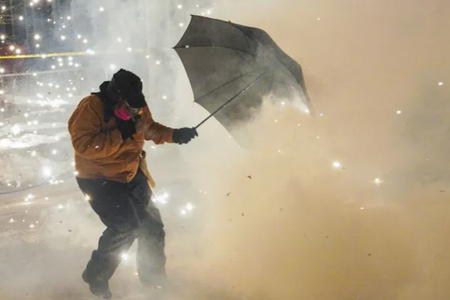
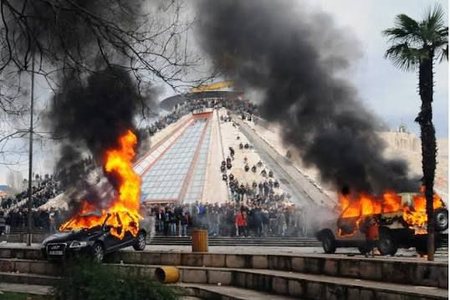
Në orët e fundit mblodhi shumë protestues falë strukturave, të cilat gjithnjë e më shumë ndjejnë dualizmin dhe lodhjen prej qendrës. Të njëjtat referime për Ramën në protestë, e njëjta koreografi, e njëjta logjikë që tregon hapur se Berisha është i pasfidueshëm. Salianji me një grup mbështetësish e kundronin në një cep të hidhur dhe të pafuqi. Molotovi tregoi forcë dhe mosbindje por nuk mjaftoi. Edhe inati i njerëzve. Berisha vazhdon në udhën e tij dhe tashmë ka ofruar dhe një element të ri: Rama është në kilometrin e fundit. Por në relativitet ka perceptime të tjera për hapësirën dhe kohën. Kjo e bën Berishën të mbetet edhe me këtë komunikim patetik.
Të dy janë dhe mbeten aty dhe të patrandshëm në skakierën politike shqiptare. Rama, si kryeministri më jetëgjatë, post ’90. Berisha si politikani më jetëgjatë, post ’90. Të dy janë aty dhe të pasfidueshëm nga askush. Të dy janë aty dhe duken lehtësisht të parashikueshëm. Dhe, kjo e shton trishtimin, sepse nuk po gjenden alternativa. Për pushtetin dhe interesat e tyre mund të bëjnë gjithçka. Salianji dhe cilido është i mënjanuar, njësoj si mbrëmjen e të shtunës; ashtu si tek Rama nuk guxon askush të tregojë paradokset qeverisëse dhe korrupsionin e madh. Nga arratia ato deklarata anti-korrupsion megjithëse përpiqen të trajtojnë në mënyrë të strukturuar nga ish-zëvendësi i Ramës, Arben Ahmetaj, nuk zënë peshë sepse shqiptarët e shikojnë vetë si qeveriset. Ashtu si dinë vetë edhe pjesën para metamorfozës së Ahmetajt dhe kinse zyrtarëve të ndryshuar, si puna e vetë atij.
Then why should we protest, when things don't change?! Because we must. At least forgive the uncertainty of our troubled souls, while those who want to and cannot protest, have a more difficult path left to be themselves and not give up: The civil servants and the administration from the Rama government; and the political democrats: From the blindness of following the leader Berisha who, despite the great adoration, cannot show them the future and return them to power. They say this themselves, of course not on-air. But, nevertheless, even a single one, if it is clear, protests, where he is and in front of the undemocratic authority. This is required of today's Albanian, increasingly carefree, ready to leave Albania at any time. Even one person can change the world, Holocaust survivor and activist Elie Wiesel told the crowd gathered for his Nobel Peace Prize ceremony in 1986: “There may be times when we are powerless to prevent injustice, but there should never be a time when we fail to protest.” This may be a small panacea in our society, but it is necessary nonetheless. (Homo Albanicus)


Lini një Përgjigje