


 Shkruar nga Ylli Pata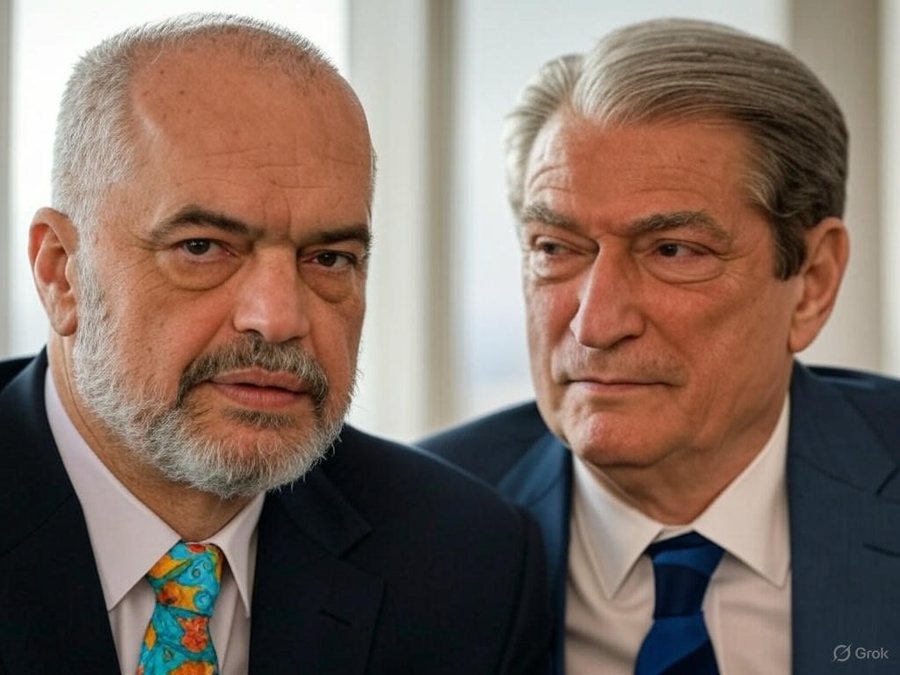
One of the reasons for the lack of a political rotation, but not only that, or the continuation of the status quo, is precisely the extreme "pan-Arab" thinking in the politics of the opposition that lost the elections in 2013...
The continuation of this political status quo in the country, instead of enriching the political debate, the pluralistic discussion, has concentrated and polarized it.
As Eduart Zaloshnja rightly pointed out in a comment of his a few days ago, the "gray" electorate or public opinion is becoming increasingly irrelevant.
In the early 1990s, Fatos Nano, when he was the leader of the Albanian opposition, declared that “the Lebanization of the Balkans will lead to the Balkanization of Europe.” It seems that we have reached a more dramatic point, the debate and politics in our country are turning into a “Middle East” in discourse and action.
This not only resulted in a frightening heat of unrelated discussions on dinner panels about developments in the world's most heated region at the moment, but also about the manner and form of the debate.
Where extreme clichés such as anti-Semitic or contrary are being fearfully imported, their representatives clash on the networks, as if we are dealing with a vital debate that concerns us as an interest or aspiration.
And precisely, the Middle-Eastern way of doing politics has turned politics and public debate into a frightening cliché with angels on one side and devils on the other, to be overthrown by the opposing side. Where argument, discussion, middle ground, and normal coexistence are increasingly being forgotten.
By blocking the existence of a normal social bed, where rationality and the right to everyone's opinion rule. Where opposition is done with arguments and not with insults and labels.
To get to the heart of this discussion; one of the reasons for the lack of a political rotation, but not only that, or the continuation of the status quo, is precisely the extreme "pan-Arab" thinking in the politics of the opposition that lost the elections in 2013.
In all the battles that this opposition, together with the establishment and its media entourage, has waged, it has had one goal: to overthrow Edi Rama. Its governing legitimacy has never been politically recognized, even though it has barely coexisted, with the aim of taking power in negotiations after overthrowing him.
A concept similar to the logic of Arab countries that never recognized Israel, but have wanted and sought its annihilation.
Thus bringing to the table, to the debate, to the discussion, two alternatives; both bad, and thus the choice was generally the lesser evil.
This mentality is precisely the child of the extreme concept of "collapsing" or "annihilating" the opponent. Not normal political competitiveness and dialectical political and media competition in public opinion.
In today's Europe, we have endless cases of joint and normal governance of political opponents, such as the Christian Democrats and Social Democrats in Germany for several mandates (even today). We have left-wing coalitions with extreme right-wing parties, or vice versa as has happened in Greece since the time of the old Mitsotakis and on and on. We have technocratic governments in Italy that have been supported by the entire political spectrum, left and right, just to stabilize the country. In Israel, the formula of a national unity government is common whenever the country is threatened by an external danger or war.
It is likely that if the opposition had not opposed the American plan for Syria's chemical weapons in 2013, participated in the administrative reform of municipalities in 2014, and especially co-authored the Justice Reform in 2016, without becoming an opponent, we would be speaking differently today.
But why did this happen? Because the goal was the extreme objective: to destroy the opponent, to declassify him, thus opening the possibility of a riot, where either the other side would prevail, or a negotiation would take place for the "sharing of the cake" or the "new order" in the country.
As always, if the final weapon is used at the beginning, the main effect is to compact the opponent, to gather them around the leadership, as in the Macedonian phalanxes, which turns these squares into invincible weapons.
Meanwhile, not demonizing the opponent, not labeling voices that do not agree with you, but simply confronting them in debate with arguments, creates and strengthens society. On the other hand, it weakens the fighting squares, because in the end, whoever governs the country, it does not change much. What matters is the way you approach the opposing or rival opinion.
So that they do not consider change a drama, rotation a tragedy, whether personal or family. But a dialectical development as it happens in Europe.
Because whoever seeks war to come out on top and win, has sown the wind, which will then bring the storm. Which does not ask but takes everyone ahead. A stage that Albania has gone through at least 3 times in these 34 years. That's why we are here….


Lini një Përgjigje