


 Shkruar nga Frrok Çupi
These themselves 'provoked' the fantasy to be called Turks, as they came around to the fame of our national hero; took the heroes of Greece with Albanian blood and language to their defense
These are not resting; however few they are, they are not resting. Their heads have turned into firework explosion positions. Their words are more slurred than before. Their hands tremble even when they write that 'Greece did well, Edi Rama'.
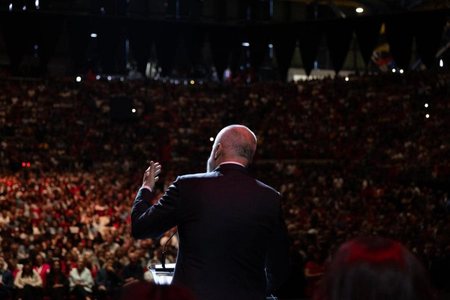
The others, that is, what happened in Greece in the meeting of the prime minister with the Albanians of Athens, have been seen and have become icons of the time.
But why do I say that these are 'Turks', these whose heads have taken the form of an explosion?
There is no real connection with the Balkan tollovina, where Greeks and Turks always appear on the water. It has nothing to do with faith either, of course. These themselves 'provoked' the fantasy to be called Turks, as they came around to the fame of our national hero; took the heroes of Greece with Albanian blood and language to their defense; they attacked Ed as 'Skënderbe'; they mocked Elisa as Laskarina...
That is, the whole battle to make 'nothing' the biggest national celebration that took place in Greece, entered and used history. Any fantasy could paint these, nothing else, but like the Turks who stormed Skanderbeg's tomb to take the bones as talismans. This is the legend, and therefore these are 'our Turks here'.
What Edi Rama did this time for Albanians, for Albanians everywhere in the world, for the nation and the future..., no one has done this until today. Now there is no time for that to happen again. And they didn't do it anymore...
All the more so that they only do bad things.
But they want a victory like that of Edi Rama... How do they want to have it? Taking it by human means. Cursing and slandering the national work.
In the same line as the Turks who attacked the church of Lezha. George was their enemy, but they wanted his bones as a talisman of victory.
They want victories, but not the way to victory. They don't even like the road at all, they want the victory right there on the spot. This is how, as soon as they arrive, they say that they will destroy the judiciary and imprison SPAK Prosecutors. For example, they want to become charismatic, one in the eighth balcony and the other in the craziness of the pillars. They want to burn the City Hall or the Parliament, as Herostratus, the arsonist of Athens and hero of evil, once did.
Only a few of their tribe like the mood of the bandit and the murderer.
Even the models of the corrupt and the fraudster, they create according to themselves. Look what they are spreading smoke: 'Where did you get the money you traveled to Athens?... You collected the buses and filled them here... Athens did not depend on them. How much lek did you get, without telling us!'.
When they talk about the theft of public wealth, they lick this word with bad lips as if it were the real talisman of Rama. They rage there. Because they talk about 'corruption' as something that Rama's administration is ending and there is not much left for them (!).
Even if they want a revolution, no one will follow them.
Even the world wants you to flood, but today's world is not like them, unprincipled and violent.
Even if they want to show strength, their plight also takes over their heads
These appear in favor of Greece's Beller, but also in favor of VMRO in Macedonia, which is against Europe. They are against everything of Albania's western interest.
These attacked Rama in the name of anti-Albanianism:
-Who are you bragging about in the middle of Athens? And you say that Bubulina has been Albanian.
Then they remembered that they violated it:
-She was born in Qafe Luzhë to a Greek woman who was passing through there. The other also insisted that Bubulina was from Qepani, a name associated with shipbuilding, like 'nail and hammer'. But in the end, the version remained that he was born in Luzhë, on the way to Va Spas, where a leader of the Muslim faith of the north, Mahmut Pasha, stood out.
Even the national hero of Greece, Kolokotroni, was an arvanita, from the village of Bitha-Guri. There was no need to say this.
Even the words of Christ were written in the Illyrian language...
He was also saying this in Athens.




Lini një Përgjigje