


 Shkruar nga Mero Baze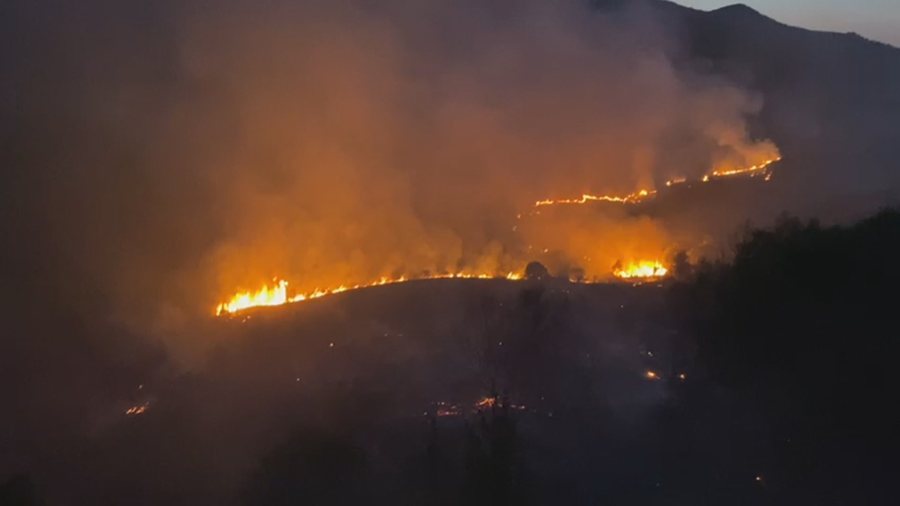
A third reason is the depopulation of the countryside and the leaving of entire forest areas beyond human control. The evacuation of villages by residents has caused the forests to flourish without supervision, pruning or clearing, and this has greatly increased the risk of fire.
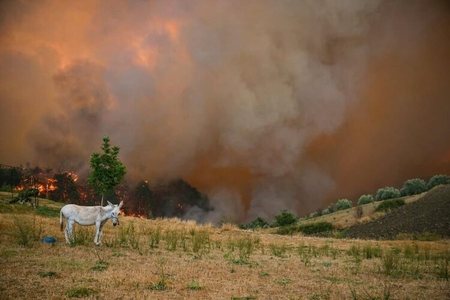
Several wildfires this year have turned into regional disasters. Two weeks ago, a fire that started in the Rrëzomët e Delvinës, near the villages of Kopacëz and Palavli, continued to Kalasë and further to Borsh, Sasaj and Piqeras, endangering an entire province for several days.
For two days, on the eastern side of Delvina, a fire that started in Krongj went to Syri i Kaltër, then to the side of Soprot, burned Delvina and now, after crossing Mount Soti, it has emerged from the side of Mount Gjerë above Lazarat.
On Golik Mountain, a fire that broke out two days ago between the villages of Kodër e Lekës, which are on the southern slope of Golik Mountain opposite Uji i Ftohtë, burned down everything from the Drino River to the top of Golik, including the historic church of Lekë, where the grave of Thana Vaja, Ali Pasha Tepelena's personal secretary, is located.
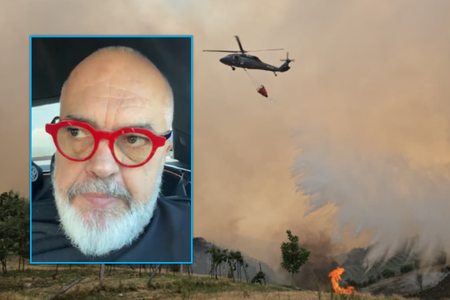
Since yesterday evening, the fire crossed the top of Golik and began to descend to its northern side, where the only large natural water park in southern Albania, Peshan-Zhej, is located, which could affect the entire Zagoria valley. Thanks to the intervention from the air a few hours ago, the danger seemed to have passed, but we must wait until tomorrow.
In Gramsh, a fire in the village of Skënderbegas continued for four days, burning down an entire village and wreaking havoc on hundreds of hectares of forests.
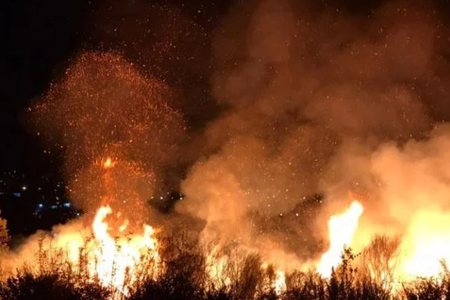
So, what these fires have in common is their longevity — a week — and their long journey in kilometers, turning into devastating fires.
The first, main reason why you can't stop our fires is that there are no firebreaks in the mountains and you have no way to stop them except with aerial intervention. Aerial intervention does not put out fires, but it reduces their intensity. What puts out fires are firebreaks and the ability of firefighters to then penetrate the territory and extinguish every hearth. Aerial interventions are necessary, even vital, but not final.
The second reason why the fires do not stop is that we, for at least 35 years, have never cleared the forests. We give permission to cut down forests, but not to clear them of dry wood. The danger that the Golik Mountain or the Soprot Mountain poses is the centuries-old forests that have hundreds of cubic meters of dry wood inside them. Our forestry companies, mostly run by political commissars, mainly wood thieves, have the mind to get some permission for firewood, but not to clear the forests of dry wood that is a danger to the forest and its health even without a fire.
A third reason is the depopulation of the countryside and the leaving of entire forest areas beyond human control. The evacuation of villages by residents has caused the forests to flourish without supervision, pruning or clearing, and this has greatly increased the risk of fire.
Finally, but most importantly, there is a lack of training for our firefighters. They are full of will to put out a fire, but without intelligent methods of controlling it. Many firefighting specialists use, in addition to tools, also intelligent methods of directing the fire in a controlled direction, using artificial ignition of fires and turning the path of the fire away from the destructive direction. Also, the so-called forest rangers almost do not exist, or there are some people who are paid for sevap without doing their duty and without reporting on the dangers of the forest not only from man, but also from degradation or the creation of conditions for fire danger.
The so-called national parks have almost no functional rangers, except for a few who are paid to take a look. This also loses the meaning of their status. I'm not talking about ordinary forests that no one can even see with their own eyes.
This degraded situation, step by step and year after year, has led us to a situation where fires last a week, travel hundreds of kilometers, and turn into catastrophic fires.
Albania's civil emergencies cannot cope with this aggression, no matter how capable they are. You can make fun of Piro Vëngu as much as you want, but don't wish yourself to be in his place these days, when you don't know where to take the helicopter first. As a popular saying in southern Albania says: "The hound is not fed on the day of the hunt." And forests are not saved when fire breaks out.





Lini një Përgjigje