


 Shkruar nga Ettore Sequi
The fragile ceasefire clearly shows that US military superiority has failed to bring about a political solution. Iran is hurt, but remains a key player in the game. In essence, this interruption does not pave the way for peace; it simply pushes forward a conflict where the main issues remain unresolved...
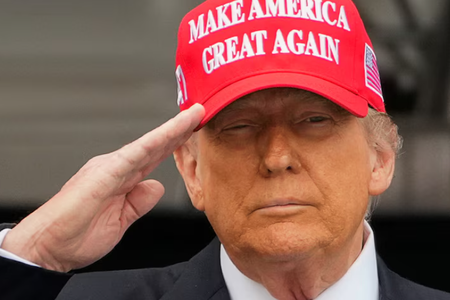
The ceasefire between Donald Trump and Iran does not mark the end of a war. More than that, it is a temporary pause in a conflict that was spiraling out of control for both sides.
And it came at the last moment, just when the tension had reached its peak and was in danger of spiraling out of control. However, it remains a fragile truce.
First, because it is not the result of a clear victory. The US demonstrated military strength, but failed to translate it into a concrete political result. On the other hand, Iran has suffered heavy blows, but has not lost its main levers: the stability of the system, the ability to exert pressure asymmetrically, and influence over the Strait of Hormuz.
Second, because the core issues remain untouched: the nuclear program, sanctions, the US military presence, and control of energy routes. On these issues, there is no real rapprochement between the parties, only a temporary pause.
Third, because the conflict has highlighted how fragile the entire Gulf region is. The idea of a “safe zone” now seems an illusion. Energy, infrastructure, water - everything can become a target and a tool of pressure.
Fourth, because the war has produced a paradox: Iran has been weakened, but at the same time it has become even more important. The regime there seems more exposed, but also more consolidated internally.
During this conflict, things have developed in two parallel directions. One vertical, towards escalation and widespread destruction, including civilian infrastructure. And the other horizontal, towards the expansion of the crisis in the region, in markets and to other actors. The US has been inclined towards escalation, while Iran has been inclined towards the expansion of the conflict. The ceasefire came precisely at the moment when these two tendencies risked merging and turning the regional crisis into a global problem. But this is precisely where the main issue that remains unresolved in the negotiations on Iranian demands, which essentially aim at a reshaping of the regional order, lies.
Tehran is demanding four things: recognition of its role (including influence over Hormuz), the lifting of sanctions, the right to a nuclear program, and a reduction in the US military presence.
On the other hand, Washington seeks almost the opposite: dismantling the nuclear program, limiting Iranian influence in the region, and greater control over strategic routes. This makes negotiation not just difficult, but essentially almost irreconcilable.
This is not a matter of an ordinary compromise, but of a difficult choice: is either side ready to give up what it considers essential? So far, there is no sign of this.
The most complicated issues are few and far between. The nuclear program is still there, with enriched uranium reserves that have not disappeared. The Strait of Hormuz remains a sticking point, lacking a clear agreement on the safety of navigation.
Sanctions are a highly politically sensitive issue for the US. And finally, the geographic extent of the ceasefire itself remains unclear. If the conflict continues in other areas, then it has simply changed form.
For this reason, the ceasefire can only last if both sides agree to live with uncertainty. As soon as concrete details are entered into, it will immediately be put to the test. But who won? In reality, the one who avoided the greatest loss won.
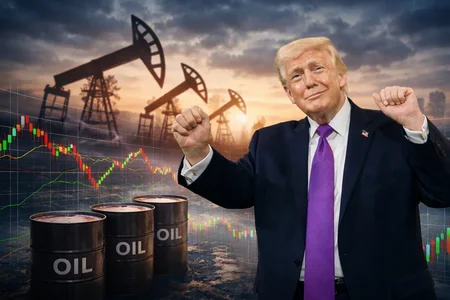
The US provided immediate relief in the markets and a partial opening of the Strait, but was forced to retreat somewhat in terms of politics and image. On the other hand, Iran managed to survive and remain an indispensable actor, even imposing the terms of the discussion.
It’s not a complete victory, but it’s a surprisingly strong position for a hard-hit country. Other actors have also gained in different ways. Pakistan has increased its role as a mediator, while China has benefited strategically, avoiding direct involvement while protecting its interests and strengthening its image as a stabilizing power.
What has been lost is the idea that military power is enough to establish order. Also lost is the belief that the Persian Gulf is a stable area. And above all, the belief in deterrence as a reliable mechanism has been struck.
The region does not emerge defeated, but weaker and changed. It has become clear that wealth does not guarantee security and that relying on others is no longer enough. In the end, this ceasefire is both a success and a postponement.
It has avoided the worst, but has not resolved anything essential. It is not a step towards peace, but simply preparation for the next phase, whether negotiating or military, of a conflict that still remains open./ Pamphlet from “La Stampa”




Lini një Përgjigje