


 Shkruar nga Skënder Asani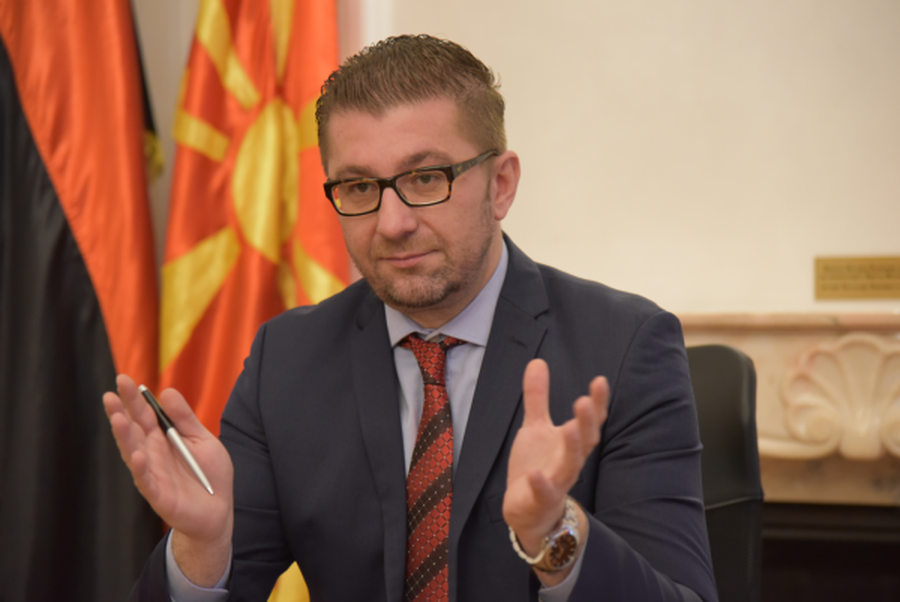
The role of Albanians in North Macedonia is not a historical coincidence, but the result of a long experience of resistance and contribution in all phases of the state. From the preservation of language and education, to the decisive participation in democratic and integration processes, Albanians have proven to be an irreplaceable factor. By trying to destroy their political structure, not only a party organization is attacked, but the bridge of trust on which a common future can be built is undermined.
Multiethnic societies, such as that of North Macedonia, have proven over the centuries that stability is not a gift, but a continuous effort to build bridges of trust between communities. Without wanting to get involved in the pre-election campaign, this text has a non-political purpose: to highlight a phenomenon that affects the coexistence and stability of the state. The position of Albanians, who constitute a decisive political and social factor, has often been conditioned by different waves of political rhetoric, sometimes integrative, sometimes exclusionary. Prime Minister Mickovski’s recent statement to destroy the Albanian political subject is not simply an expression of a political moment, but a symptom of a deeper crisis in the culture of coexistence. Essentially, this stance does not only challenge a political structure, but aims to delegitimize a historical subject of representation of the Albanian community, thus endangering the balance on which the state itself is built.
Societies that do not cultivate mutual respect actually undermine the foundations on which freedom is built. Respect is not a moral luxury, but an internal order that makes coexistence possible. When this dimension is ignored, a tragic contradiction is created: the friend who offers a hand is turned away, while the enemy who holds the whip is placed on a pedestal. This is an illusion of power that feeds on fear, a distorted metaphysics of politics, where man is taught to admire violence and despise kindness. In this flow, the lack of respect becomes a self-destructive logic, where the citizen loses the dimension of freedom and becomes only a figure of fear: accepted by tyranny, but denied by himself.
Mickovski's declaration to destroy the Albanian political entity should be seen not only as another provocation, but as an attempt to revive the ghosts of the past, when exclusion was a means of rule. This approach not only contradicts the spirit of the Ohrid Agreement, conceived as a new architecture of coexistence, but also endangers the internal stability of the state. History has shown that when the government tries to delegitimize the voice of an ethnic community, it does not strengthen unity, but rather weakens it, paving the way for divisions, crises and mistrust.
In this context, the nationalist language used by Mickovski, which aims to destroy a political entity that emerged from the spirit of the Ohrid Agreement, cannot go unjudged. It must be assessed not only by the international factor, but also by the entire society, because any silence towards this rhetoric would have serious consequences for the strategic orientation of the state. If this language is allowed to normalize, then North Macedonia not only risks losing the internal balances of coexistence, but also its credibility in the face of Euro-Atlantic partners, calling into question the very path of integration.
In this light, respect for the Albanian political entity is not only a democratic obligation, but a guarantee for the stability of North Macedonia. To destroy the representation of an ethnic community means to destroy the mechanisms of equilibrium, and where equilibrium is lacking there is neither stability nor peace, but only the revival of the shadows of exclusion.
In retrospect, Mickovski’s rhetoric is reminiscent of the language of nationalist leaders of the 1990s, who, with slogans of “protecting the state,” led their countries to civil wars and disintegration. In Bosnia, the denial of the rights of Bosniaks and Croats led to the bloodiest conflict in Europe since World War II. In Croatia and Serbia, aggressive nationalism turned communities into enemies and divided them for decades. History has proven that those who have sought to govern through fear and the language of destruction have ultimately fallen victim to their own policies. In this light, Prime Minister Mickovski’s statement is not only wrong, but also dangerous: it revives an outdated logic that the world and the region itself have condemned and left behind.
The role of Albanians in North Macedonia is not a historical coincidence, but the result of a long experience of resistance and contribution in all phases of the state. From the preservation of language and education, to the decisive participation in democratic and integration processes, Albanians have proven to be an irreplaceable factor. By trying to destroy their political structure, not only a party organization is attacked, but the bridge of trust on which a common future can be built is undermined. Any attempt to marginalize this dimension is a risk that sets the state back, exposing it to new political and social crises.
Therefore, respect for the Albanian political entity is not simply a formal obligation of democracy, but a fundamental condition for peace and stability. A North Macedonia that dares to ignore or suppress the voice of Albanians does not only harm this community, but also destroys its own foundations. History teaches us that where equality and respect are lacking, crises arise that no one can control. Today, more than ever, it is time to understand: without Albanians there is no stability, without partnership there is no future, and without respect there is no integration. This is the message that everyone inside and outside the country must hear if they want North Macedonia to move forward as a state of equality and lasting peace.




Lini një Përgjigje