


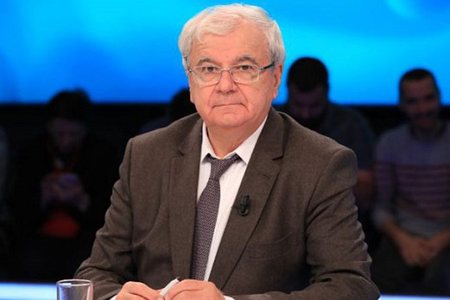
 Shkruar nga Eduard Halimi
In Albania, the termination of the mandate of mayors has become a manifestation not only of legal, but also political and institutional debates; a phenomenon that challenges the fundamental principles of constitutionality, the separation of powers and the stability of politicians in local institutions...
Specifically, the termination of the mayor's mandate is an issue that affects not only local institutions and public governance, but also legitimacy, citizen representation and the rule of law. Former Minister of Justice, Eduard Halimi, while referring to the "Veliaj" case, identifies shortcomings in the law "On Local Self-Government" and makes comparisons with European cases, where the law was carefully drafted to prevent abuses.
Through his analysis for the newspaper “Panorama”, Eduard Halimi expresses concern that the current law does not sufficiently guarantee constitutional rights and principles, in particular those of proportionality, equality before the law and legal certainty. According to Halimi, a revision of it (e.g., to provide for temporary replacement, or to distinguish between justified and unjustified absence) would bring it closer to European standards and minimize the risk of infringement of political rights.
In Albania, the Prime Minister has announced the dismissal of the Mayor of Tirana (PS) detained and accused by SPAK for 13 criminal offenses, (but still without a final criminal decision) using Article 62 of Law 139/2015. I am saying from the beginning that my purpose when I sat down to write this article is fundamentally related to my profession as a lawyer and has no approach to defend or attack any of the parties in this conflict. Due to my 'background', as a voter against Mr. Veliaj and as someone who admires and votes for my political family, I would like the elections to be held in the first hour, to have as many candidates to choose from the opposition, to start the campaign and win the elections in Tirana.
However, this article does not intend to take sides and will focus on a fundamentally professional legal analysis because it is happening for the first time in Albania and could become a legal precedent. Although the debate is within the political force that is in power for the fourth term and the concept of “lawfare” (using the law against a political opponent) is not relevant today, this behavior could be repeated and the event could come to our court, that of the opposition. As a jurist and advocate for more than 30 years, the rule of presumption of innocence is sacred and I am also personally against any kind of public lynching against anyone that in the last 5 years has turned into a degrading process in its worst form.
But, let's see a brief legal analysis below:
1. Albanian framework, the difference between MP and Mayor
In Albania, Law No. 139/2015 “On Local Self-Government” was adopted in parliament on 17 December 2015, with 86 votes from the majority and no votes from the opposition. Article 62 provides that “The Mayor shall be proposed for dismissal by the relevant municipal council for failure to appear at work for an uninterrupted period of 3 months” without distinguishing between “reasonable” or “unreasonable” absence. This is a strict and automatic norm, which allows the municipal council to propose dismissal and the Council of Ministers to decide on it. In the report accompanying the draft law, I did not find any explanation from the government for this article, except for the fact that it had nuances of Italian law and that it did not aim at approximation with the “acquis communautaire” (EU).
On the other hand, the Constitution of Albania, Article 71/2 states that the mandate of a deputy ends prematurely even when the deputy is absent from the Assembly without reason for more than 6 consecutive months. So, here a clear distinction is made: the absence must be without reason. If it is with reason, the mandate is not lost, (Berisha 2024 case).
Compared to the Albanian Constitution for MPs, the law sets a “harsher” standard for the mayor: it is enough that the absence is over 3 months uninterrupted, regardless of the reason, and the mandate ends according to the relevant procedure above, Article 62. This difference may have been intended by the socialists with the nature of the functions: The MP is part of a collegial body with 140 members, where representation can be compensated by colleagues, therefore the legislator has relaxed the rule for cases with reason. The mayor is a monocratic and irreplaceable body (except for the deputy mayor in temporary duties), therefore the legislator has probably chosen the stricter standard, without distinguishing between absences with reason and without reason (the opposition was against the law in its entirety in 2015).
2. Comparison with some EU countries
Në një kërkim të shkurtër dhe jo të thelluar lidhur me modelet dhe rastet në vendet e BE-së rreth nesh rezulton se psh., Italia – Nuk ka një prag mujor për mungesën. Ligji parashikon ndërprerje vetëm për impedimento permanente, dorëheqje, vdekje apo shkarkim për shkelje të rënda, ndërkohë, zëvendësimi bëhet nga nënkryetari. Greqia ndërkohë sipas Korniza Kallikratis (2010) dhe Kleisthénis lejon pezullim/ shkarkim vetëm në raste penale apo shkelje të tipizuara. Nuk ekziston një klauzolë “mungesë X muaj”. Kroacia në rast mungese ose pamundësie të kryetarit, detyrat i ushtron nënkryetari; ligji nuk parashikon humbje automatike të mandatit për mungesë disamujore. Në Gjermani, në shumicën e Landeve, ndërprerja bëhet përmes mekanizmit të votim për shkarkim ose për shkaqe të tipizuara. Nuk ka humbje automatike për mungesë në punë. Kështu, Shqipëria (dhe pjesërisht Rumania, ku ekziston një dispozitë për “pamundësi 3 muaj”) janë përjashtime. Shqipëria ka një regjim më të rreptë se shumica e vendeve të BE-së për ndërprerjen e mandatit të kryetarëve të bashkive, duke e lidhur me një afat fiks 3 muaj mungesë. Modelet e tjera evropiane janë më fleksibël, duke lejuar zëvendësim të përkohshëm dhe ndërhyrje vetëm në raste të tipizuara.
3.Jurisprudenca e ECHR (Strasburgut) mbi kryetarët e Bashkive dhe Komisioni i Venecias
Unë nuk e di fare dhe nuk kam fare interes sesi do të sillet z.Veliaj rreth kësaj çështjeje apo avokatët e tij. Nëse do të ndjekë instinktin e frikës për të mos mërzitur edhe me shumë “të madhin”, apo do përballet juridikisht. Por, siç thashë, në interes të lexuesit mund të jetë precedenti nëse ndodh javën e ardhshme dhe çfarë do ndodhë nëse në të njëjtën mënyrë do tentojë për një kryetar bashkie të opozitës. Për këtë bëra një kërkim të shkurtër në HUDOC (data bazën e vendime të Gjykatës së Strasburgut) dhe lexova disa opinione të Komisionit të Venecias lidhur me qeverisjen vendore, përfshi atë të 2025. Në HUDOC (nuk po i citoj rastet konkrete) gjenden rastet e Turqisë (2021), raste e Gjeorgjisë (2020-2023), rastet e Rumanisë (2005) dhe disa raste jo shumë relevante, ku përfshihen përveç kryetarëve të bashkive edhe deputetë lidhur me atë që quhet “mandate loss for absence” (humbje e mandatit për shkak të mungesës).
Standardi i nxjerrë nga këto vendime është se ECHR (Strasburgu) nuk e aplikon Protokollin 1, neni 3 (zgjedhje të lira) për zgjedhjet lokale, pra kryetarët e bashkive nuk mbrohen drejtpërdrejt nga kjo dispozitë. Por, Gjykata vlerëson proporcionalitetin e masave që pengojnë ushtrimin e mandatit (paraburgim, shkarkim), duke përdorur nenin 5, nenin 10 dhe ndonjëherë nenin 18 të KEDNJ.
4.Rasti Imamoglu në Turqi
In Turkey, there is no provision similar to Article 62 of Law 139/2015 that we have for absences over 3 months, but the government (UK) according to the Constitution has the right to impose suspension in cases of investigations. This approach has been criticized many times by the Venice Commission or Human Rights Watch. Typical is the case of Imamoglu (not at all relevant to the case in Tirana). Arrested in March 2025 on charges of corruption and terrorism, the Istanbul Court ordered him to be detained. He then received a non-final sentence of 1 year and 8 months. Istanbul University canceled his diploma, making him technically ineligible for presidential candidacy. In international reactions: The Council of Europe and PACE called the arrest an “attack on democracy” and demanded his release. In the meantime, he was replaced: the Istanbul City Council elected Nuri Aslan (from CHP) as acting mayor from the same opposition party. This case is a typical example of what our legal literature calls "lafafare" - the use of legal means to neutralize a political opponent, but which, as I reiterated, is not relevant to Mr. Veliaj, but may be relevant to other cases during the fourth term, if used against the opposition.
5. Parallels and implications for Albania and some conclusions
Albania’s strict 3-month rule makes it easier to terminate a mayor’s term of office when he is in pre-trial detention, even if the criminal proceedings have not been concluded. In EU countries, such situations are resolved by temporary replacement and respect for the presumption of innocence. ECHR jurisprudence suggests that any intervention must be proportionate, justified and with less restrictive measures considered. Otherwise, it risks being seen as a violation of Article 5 and Article 18 of the Convention. Albania has a stricter regime than most EU countries for terminating the term of office of mayors, linking it to a fixed 3-month absence. If this rule is mechanically applied to cases where mayors are in pre-trial detention, there is a risk of a democratic paradox: an elected mandate is lost before there is a final criminal decision. The ECHR jurisprudence does not directly protect the local mandate through the article on free elections, but covers it through the right to liberty, fair trial and protection from state arbitrariness. A review of Albanian law (e.g., to provide for temporary replacement, or to distinguish between justified and unjustified absence) would bring it closer to European standards and minimize the risk of violating political rights, however this suggestion is entirely mine as a lawyer and does not represent any opinion or opinion of the opposition, for which my friends there have all the time, opportunity and capacity to resolve. /Panorama/
* Author, lawyer and former Minister of Justice


Lini një Përgjigje