


 Shkruar nga Pamfleti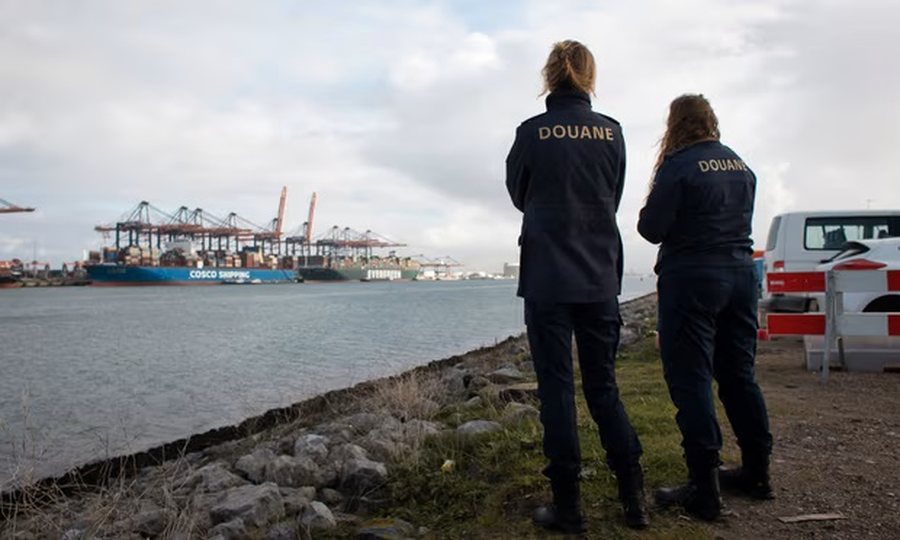
Dutch ports have become one of the main warehouses for drugs, especially cocaine coming from Latin America. The battles for the supremacy of the gangs are fierce and the situation is seen more serious in Amsterdam. It has become the main port of entry for cocaine and there is a great war between the gangs for its dominance. Albanian gangs are also part of this war, which use Dutch ports to bring cocaine from Ecuador and other countries. The British network "The Guardian" has published an article, in which the mayor of Amsterdam, Femke Halsema, gives the alarm about what is happening there and asks for measures to be taken.
The citizens of the Netherlands viewed the international "war on drugs" with some disdain. The state is lenient on soft drugs like cannabis, allowing personal use under certain conditions. Hard drugs are technically illegal, but possession of small amounts (like half a gram of hard drugs or a single ecstasy pill) is often not prosecuted. In the past, there were drug crimes and even murders, but the drug trade did not affect the economy and the daily life of citizens. However, this is no longer the case. Driven by globalization and the international criminalization of drugs, the illegal drug trade has become more profitable and more violent, and the effects are catastrophic.
In the last decade, Rotterdam, the largest port in Europe, has become the "heart" of the cocaine trade. Dutch authorities have stepped up efforts to combat trafficking, but have not turned the tide. The latest data shows a record increase in the amount of cocaine seized, from just over 22,000 kilograms in the first half of 2022 to 29,702 kilograms in the first half of 2023, writes "The Guardian".
With the increase in the drug trade, the concern has increased, because 14-year-old children have been "drawn" into this illegal trade. As the amounts seized increased, so did the violence. In the past five years, three key figures in a major criminal case against drug gangs have been killed in broad daylight in Amsterdam: the brother of a key witness, his lawyer and a prominent journalist.
Amsterdam has become a prime destination for drug lords to launder their money or send it to tax havens. Their money goes into the legal economy, especially real estate. If this trend continues, the Dutch economy will be flooded with crime money and violence will reach its peak. This leads to social disruption, generations of young people will be lured into crime and the rule of law will be destroyed. Without fundamental changes, the Netherlands risks becoming a narco-state. The estimated value of the annual production of ecstasy in the Netherlands is 18.9 billion euros.
The war on drugs
In order for the Netherlands to solve its drug problems, it must change its current approach. Alternatives to the war on drugs must be urgently discussed in local governments, national parliaments and especially in international assemblies. Drug prohibition is enshrined in international treaties that limit the scope for national drug policies, meaning that new international alliances will need to be created that prioritize health and safety over punitive measures.
There are many historical examples that can help find alternatives in the war on drugs. Since the early 1980s, the introduction of harm reduction facilities in the Netherlands, such as methadone supply and drug use areas for heroin addicts, has improved their living conditions, health and quality of life, while crime is sitting The capital of Switzerland, Bern, this summer has announced legal proceedings for the legal sale of cocaine, in order to increase control and preventive measures. This followed the launch of a trial on the legal sale of cannabis in the city. Another great example is Uruguay, where the government has legalized cannabis for recreational, medical and industrial use and created a regulated market for cannabis, with strict rules for production, distribution and sale.
Market regulation, state monopolies or providing services for medical purposes are just some of the possible alternatives. But none of them offer "instant" solutions. Criminals have shown that they will use violence to protect their profits, and the health risks of some drugs are still great. This means that the state must also take into account the reaction. However, none of this can be an excuse for not doing something about it. / Adapted from "The Guardian"






Lini një Përgjigje