


 Shkruar nga Gjergj Zefi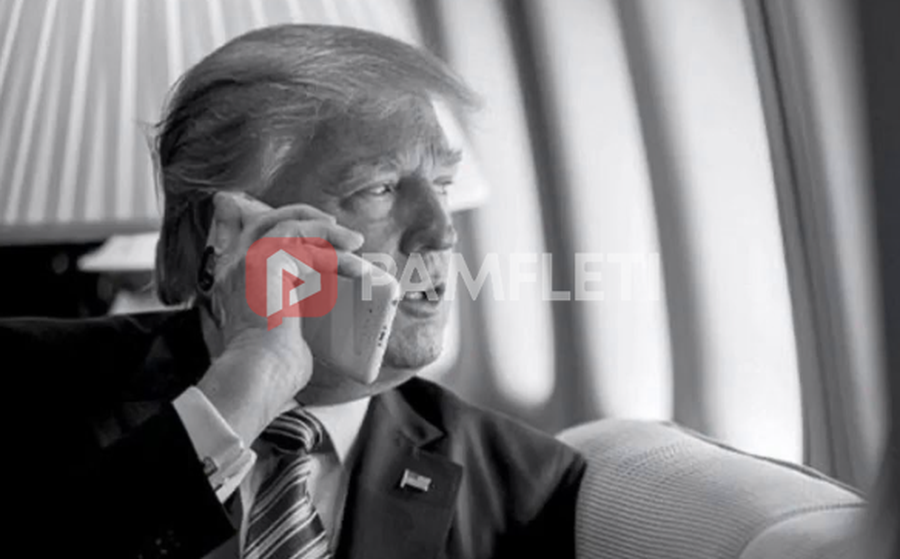
Behind the harsh rhetoric and tense nerves lies a strategy that aims to reshape NATO according to American interests, forcing Europe to face the bill for its own security...
There are NATO summits that go down in history for their decisions. There are also summits that are remembered for the humor of the leaders. This one in Ankara risks being remembered for the latter.
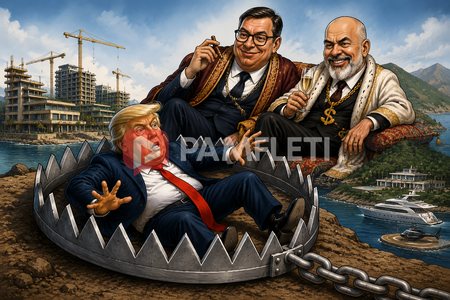
Donald Trump arrives at the Alliance table not as a president seeking consensus, but as a creditor demanding that debtors pay the bill. For him, NATO is no longer the romantic symbol of Western unity, but a financial balance sheet where the United States pays too much and Europe spends too little.
If diplomats once spoke of "shared values," today the White House talks about percentages of GDP, billions of dollars, and cost-sharing. It's a shift in philosophy that didn't start yesterday, but under the Trump administration has become a doctrine.
The American president does not seem concerned that his statements create anxiety in Berlin, Paris or Brussels. On the contrary, anxiety seems to have become a bargaining tool. The greater the uncertainty about American commitment, the greater the pressure on allies to open the treasury.
The irony is that Europe heard this warning for years, but preferred to dismiss it as electoral rhetoric. Today, when rhetoric has become state policy, many European capitals are rushing to pledge billions more for defense. Not because they suddenly changed their minds, but because they realized that the American umbrella is no longer an unconditional guarantee.
In this sense, Trump's nervousness is not simply a matter of temperament. It is a method of pressure. The American president has understood that allies react more quickly to fear than to diplomatic speeches. And so far, this strategy has produced results. NATO countries are increasing military budgets at rates that a few years ago would have seemed impossible.
But there is also the other side of the coin.
A military alliance is not sustained by money alone. It is sustained by trust. And trust is not built by constant threats that “America might leave.” Any statement that suggests that the American presence in Europe might be reduced for political reasons creates a chain reaction: allies begin to think about alternatives, while adversaries begin to test the limits of Western patience.
For Russia, any public debate about divisions within NATO is a propaganda victory. For China, it is a signal that American strategic attention is shifting. For countries on the Alliance's eastern flank, it is a source of uncertainty at a time when security guarantees carry more weight than ever.
The paradox is that Trump does not necessarily want to weaken NATO. On the contrary, he wants a financially stronger NATO, but with a less burdensome America. The problem is that the way he communicates this objective often produces the opposite effect: more doubt than certainty.
In international politics, perception is often as important as reality. A sentence uttered at a press conference can have more impact than a deployed battalion. When the president of the world's most powerful country appears irritated, impatient, and ready to renegotiate any deal, nervousness is no longer a personal trait. It becomes a geopolitical factor.
Europe is faced with a choice that has plagued it for decades: to continue to rely on America as the permanent guarantor of security, or to build a real strategic capacity that does not depend on the mood of the American president, whoever he may be.
In the end, the question is not whether Donald Trump is angry. That is almost a constant of his political style.
The real question is whether Europe has finally understood that the post-Cold War security architecture cannot rely indefinitely on Washington's political will.
Because a president's tense nerves pass. The strategic consequences of the decisions he makes, do not./ Pamphlet


Lini një Përgjigje