


 Shkruar nga Pamfleti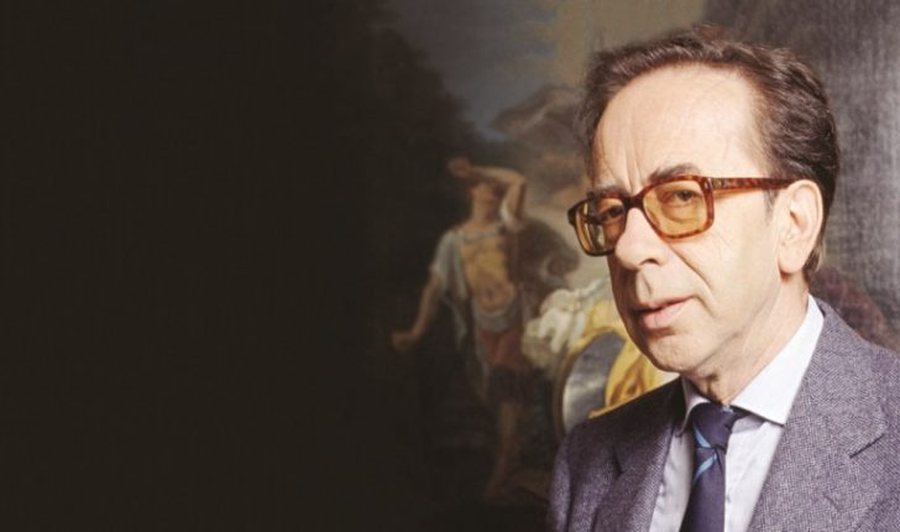
Writer Ismail Kadare returns to Italian bookstores with a novel written about 40 years ago. "Dream Palace" retains all the power and dystopian freshness of the present. In an interview for "La Lettura" of Corriere della Sera, the writer talks about the time when the novel was written, the relationship with Enver Hoxha, the escape to France and even about technology and the fear that the latter is controlling our minds.
Dear Mr. Kadare, first of all, thank you very much for accepting this interview. This interview is taking place on the occasion of the publication in Italy of your work "Palace of Dreams", published in Albania in 1981. What is your current point of view towards a book you wrote more than 40 years ago?
It is a book written for that time. Albania was a totalitarian country and as a writer I felt that the extent of communism and its power over the individual was becoming absolute. The whole atmosphere that is described in this work does not differ much from the oppressive totalitarianism of Enver Hoxha's Albania in that period. In my head, all that gloom that I was able to express was true, and today it makes me happy that I was able to express it. Literature gives you the possibility of life and in such conditions. This was my destiny, life with literature.
At the time it was written it was absolutely current. But even now it is current, but with the passage of 40 years, nothing has been lost from its qualities. I happily reproduce those thoughts once again for today's audience. The critical, denying spirit that has existed since that time, has been very harsh, makes it current. I am glad that I had such a radical thought about time. This severity has not diminished over time. In those years, there were pressures, bans, and criticism about the book. For the first time after the publication of this novel I thought that I would be arrested, as the anti-system spirit in it was obvious.
And what is your view of the man and writer Ismail Kadare of 1981? Think you've changed a lot? And if so, how?
I don't think I've changed. In literature, things change very slowly, in the writer's mind as well, and this is something positive. In 1981 my views on totalitarianism sought to configure a European Albania as its roots were. I have defended this view with my works, naturally, believing in an early European affiliation of this people who lived through one of the most savage communist systems. All my work tries to orient the reader towards an inner awakening, but also as beautiful as literature can give, and why in those years it seemed impossible.
For a person like me, who today reads the work "Palace of Dreams" for the first time, this novel is surprising because it is very current. Did you think you were writing above all an allegory of the Albanian communist regime? Or were you aware, already at that time, of the universal and timeless scope of the novel?
The writer intuitively feels about the things he writes and lives, that being of time they are simultaneously eternal. Fortunately, this theme that develops in this novel is timeless. The work is a satire of totalitarianism, which crosses local and national borders. The text of this novel was written in one of the novels I wrote in parallel at that time. Maybe in "Qorrfermani" I have the idea of a character that leads to a dream. Later, this thought would hit me when I heard about some thefts in Tirana. Strange, grotesque thefts, in the foreground, but which awakened in me the design of the infernal. I had long been tempted to design an inferno. I have shown this in the book "Time for confession", a conversation with an Albanian researcher where I say that "I knew that it was difficult, if not impossible, to write such a work. Only after writing the first two chapters of the work, I felt that I was realizing what had seemed impossible to me: hell. It was a kind of realm of death where, if not ourselves, it was our sleep and dreams, a part of our life that lay beyond while we were here. The novel reflects the tension between national and imperial ethnicity for an individual and dynasty whose fate is simultaneously tied to national and international politics. I was aware of the fatality that this book could bring me, but so convinced of the universal power of this theme.
Is the power of dreams in the novel similar to the power of information in today's world?
Powerful images and almost surreal logic made the character of this novel, Mark Alem, often powerless in the face of the power of dreams. The human world has the ability to describe and repeat itself in many forms, to find ways to survive obstacles. The allegory of the "Palace of Dreams" in the new cultural and social contexts, or a world which is already facing new and tougher conflicts such as the two hotbeds of new wars, which are bringing a threat to stability, brings attention back to the need of human wisdom. The power of information in today's times is bringing back another totalitarianism, that of culture. Preserving culture in these mighty waters of information is the duty of men of letters.
What do you think about the efforts of technology, which is working (working) everywhere in the modern world, from China to Silicon Valley, and efforts are being made to digitize everything, and therefore maybe one day it will be possible to control human thought?
This is an impossible endeavor.
Çfarë roli luajti vepra “Pallati i Ëndrrave” në lidhje me situatën tuaj në Shqipëri edhe në lidhje me vendimin që ju morët për të jetuar në Paris?
Ky roman më solli shumë telashe dhe pse isha mësuar me telashe. Zakonisht botimi i veprave të mia shoqërohej gjithnjë me kritika në shtyp, mbledhje në Lidhjen e Shkrimtarëve. Kudo në Tiranë flitej se “është ndaluar libri i Kadaresë dhe pritet dënimi”. Botimi i veprave të mia në Francë ka luajtur një rol të jashtëzakonshëm në lidhje me situatën në të cilën unë si shkrimtar ndodhesha në Shqipëri. Franca, lexuesi perëndimor ka luajtur një rol në shpëtimin e situatës sime. Më vonë në Kafe Rostand në Paris kam takuar një gazetare franceze e cila më ka treguar se ka shkuar në ambasadën tonë dhe ka pyetur mbi gjendjen time. Erdhën shumë informacione nga Perëndimi, që shtypi i huaj interesohet për Kadarenë dhe kjo e trembi Enver Hoxhën. Në këtë rast veproi mekanizmi i mbrojtjes perëndimore. Ka qenë periudha më e zezë në jetën time.
Largimi im drejt Francës duke ikur përgjithmonë nga vendi im erdhi në rrethana kur kuptova se kjo ishte mënyra e vetme për të ndryshuar kursin e regjimit në Shqipëri. Udhëheqësi komunist i asaj kohe duket se nuk do ta bënte një veprim të tillë. Ika kur mendova se ky veprim do të luante një rol për rënien e komunizmit në vend.
Keni lindur në të njëjtin qytet, Gjirokastër, me diktatorin Enver Hoxha. Cila ka qenë marrëdhënia juaj me të?
Nuk kam pasur asnjë marrëdhënie personale me të. Ne kemi qenë komshinj, në lagjen më të vjetër e më të madhe të Gjirokastrës, te rrugica që unë i kam ringjallur emrin e çuditshëm “Sokaku i të marrëve”. Në Gjirokastër Enver Hoxha nuk njihej shumë gjatë luftës, pasi shtëpitë gjirokastrite kishin shumë identitet të fortë dhe nuk lejonin spikatjen e identiteteve të zbehta. Mendimi im i gjithëkohshëm për Enver Hoxhën ka qenë jo pozitiv. Nuk gjendet në veprën time askund ndonjë përshkrim ku të theksohet admirimi për të. Kjo shpaloset qartë, sidomos, te “Dimri i vetmisë së madhe”, ku ai përshkruhet gjerësisht në biseda me të tjerët dhe s’ka ndonjë ndryshim midis tij dhe galerisë së personazheve krejtësisht negative të atij që quhej blloku komunist.
Në moshën 11-vjeçare ju kopjuat me dorë të gjithë Makbethin. Pse Shekspiri ishte kaq i rëndësishëm për ju?
Shakespeare's tragedy occupied my mind since I was still a child. Macbeth showed me the world of literature. I gave in after this fascination as you give in to a religion. With the idea that if you copied the book it became yours, so you became an author, I copied everything by hand with a pencil and paper. This was a strange concept that I don't know where it came from and I can't explain it, but such an idea stuck with me for a very long time, thinking that as long as I was copying a book, I was also a participant in the creation. his. So, after I copied part of Macbeth, I lived with it alone. Shakespeare has always been important in my work and continues to be like a master who guides you towards the gates of great literature.
Unlike other great writers in exile, such as Conrad, Nabokov or Kundera, you have never abandoned your original language, Albanian. Why?
I thought I could give more to my art with this language. The Albanian language has given me all the space to express my imagination through it. I have never felt hindered in my art by this language, but I am constantly fascinated by its beauty.



Lini një Përgjigje