


 Shkruar nga Federico Rampini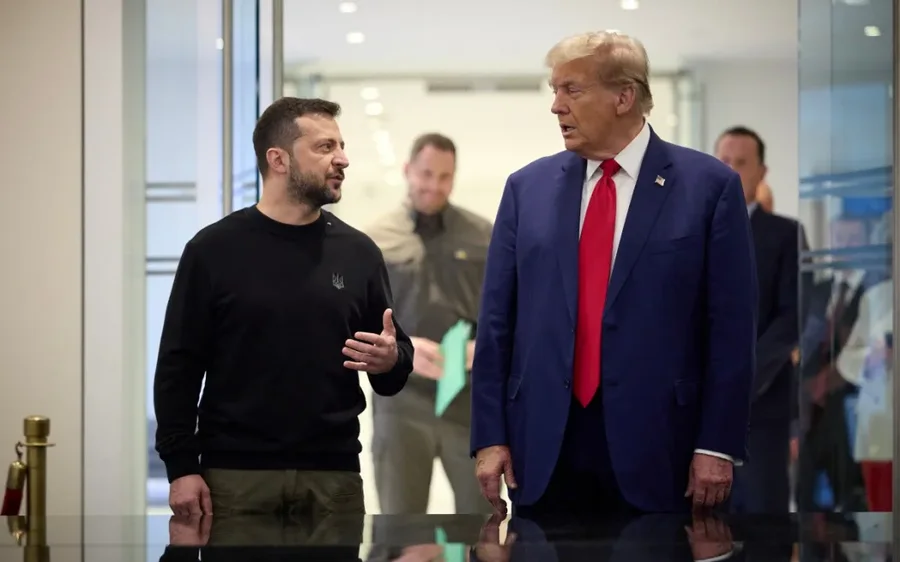
How should we read the Trump-Zelensky debate?
A New Era is coming. The maps of geopolitics are rapidly transforming before our eyes. Donald Trump betrays Ukraine, it is right to be outraged, it is wrong to be surprised: he had announced and promised it for a long time. He is seeking a grand pact with Putin to end a war, to create order instead of fighting, to reduce America's spending and commitments abroad: this too he has promised for some time, gaining consensus among his electoral base. You may be horrified or even disgusted, but not surprised.
Of course, the stormy Trump-Vance-Zelensky summit at the White House on Friday has accelerated events. But even that was less worrisome than one might think: Trump and Zelensky have been publicly arguing since at least 2019. Of course, on Friday, the situation spiraled out of control for both of them.
It's not true that "everything was planned in advance." The White House had planned a final press conference to announce the minerals deal, which was skipped along with the official lunch. Trump and Zelensky are two showmen. Sometimes the irresistible dynamics of the stage snatch an extra joke from you. Maybe to win the applause of your fans.
To rehabilitate himself, it is also legitimate for those who support him to list Zelensky's mistakes. He arrived at the White House after a public consultation with the US Democratic opposition, not a very smart gesture to prepare for the meeting. Democrats seeking revenge after the election have urged him to hold his own, to crush Trump. And so he did. Perhaps if, instead of going to the US opposition politicians, he had prepared the meeting in the Oval Office by talking to Duda, Macron and Starmer (the three European leaders who had gone to Trump shortly before him) he would have approached the summit with a different attitude.
I assume you’ve all seen the last 10 terrible minutes in which Vance and Trump unmercifully attack Zelensky. But I recommend you watch the entire 45 minutes. Not to find extenuating circumstances for Trump-Vance, but to put the final terrible attack in its context. From the very beginning, Zelensky was on the offensive, often contradicting Trump in front of reporters. Above all, Zelensky tried to extract the following admissions from Trump: that Putin is a criminal, that he is solely to blame for this war. This is the plain truth. But if Trump wants to bring Putin to the negotiating table, he can’t start by calling him a criminal: that’s what Biden did, and for three years there was never a negotiation.
Zelensky’s hostility, clearly evident in the first 35 minutes of that meeting, has a thousand holy reasons. He is convinced that Trump is ready to accept a wicked pact at the expense of the Ukrainian people. Perhaps it is true. But what is the alternative? Even the Biden Administration had never believed in a military victory for Ukraine, which was content with a “no-lose” at the price of continuing the fighting indefinitely. Since Trump has promised his voters to end this war, what alternatives are there to his “mediation” with Putin?
Zelensky with his performance in the Oval Office was probably looking for other results, which ignore America and take his betrayal as normal. First: popularity at home. Sooner or later we will have to vote in Kiev. Zelensky has returned to being a hero for most of his compatriots: after Putin, he also opposed Trump. Second: to send a message to Europe, to ensure that the abandonment of the Americans is compensated by a mobilization of the Europeans. It is doubtful that this is enough, especially in the military field.
Macron and Starmer's visits to the White House last week had this common leitmotif: a plea to Trump not to lose American military support if France, England and others send their troops to guarantee a ceasefire and the future security of Europe.
The situation is still fluid and uncertain. History is being written these days. It is possible that Zelensky will turn out to be a giant, even greater than the proof of courage he gave in February 2022 (when Biden and Boris Johnson asked him to leave): that he will become the "demiurge" of a politically united Europe capable of a renaissance extending to the military sphere. I do not think there is a very high probability, but history is full of surprises.
Për ta vendosur Trumpizmin në një kuadër historik, dhe për të kuptuar Botën e Re tek e cila mund të na transportonte, një lexim i vlefshëm është një analizë e Ross Douthat, një kolumnist i Neë York Times, i cili është anti-Trumpian, por vjen nga një botë e moderuar-konservatore dhe arrin të kuptojë logjikën e Trumpit si pak të tjerë.
Ja ku është:
"Në vitin 2018, ish-Sekretari i Shtetit Henry Kissinger tha për Trump: "Ai mund të jetë një nga ato figura të historisë që shfaqen herë pas here për të shënuar fundin e një epoke dhe për ta detyruar atë të braktisë iluzionet dhe trillimet e saj të vjetra".
Ky koment gjenerik rreth mandatit të parë mund të jetë shumë mirë axhenda e politikës së jashtme për mandatin e dytë të Trumpit. Nga strategjia te fjalimet në takimin shpërthyes të Zyrës Ovale të së premtes me presidentin e Ukrainës, gjithçka që Trump po bën dhe thotë dhe gjithçka që zëvendës/presidenti i tij po bën e thotë, po demaskon pa mëshirë trillimet/iluzionet rreth Shteteve të Bashkuara, aleancave të saj dhe gjendjes globale.
Trillimi/iluzioni i parë. Shtetet e Bashkuara janë ende në gjendje të luajnë rolin hegjemonik që kishin njëzet vjet më parë, duke mbështetur plotësisht aleatët demokratë në çdo rajon, të gatshëm për të luftuar luftërat në fronte të shumta dhe duke refuzuar çdo kompromis me autoritarizmin.
Realiteti. Amerika është e mbingarkuar. Një botë më shumëpolare kërkon të bëjë marrëveshje me regjime jo komode; Ne duhet të rialibratohemi dhe të tërhiqemi në mënyra që do të kërkojnë shumë më tepër nga aleatët tanë.
Trillimi i dytë/iluzioni. Aleatët tanë evropianë janë kombe të forta dhe partnerë të barabartë në mbrojtjen e sigurisë globale.
Realiteti. Evropa është keqqeverisur nga krijimi i saj, me figura dikur të përshëndetura si Angela Merkel në krye. Pozita e saj ekonomike është e pasigurt, gjendja e saj demografike është katastrofike dhe aftësitë e saj ushtarake janë atrophiuar. Pjesa më e madhe e retorikës rreth një ringjalljeje të pushtetit evropian është vetëm tym dhe fantazi.
Trillimi/iluzioni i tretë. Nëse marrin mjaftueshëm ndihmë ushtarake dhe mbështetje morale, ukrainasit mund të shtyjnë rusët, të rivendosin kufijtë e tyre të paraluftës dhe përfundimisht të bashkohen me NATO-n.
Realiteti. Lufta është në një bllokim, nuk ka rrugë drejt fitores ukrainase pa ndërhyrjen e drejtpërdrejtë të SHBA, një formë e zgjidhjes së negociuar është e pashmangshme dhe anëtarësimi i Ukrainës në NATO nuk ka qenë kurrë një opsion realist.
Shumë nga këto realitete janë kuptuar prej kohësh nga udhëheqësit amerikanë të të dyja partive. Kjo është arsyeja pse Barack Obama kërkoi një "pivot në Azi" dhe veproi me kujdes kur Vladimir Putin mori Krimenë. Është arsyeja pse Joe Biden tërhoqi trupat nga Afganistani. Dhe është arsyeja pse ekipi i Biden mbështeti Ukrainën, por me limite, dhe u përplas me Zelenskyn në prapaskenë tashmë në vitin e parë të luftës.
It is useful to talk more openly about uncomfortable realities. People need to know that the world is no longer what it was in 2000 or 2012. He needs to understand the issues raised by JD Vance in his controversial speech in Munich, in which he criticized Europe's failed approach to immigration, its violations of free speech, and its deficit of democratic legitimacy.
They need to understand that the ceasefire that Trump seems to want to negotiate with Russia may not be so different from the outcome that would have unfolded under a Democratic president.
And they need to understand why, exactly, Vance got angry at Zelensky in the Oval Office on Friday, after the Ukrainian president began lecturing them about how impossible it is to negotiate with Putin — because the world is what it is, and for now negotiating with unreliable rivals is a necessity that simply cannot be ignored. / Adapted from “Pamphlet” by “Corriere Della Sera”


Lini një Përgjigje