


 Shkruar nga Pamfleti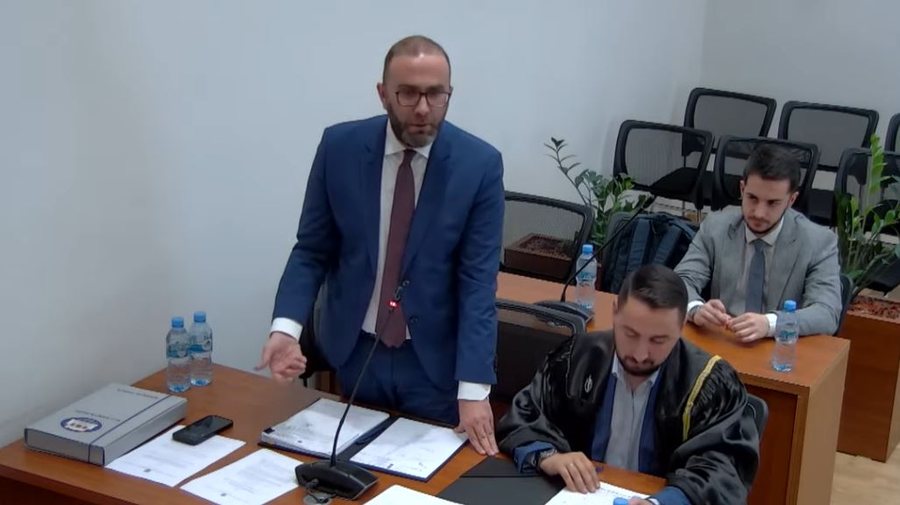
The Constitutional Court has considered the DP's request regarding the Assembly's rejection of two opposition requests for the establishment of Investigative Committees, one for the McGonigal case and the other for the May 11, 2025 elections...
The Constitutional Court is expected to rule on the Democratic Party's appeal against the Albanian Parliament's refusal to establish two investigative committees that were rejected. These are the investigative committees related to the "McGonigal" case and the general elections held on May 11.
DP MPs are asking the Constitutional Court to oblige the Assembly to establish an investigative commission to verify the legality of the actions of Albanian officials in relation to former FBI special agent Charles McGonigal.
In parallel, the deputies have also requested the establishment of a second investigative commission, with the aim of controlling the legality of the activities of central and local government bodies, as well as verifying the use of state administration resources for electoral purposes in the elections of May 11, 2025.
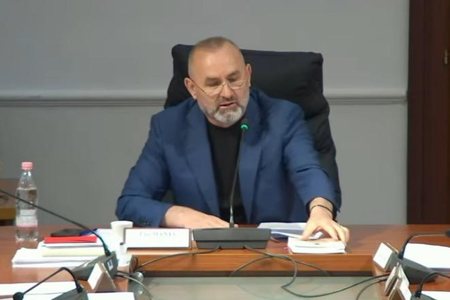
The head of the DP Parliamentary Group, Gazment Bardhi, stated that the Assembly is not allowing the opposition to fully exercise its rights, especially in relation to requests for interpellation and obtaining information from the Prime Minister.
He said that no request for interpellation has been accepted and that the rejections have been accompanied by different reasons at each stage. According to him, this situation raises questions about the functioning of the parliamentary system and respect for the Constitution.
Bardhi emphasized that parliamentary committees are auxiliary structures of the Assembly, while investigative committees have a role in controlling the executive. He added that administrative, legal or criminal responsibilities belong to other institutions and cannot be replaced by internal parliamentary mechanisms.
In his speech, he also rejected the claim that there is a lack of evidence for illegal actions by the Albanian authorities. Bardhi stated that there are official international documents and confirmation from the Special Prosecution Office for the launch of investigations, which according to him shows that there is a basis for verification.
He emphasized that the initiation of a criminal investigation does not exclude the right of the Assembly to exercise parliamentary control over the same issue.
Meanwhile, the legal representative of the Democratic Party, Marash Logu, described the rejection of the opposition's request by the parliamentary majority as a fundamental violation of the constitutional right of the minority.
"The right to request an investigative commission is sanctioned in the Constitution and the majority does not have the right to block it through a vote in the plenary session, but only to ensure that constitutional principles are respected," he said.
Logu explained that the requests for the establishment of Investigative Commissions met all 3 conditions established by constitutional jurisprudence.
"Even in the content of our requests and during the parliamentary debate, it was underlined that the commission has the right to investigate and provide transparency while respecting the constitutional principles and focusing on the principle of separation of powers, the principle of due process, respect for the right to privacy and impartiality," said Logu.
The McGonigal Commission aimed to verify the application of the law by Albanian public officials in their dealings with the former FBI agent, based on official documents from American and Albanian justice authorities.
While the commission for the May 11 elections was focused on controlling the use of public resources and state administration for electoral purposes, relying on reports from the OSCE/ODIHR and other international organizations.
Logu said that the requests for the establishment of investigative commissions are based on concrete documents from American authorities, while the majority does not have the right to refuse the establishment of investigative commissions, but if it considers that constitutional principles have been violated, it can offer an alternative formulation.
"Based on the jurisprudence of the Constitutional Court, the obligation to provide an alternative formulation when assessing or raising claims that constitutional principles are violated is not the obligation of the applicants but of those who raise this claim. That is, of the parliamentary majority. In the specific case, there has not been a single attempt to provide an alternative formulation of the object of the investigation.
On the other hand, there has been a claim that the request was not accompanied by facts and evidence proving that state authorities have committed illegal actions that require a parliamentary investigation. But this is completely untrue and easily verifiable.
"Our request for the establishment of the investigative commission for McGoinigan was accompanied by official documents produced by the American justice system, official documents of the Albanian justice system and arbitration. In this sense, the condition to accompany the request with documents was more than met by documents from both the US and Albanian," said Logu.
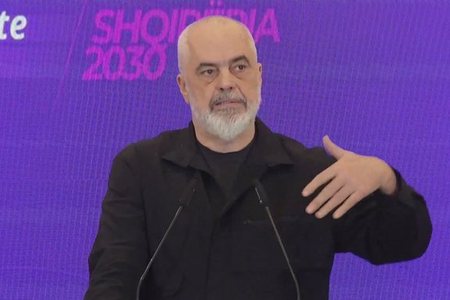
He stated that in all the American justice documents that accompanied the request for the establishment of the Investigative Commission, Prime Minister Edi Rama is mentioned dozens of times, as well as senior Albanian officials who have been involved in one form or another.




Lini një Përgjigje