


 Shkruar nga Stephen Bryen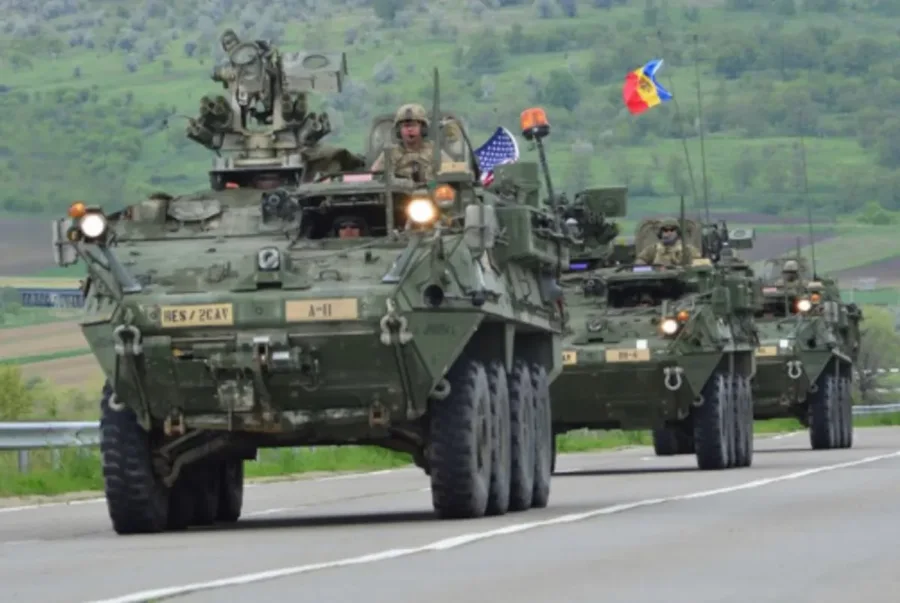
European experts and some officials are increasingly thinking that Ukraine's days as an independent country may be over. They assume that a Ukraine could in the future consist of a Russian-annexed area, a pro-Russian regime in Kiev, a buffer zone, and Western Ukraine occupied by Poland, thus divided among its neighbors.
The tiny state of Moldova could face big trouble as it could become the West's new barricade to stop Putin's advance in the event of a victory in Ukraine. It is not clear whether such a plan will succeed.
But it is a fact that Moldova is not the most stable country in the world because this small nation is divided between pro-European and pro-Russian elements. According to a statement from the Ministry of Defense of Moldova, the purpose of the upcoming exercise in the country will be joint training and exchange of experience between Moldovan, Romanian and American special forces, as well as increasing the level of interaction between the participating contingents.
This year, representatives of the State Defense and Security Service of Moldova and the Pantera Special Forces will also participate. These exercises are nothing new, but are now considered much more important and urgent due to the developing situation in neighboring Ukraine.
Meanwhile, the US is sponsoring what it calls the Moldova-US Strategic Dialogue in Chisinau, the capital of Moldova. It focuses on various areas of cooperation, including the justice sector and anti-corruption reforms, human rights, promoting a pluralistic media environment and media policies that respect the right to fight misinformation, diversification.
The dialogue also focuses on the sustainability of the energy system, the modernization and transformation of defense, civil defense, border management, cyber security, countering threats, the fight against the illegal trafficking of arms and ammunition, the proliferation of weapons of mass destruction and of related materials, the humane treatment of refugees and the expansion of ties with other friendly countries.
The United States has made nearly $320 million in new economic, security and humanitarian aid available to help Moldova. This assistance includes $30 million in non-refundable budget support disbursed as of December 2022 for electricity purchases.
According to the US Department of State, the US, in cooperation with Congress, plans to make available an additional $300 million in energy assistance to Moldova to address the urgent challenges created by Russia's war against Ukraine and to strengthen the stability and energy security of the country. Moldova, including another $80 million in support to address additional energy costs.
The purpose of the State Defense and Security Service, which is separate from the Moldovan military, is to protect senior government officials. Officially, Moldova is supposed to be a neutral country. But there is talk of changing the Moldovan constitution to allow it to join military alliances and potentially join NATO.
Even joint military training with foreign countries (the USA and Romania) seems to violate current neutrality provisions. Romania is keen to strengthen its military relations with Moldova. Bucharest is expected to soon approve a law that will allow it to intervene militarily abroad.
But such actions will not be limited to the military, but may also include other types of interventions to combat hybrid threats. The focus of the new law is specifically Moldova and Ukraine. Romania supplies 80-90 percent of the energy Moldova consumes. It has built a gas pipeline connecting Cisenau with Romania, financed mainly by grants and loans from the European community. Moldova no longer receives gas from Russia. According to Romanian sources, there are 600,000 Romanian citizens in Moldova (most with hybrid citizenship). Romania is positioning itself to "protect" its Moldovan citizens in case of conflict.
Moldova is the second poorest country in Europe after Ukraine. In 2022, Moldova's per capita income was $5,688. Ukraine had only 4005 dollars per capita (before the current war). In general, the countries of Eastern Europe have per capita income at the level of 11,855 dollars.
Moldovan territory lies between the Dniester and Prut rivers, an area once known as Bessarabia. The majority of the population are Orthodox Christians. There was once a large and developed Jewish community. Chisinau, the capital of Moldova, had 46 percent of the Jewish population.
Gjatë Holokaustit, rreth 380.000-400.000 hebrenj vdiqën në zonat e atëhershme të kontrolluara nga Rumania, përfshirë Bessarabinë, Bukovinën dhe Transdniestrias. Në Moldavi ka pasur një përplasje të vazhdueshme midis kampit pro-BE nga njëra anë dhe kampit pro-rus nga ana tjetër. Aktualisht në pushtet janë pro-evropianët. Ata kanë nxjerrë jashtë ligjit partitë dhe organizatat e opozitës pro-ruse dhe kanë burgosur disa nga udhëheqësit e tyre. Përveç kësaj, partia në pushtet ka mbyllur 13 televizione dhe media me arsyetimin se ishin të lidhura me Rusinë. Deri në mes të muajit mars, partia pro-BE-së në krye të qeverisë nuk i lejoi kandidatët e opozitës të konkurrojnë për zgjedhjet lokale apo kombëtare.
Një rast është ai i guvernatores aktuale të rajonit autonom Gagauzi, Evghenia Gutsul. Gagauzia është një entitet i banuar nga ortodoksë rusë dhe disa turqisht-folës në pjesën juglindore të vendit. Gutsul ishte anëtare e partisë Shor (ose Sor), një forcë politike pro-ruse që u shpall jashtë ligjit nga qeveria aktuale.
Ajo nuk u lejua të kandidonte për një mandat tjetër nën siglën e kësaj partie dhe u akuzua se ndihmoi në financimin e paligjshëm të partisë Shor. Megjithatë ajo vendosi të kandidojë për postin si “e pavarur” dhe fitoi me lehtësi. Gutsul është shumë e afërt me Moskën dhe presidentin Vladimir Putin.
Në mars, Gjykata e Lartë në Moldavi e shpalli anti-kushtetuese nxjerrjen jashtë ligjit të partisë Shor. Ndërkohë, vende të tjera po shfaqin një interes të madh për Moldavinë. Një shembull interesant: Gjermanët po e furnizojnë policinë moldave që të përforcojë kufirin me Ukrainën. Policia e lufton kontrabandën, por sipas raporteve, kritikët thonë se përpjekjet e Perëndimit kanë të bëjnë kryesisht me ndalimin e hyrjes në vend të ukrainasve që përpiqen t'i shmangen rekrutimit dhe t'i kthejnë ata në Ukrainë, ku përballen ose me burg ose dërgohen me forcë në vijën e parë të frontit për të luftuar kundër trupave ruse.
Se si një aktivitet i tillë përputhet me ligjet evropiane të të drejtave të njeriut, kjo mbetet një pyetje e hapur për debat. Edhe Franca po aktivizon njësitë kryesore të Legjionit të Huaj, shumë prej të cilave janë aktualisht pa punë pasi janë dëbuar nga disa vende afrikane.
Sipas raporteve mediatike, 1500 trupa të Legjionit të Huaj francez ka të ngjarë të dislokohen ose në Ukrainë ose në Moldavi në maj ose qershor. Presidenti francez Emmanuel Macron ka punuar këto kohë jashtë orarit zyrtar duke u përpjekur të sigurojë mbështetjen e NATO-s për ndërhyrjen në Ukrainë.
Në Transdniestria gjendet një kontigjent ushtarak rus, por ai përbëhet nga vetëm 1500 ushtarë. Po ashtu atje ka një depo të madhe municionesh ruse, diçka me shumë interes për ukrainasit që janë shumë në nevojë për to. Ushtria e Transdniestrias përbëhet nga 5.000 personel aktiv dhe 16.000 rezervistë.
Most of its equipment is outdated. By comparison, Moldova has an army of 6,500 active troops and 2,000 annual recruits. It claims to have a reserve force of 65,000 troops. How reliable any of these figures are is unknown.
If foreign troops were to attempt to operate from Moldova into Ukraine, they would have to take over Transdniestria and deploy military forces in Gagauzia, an act that would likely trigger a civil war. In itself, Moldova has no strategic importance. However, it could be a very good springboard for a strategy that will target the southern Ukrainian city of Odesa and possibly Russia-annexed Crimea. What seems to be being prepared in Europe is a kind of Plan B. So what should be done if the Ukrainian army capitulates.
European experts and some officials are increasingly thinking that Ukraine's days as an independent country may be over. They assume that a Ukraine could in the future consist of a Russian-annexed area, a pro-Russian regime in Kiev, a buffer zone, and Western Ukraine occupied by Poland, thus divided among its neighbors.
Under these conditions, NATO would like to have a counterweight to a Russian victory. This could mean, in addition to the return to Poland of the Ukrainian city of Lviv, an attempt to protect Odesa and perhaps to threaten Crimea, which the Russians consider vital territory for their security and its historical importance./ Adapted Pamphlet from " Asia Times"
Note: Stephen Bryen, former US Deputy Secretary of Defense


Lini një Përgjigje