


 Shkruar nga Pamfleti
The future of regional cooperation in the Western Balkans rests on a clear project of European integration, led by Brussels and without theatrical and political games like those played by the Balkan leaders...
The Open Balkans Initiative, originally known as "Mini-Schengen", emerged as a regional cooperation project between three Balkan countries: Albania, North Macedonia and Serbia.
As European expansion stalled, the leaders of the Western Balkan countries found themselves unable to keep promises of a European future. The European prospects of the Western Balkans, while not entirely lost, were clearly dimmed by statements by top European officials that the EU needed to reform itself before welcoming new members.
In response to the enlargement moratorium announced in 2014 by Jean-Claude Juncker, the Western Balkans were offered a consolation prize: the so-called Berlin Process, a regional cooperation initiative led by Germany. The initiative represented another "project transfer" - a regional cooperation idea conceived within the EU and then entrusted to the Western Balkans to implement and develop further.
'Open Balkan' was intended to be just the opposite: an internal project, developed by Western Balkan leaders eager to show themselves capable of fostering cooperation within the region.
The initiative started in October 2019 with a statement signed in Novi Sad by the heads of the countries involved, followed by two other joint statements, signed in Tirana and Ohrid. The idea was to create a common market, similar to that of the EU, to allow the free movement of goods, services, capital and people (the so-called four freedoms).
Each of the countries involved perceived the potential benefits of the initiative in their own way. For Albania, the opening of the border with Kosovo would enable the Albanians of both sides to enjoy the four freedoms without any restrictions. For Serbia, the initiative would lead to a softening in what could be seen as an informal normalization of Belgrade-Pristina relations. Finally, for North Macedonia the initiative would represent an opportunity to regain political momentum at the regional level, as the Prespa Agreement - and the subsequent change of the country's name - had left a sour taste in the mouths of the local population and politics.
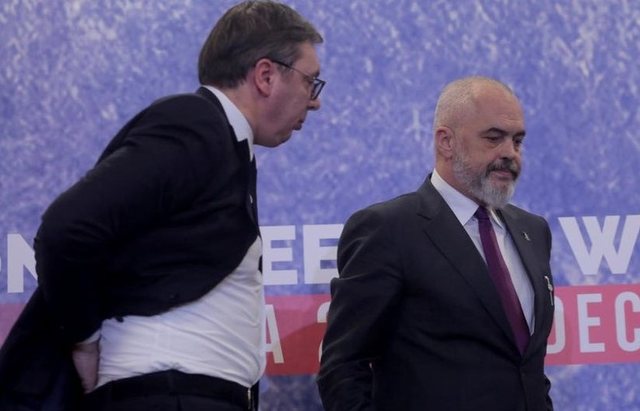
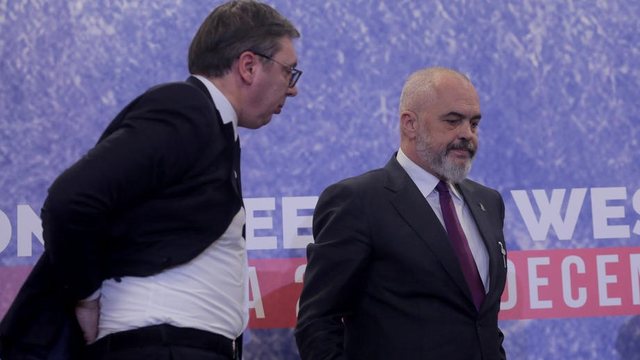
Despite the initial enthusiasm, today the Open Balkan project seems to have entered a dead end. The reasons for this are multiple. The failure is partly related to the very structure of the project, promoted mainly by Serbian President Aleksandar Vucic and Albanian Prime Minister Edi Rama, that is, by two leaders willing to support regional initiatives only if they can benefit from them at the internal political level.
Second, the initiative has never included other countries such as Montenegro, Bosnia and Herzegovina and Kosovo, all of which expressed distrust and supported the Berlin Process as the preferred alternative. Third, geopolitical changes, provoked by Russian aggression in Ukraine, pushed the EU to make a U-turn in its enlargement policy.
In March 2024, the EU decided to open accession negotiations with Bosnia and Herzegovina. A few months ago, Moldova and Ukraine also got the green light to start negotiations. The revival of enlargement has exerted negative pressure on alternative initiatives such as the Open Balkans.
At the same time, the EU's renewed political presence in the Western Balkans has revived the question of the fate of regional cooperation. The process of European integration cannot continue without cooperation and the search for solutions to some issues faced by post-conflict societies, such as the former Yugoslavia.
A revised Berlin process that includes EU membership as a definite goal might be a good decision to start over. By setting a clear objective, the Berlin Process can be transformed from another paternalistic initiative conceived from abroad into a project enthusiastically embraced by the countries of the region.
The positive signal in this direction is the fact that in 2023 the annual summit of the Berlin Process took place in Tirana, unlike in previous years that was expected from EU cities. Although largely symbolic, this change follows one of the few ideas successfully promoted by Open Balkan - that of encouraging meetings within the region to demonstrate the coherence of a project capable of involving local actors.
Full alignment of the Western Balkans with the Common Foreign and Security Policy should be a prerequisite for the region's progress towards the EU, thereby preventing Russia from exploiting fault lines within the region. This alignment is necessary in the current phase of the reorganization of the global order in which the EU cannot afford another leader like Orbán.
Albanian Prime Minister Edi Rama said that the Open Balkan initiative has achieved its goal, thus sending a clear message that Albania is refocusing. The future of regional cooperation in the Western Balkans rests on a clear European integration project, led by Brussels and without theatrical and political games like those played by Balkan leaders during the Open Balkans experiment. /Adapted "Pamphlet" from " OBC Transeuropa "


Lini një Përgjigje