


 Shkruar nga Pamfleti
Mujahideen, Mossad and the map of Iran: Albania in danger from Tehran!
24 hours before the Israeli attack on Iran, the Mujahideen in Manzë released an AI video, which accurately predicted the targets to be hit. Has the pact that Edi Rama secretly signed with Iran under Turkish mediation been broken?
Just one day before the start of the surprise Israeli attacks on Iran, the Mujahideen sheltering in Manzë distributed a warning video, created through artificial intelligence, in Albanian, denouncing the establishment of a "secret network for the production of the nuclear bomb" by the ayatollahs' regime, in an operation called "Plan Kafir."
This material, which was distributed on Thursday evening, stated that Iranian nuclear facilities were located in a desert on the outskirts of Tehran, the same locations that 24 hours later were hit by Mossad through a coordinated drone attack.
One of the sources the mujahideen cited in their video was a conference in Washington, where one of the movement's leaders presented detailed maps of Iran's secret facilities.
This information, which was later verified by real attacks, indicates that the mujahideen have access to internal anti-regime networks in Tehran, perhaps the same ones that two years ago organized the nationwide protests, which were violently suppressed by the Revolutionary Guard.
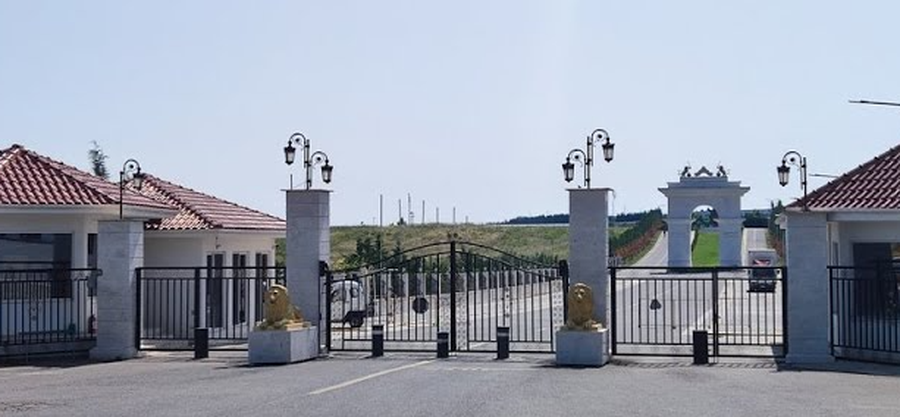
All these developments turn their attention to Albania, which is sheltering over 2,000 MEK mujahideen in Manzë. A group that the Tehran regime has declared a "terrorist" and "internal national enemy."
Is Albania in danger again?
In 2022, after the major cyberattack from Iran, where all Albanian state systems were blocked, Edi Rama expelled the Iranian embassy in Tirana, declaring all diplomats "persona non grata".
But only a year later, under the mediation of Turkey and during a visit by Foreign Minister Hakan Fidan to Tirana, a tacit agreement was reached: the establishment of an "Iranian diplomatic office" was allowed on the premises of the Turkish embassy, which according to security sources is an operational office of Iranian intelligence in Albania.
In return, Iran promised to stop cyberattacks, while Edi Rama sent police to stop the Mujahideen's activity, an operation that resulted in casualties. Tehran's demand was clear: The Mujahideen could stay in Albania, but they should not carry out active political or propaganda activities from Albanian territory.
But with the recent release of the AI video and the return of mujahideen activity directly related to the Iranian nuclear issue, it appears that the pacts have been broken.
This is also confirmed by official reactions: Tehran has publicly warned against countries that harbor and allow the actions of "subversive groups", while Erdogan has recalled that "red lines have been crossed".
Could Iran strike Albania?
Militarily, it is impossible for Iran to attack a NATO country like Albania with missiles, especially since that would give the United States a direct pretext for a counterstrike. But direct action is not the only way.
Iran has been building informal networks for years, not only of propaganda and disinformation in the Balkans, but also of action on the ground, through sabotage, espionage, indirect pressure, internal destabilization, and infiltration into media structures, religious and even economic communities.
Currently, through its office located in the Turkish embassy, and through unofficial funding channels, Iran is able to regenerate its network in Albania, to exploit the moment of maximum tension and to send clear signals in the form of silent destabilization, or even through selective strikes.
conclusion
Albania has unwittingly become part of an asymmetric war between Mossad and Iranian services, being a neutral ground where two parties shelter, move, recruit, and operate:
The MEK Mujahideen, collaborating with Western services.
The informal Iranian network, working silently for counter-control.
The MEK's breach of the tacit agreement, with the publication of data that later became war targets, reopens the conflict and puts Albania at real risk of indirect involvement in a new conflict.
In this situation, the silence of Albanian institutions is not neutrality. It is incompetence, or worse: approval to be a terrain usable by everyone, in the face of a war that does not belong to us./ Pamphlet



Lini një Përgjigje