


 Shkruar nga Pamfleti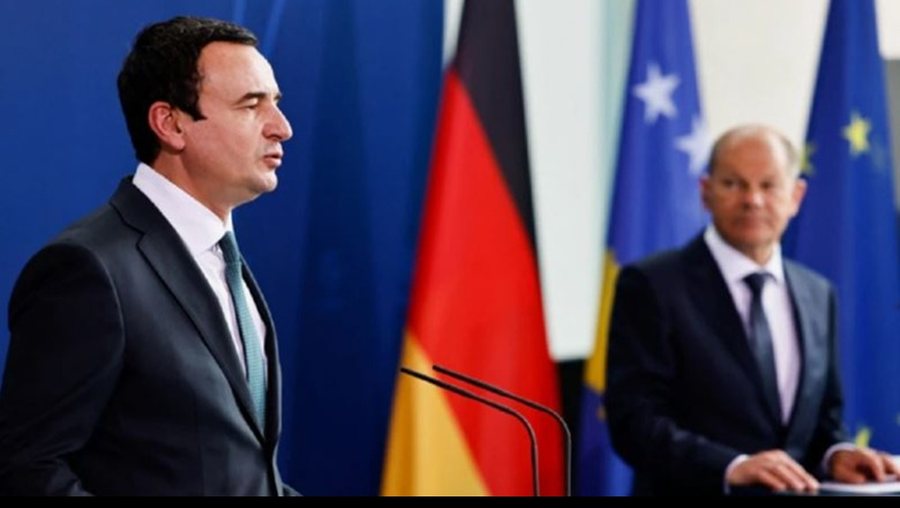
The German government urged Kosovo to postpone plans to implement the decision to make the euro its sole currency amid concerns that the decision could exacerbate ethnic tensions by cutting off the flow of cash to ethnic Serbs in the north of the country.
"We strongly urge Kosovo to postpone the implementation date until an acceptable solution is found," Christiane Hoffmann, the government's deputy spokeswoman, told reporters in Berlin on Friday.
While he considers this issue to be a sovereign decision for Kosovo, Hoffmann called the decision on the currency an "important step with far-reaching consequences", which requires more time and preparation.
The New York-based news agency "Bloomberg News" writes that European leaders have failed in efforts to normalize relations between Serbia and Kosovo, whose sovereignty the authorities in Belgrade refuse to recognize. Tensions in Serb-dominated northern Kosovo boiled over last year in the worst violence in nearly two decades, reports Gazeta Express.
Kosovo's central bank announced earlier this month that starting next week, it will ban any lender from operating without a license, potentially affecting Serbia's Postanska Stedionica, the main conduit for funds in Serbian dinars supported by around 90,000 Kosovo Serbs. .
The EU and US have warned against any sudden changes as mediators seek to facilitate a comprehensive deal between the Balkan neighbours, who both have aspirations to join the 27-member bloc. The talks have stalled mainly on the fate of the Serbs who became a minority after the division of Kosovo.
"Kosovo should be able to control the currency in the country - it should not be controversial," said Florian Bieber, director of the Center for Southeast European Studies at the University of Graz.
"But the dialogue with Serbia is now in such a difficult place, and at the end of the day, the Government of Kosovo must try to make the Serbs of Kosovo see themselves more integrated."






Lini një Përgjigje