


 Shkruar nga Pamfleti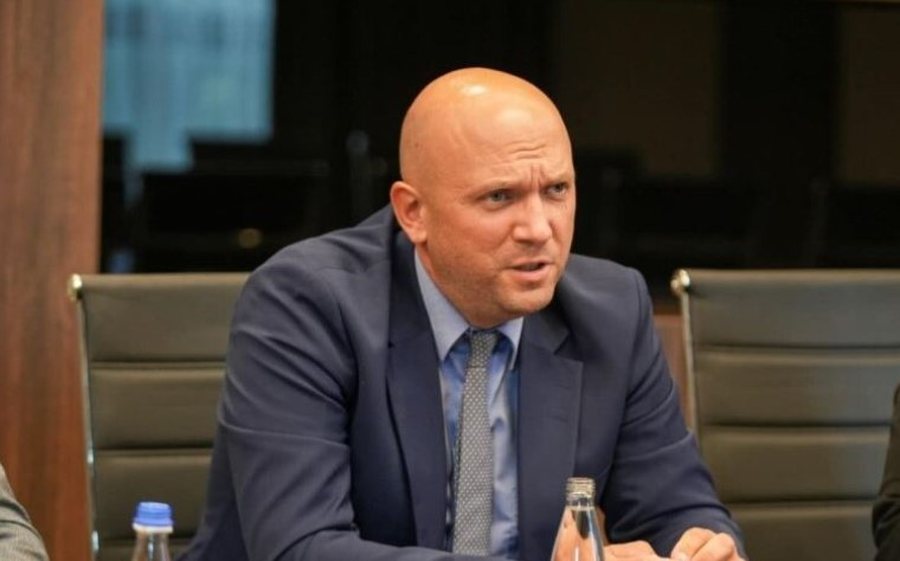
The special envoy of Germany for the Western Balkans, Manuel Sarrazin, declared that the countries of the Western Balkans, in particular Kosovo and Serbia, should be ready for compromises and concessions that are not easy on their way to the European Union.
Sarrazin said that he visited Kosovo on Thursday and will visit other countries in the region to achieve "concrete" results for the people of the Western Balkans and that for this compromises are needed on the eve of the Berlin Process, which will be held on October 14 in Germany.
"But for this we need compromises and sometimes even willingness to make concessions to agree on political issues which are not easy for either Serbia or Kosovo. We still haven't reached where we need to be", said Sarrazin to reporters at Pristina International Airport.
Kosovo and Serbia have many disagreements and the dialogue between them for the normalization of relations, started as early as 2011, has stalled in recent times and the parties continuously blame each other for non-implementation of existing agreements or for the failure of the dialogue, while the EU says that there is a lack of political will to implement the agreements.
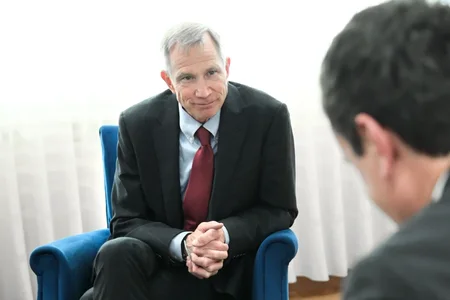
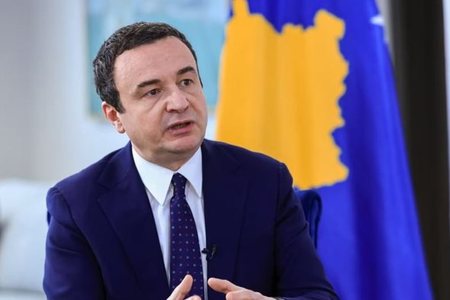
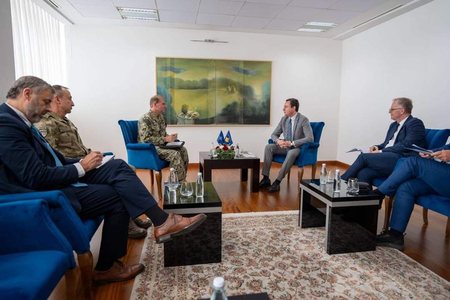
Sarrazin emphasized that he talked with the Prime Minister of Kosovo, Albin Kurti, during a meeting in Pristina, and that he will also talk with the leaders of five other countries in the region during the next week about regional cooperation.
"I ask everyone to do everything possible to express a willingness to compromise in order to achieve results for the free movement of goods, people, money and trade in the region to move forward towards the European Union," he added.
The Berlin process is not a formal EU policy process towards the Western Balkans region.
It is an initiative of former Chancellor Angela Merkel of Germany in 2014, to help the economic development of the six countries of the Western Balkans and their alignment with the European Union.
This initiative serves as a platform for high-level cooperation between high-level official representatives of the so-called Western Balkan Six, which consists of Albania, Bosnia and Herzegovina, Montenegro, Kosovo, North Macedonia and Serbia. The process also includes EU institutions, international financial institutions and civil society in the region.
The countries of the Western Balkans have been promised a European perspective since 2003, at a summit in Thessaloniki. Since then, only Croatia among the countries of the region has joined the EU, in 2013.
Montenegro and Serbia have started membership negotiations for years, while in July 2022 Albania and North Macedonia have also started them. Bosnia and Herzegovina received the status of a candidate country in December last year, while Kosovo only has a Stabilization-Association Agreement (SAA) with the EU.
During the visit to Pristina, Sarrazin also met with the President of Kosovo, Vjosa Osmani, as well as with the leaders of the opposition parties, Memli Krasniqi of the Democratic Party of Kosovo and Lumir Abdixik of the Democratic League of Kosovo.
The Presidency of Kosovo said that Osmani and Sarrazin talked about the latest political and security developments in the country and the region, as well as the Berlin Process. "On this occasion, the President has reiterated her full support for the agreements resulting from this process", the announcement states.
Sarrazin was appointed to the post of special envoy for the Western Balkans in February 2022. Since then, he has made a series of visits to Kosovo and other countries in the region. He was in Kosovo for the last time, in May of this year.
In June, he was in Serbia, where he met with the Serbian president, Aleksandar Vučić, with whom he talked about the dialogue for the normalization of relations between Kosovo and Serbia, which is mediated by the European Union./ REL



Lini një Përgjigje