


 Shkruar nga Pamfleti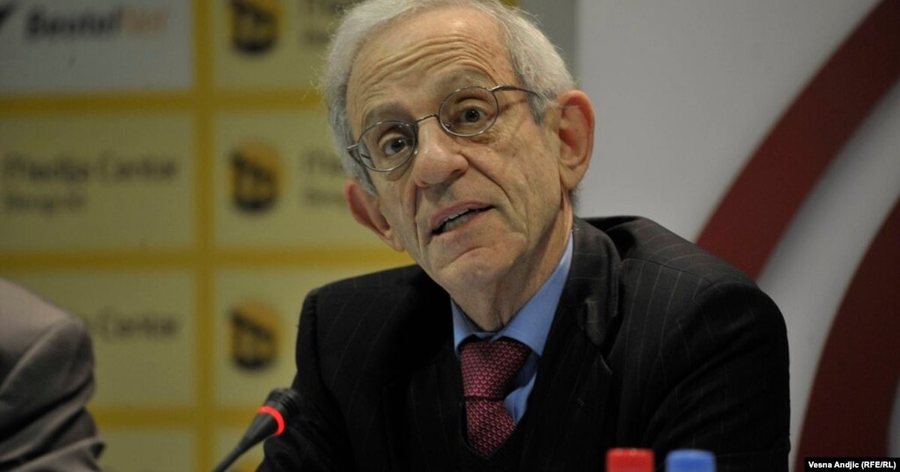
The American expert on the issues of the Western Balkans, Daniel Serwer, has brought to attention the September 24 attack on the Kosovo Police in the north of the country, also mentioning the fact that the announced results of the investigations have not yet been published.
Serwer said that this is one of those moments when what is not said is more important than what is said, criticizing the Americans and Europeans who are not publishing the results of the investigations.
"This is one of those moments in the Balkans when what is not said is more important than what is said. The Americans and Europeans have so far failed to publish the results of their announced investigations into the failed September 24 Serbian uprising in northern Kosovo.
On that occasion, Serbia sent a well-armed group to ambush the Kosovo Police, killing an officer. The Serbs also tried to draw the police into a firefight at a monastery compound. The authors intended this incident to provide a justification for Serbian military intervention. Apparently, the goal was to capture the four municipalities with a Serbian majority in the north of Kosovo," he said.
He also said there is no doubt about what happened and why, but it raises questions about who really authorized this terrorist plot.
"Was it the Serbian president Vucic or not. I have no evidence on this matter. But we know that Vucic usually makes all the important decisions in Belgrade," the expert said.
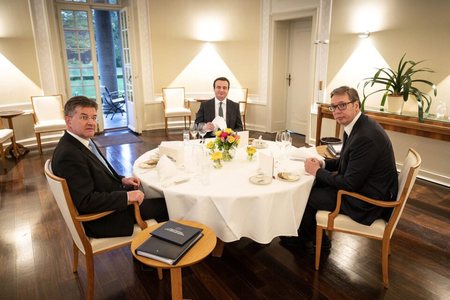
Serwer also said that since the "failed plot" in Banjska, Vucic has joined anti-democratic forces in the region, meeting Dodik, Orban, Lukashenko, Aliyev of Azerbaijan, and autocrats Putin and Xi.
“He also intends to follow Aliyev's example to take back Nagorno-Karabakh by force. When the geopolitical circumstances allow, he will do the same with Kosovo", continued Serwer.
The American expert talks about the reasons why he is silent about these actions of the president of Serbia, Aleksandar Vucic. Here he mentioned the elections that are expected to be held in Serbia, the unity required in the European Union to take a stand on an issue and Washington's attempt to direct Serbia towards the West.
"Some diplomats will attribute the silence to the preoccupation in Washington and Brussels with the war in Gaza. This certainly deserves priority and slows down high-level decisions on other issues. But the State Department and the EU's foreign policy apparatus deal with problems around the world, not just today's top issues.
Most likely they hesitated because of the Serbian parliamentary elections this Sunday, which will not bring big surprises. President Vučić would not have called early elections if he thought he would lose them. There is ample evidence that he is using the government's dominance of the media, state institutions, patronage and grandstanding to ensure an amicable outcome. But no one in Washington or Brussels at this point should want to help him.
The EU has another obstacle. It requires consensus for any serious reaction. Most of its member countries may be ready to do something. But Hungary and perhaps now Slovakia will be prepared to block the consensus on sanctions against Serbia. I can also hope that the State Department is reevaluating its policy in the Balkans and needs a little more time to get it right. It has officials committed to the notion that he has succeeded in making Serbia embrace the West. Sometimes it is easier in the state to change the personnel than the mind, but it takes time", he concluded.





Lini një Përgjigje