


 Shkruar nga Pamfleti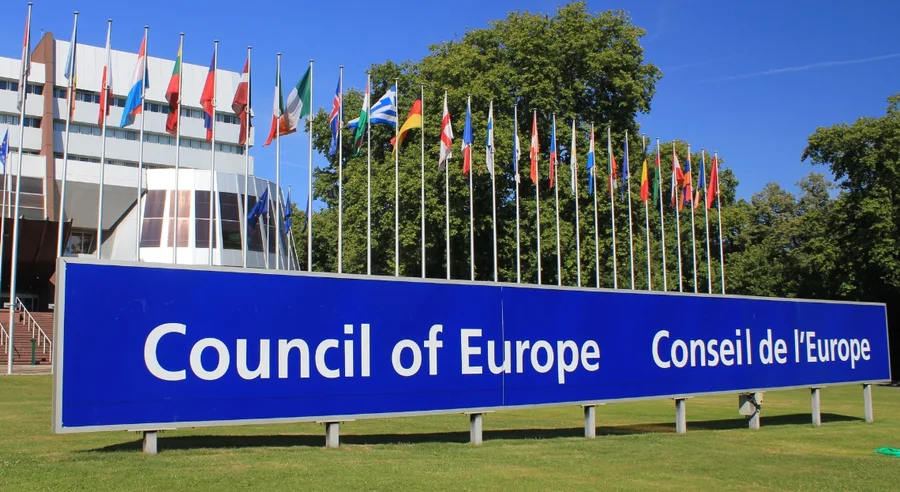
The Commissioner of the European Council for Human Rights, Dunja Mijatovic, in her letters addressed to the prime ministers of the member countries from the area of Former Yugoslavia, has requested that concrete steps be taken to confront the violent past. In the case of Serbia, the pledges that it has given in the context of the dialogue with Serbia are also mentioned, such as the opening of the army archives to reveal the fate of those forcibly disappeared from the last war.
Serbia has not shown readiness in the trial of war criminals and the achievement of transitional justice, after the wars in the former Yugoslavia, it is found in a recent report of the Council of Europe. On his basis, in the letter that the Commissioner for Human Rights in this organization, Dunja Mijatovic, has sent to the Serbian Prime Minister, Ana Bërnabič, the delays in addressing issues from the past are noted in recent years.
"Instead of speeding up the processes to achieve finalization, to face the past, they have slowed down or stagnated in recent years. I find particularly disturbing, in some countries, the return of ethno-nationalist discourse, the denial of wartime atrocities and the glorification of war criminals by political leaders and other influential social actors, such as the media, religious leaders and other figures public. This is contributing to the sharp increase in inter-ethnic hate speech and intolerance and an increasingly hostile environment for human rights defenders committed to dealing with the past ," Mijatović's letter to Brnabić reads.
In this context, as stated in the letter, it is necessary to emphasize that dealing with the past is not an effort oriented towards the past, which would prevent countries from moving forward, but a prerequisite for building cohesive and democratic societies, based on respect for human rights and the rule of law.
"There are significant links between the failure to fully address past and current human rights challenges in the region, such as increasing hate speech and discrimination, the weakness of rule of law institutions, challenges to freedom of assembly and civic space, threats to the media, freedom and gender-based violence ", writes in the letter of the Commissioner of the Council of Europe.
As a positive step for Serbia in addressing these issues, the adoption of the 2021-2026 National Strategy for the prosecution of war crimes, as well as the adoption of a strategy in 2020 to improve the protection of victims and witnesses in court cases and support for voluntary return, is mentioned. of refugees from other countries of the region.
In the part of the recommendations, the aspects for which the Serbian state has given commitments in relation to Kosovo in the Brussels dialogue where the violent disappearance of persons from the last war in Kosovo was addressed, such as the opening of the army archives, are also mentioned.
" To recommit to an effective regional cooperation in all areas of dealing with the past, especially the prosecution of war crimes and the search for missing persons. This includes executing extradition requests related to war crimes from other countries in the region, when these have been positively evaluated by the local judicial system, or ensuring that suspects are tried before Serbian courts, in accordance with the obligation to extradite or prosecute under the law international. To open the military archives to facilitate the search for missing persons ", the document reads.
Such reports have also been issued for other member states of the Council of Europe from the areas of former Yugoslavia: Bosnia and Herzegovina, Slovenia, Croatia, Montenegro and North Macedonia.
The last part of the document underlines the responsibility of the authorities in the respective countries to take measures to stop these negative developments and to promote a comprehensive and human rights-based approach to dealing with the past.
" In this regard, I call for renewed efforts in the prosecution of war crimes, reparations, the search for missing persons and the search for the truth, which would be centered around the needs of the victims - regardless of their ethnicity and with special attention to those who tend to be forgetful. I also call for an urgent focus on the intergenerational dimension of dealing with the past, including young people and equipping them with the competence to build peaceful, cohesive societies through integrated education, genuine teaching of comprehensive history and commemoration ", the document states.
There is no such report for Kosovo, since it is not yet a member of the Council of Europe. However, Kosovo has made commitments to respect the conventions of this organization, in which it has deposited the application for membership in December 2022. As for war crimes and dealing with the past, in 2015 Kosovo established a Special Court after the release of another report by the Council of Europe, the author of which was the former Swiss senator, Dick Marty. On its basis, several indictments have already been filed, including the one against the former senior leaders of the KLA, who are being tried by the Specialized Chambers based in The Hague, related to suspicions of war crimes and crimes against humanity. / KohaDitore




Lini një Përgjigje