


 Shkruar nga Pamfleti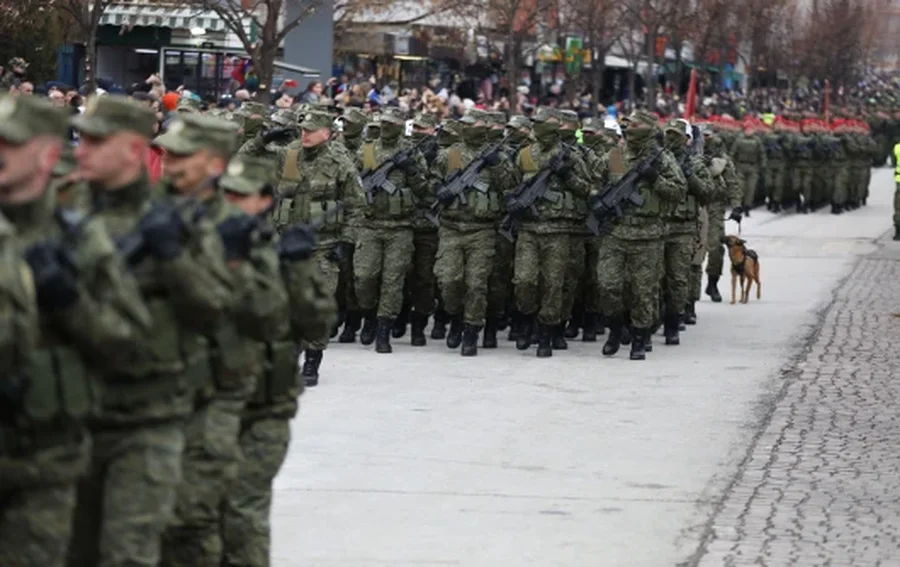
The concretization of military cooperation between Kosovo, Albania and Croatia is expected to take place in September, when the implementation plan for the declaration signed earlier by the defense ministers of the three countries is expected to be finalized.
The plan also includes arms contracting, where the three countries aim to place a single order. Security expert Nuredin Ibishi says that this form of contracting makes it easier and more affordable to purchase weapons.
" And these aspects of the armament equipment are from a state or our main strategic partner, namely the United States of America, and the common goal of the three states, that after approval, as I said, from July 18 when it entered the operational phase by the working group, which will determine which will be those types of armament that will have a common order from these three states. And the interaction itself, even in terms of joint exercises, in increasing capacities, in education and even in the military academies of these states, to also do the typification, namely the standardization of the armament. So, every time from the main NATO state, namely the United States of America. When there is more demand for armament, then the price is more favorable, but there are procedures that must be followed and an approval process in the Administration of the United States of America ," said Ibishi, reports "Koha".
Kosovo's acting Minister of Defense, Ejup Maqedonci, announced a few days ago to Radio Free Europe/Radio Liberty that an implementation group meeting was held in Tirana on July 18 to detail the plan for implementing the declaration. The final guidelines will be presented to the three ministries for approval in September.
The acquisition of defense capabilities is the first commitment in the declaration that the defense ministers pledged to make. According to Makedonci, the aim is to place one purchase order instead of three separate orders from each country.
" For example, a [weapons] system that all three countries are interested in purchasing from the US, we should place the order as a single purchase, using the legislation of each country, but the quantity and delivery time should be determined jointly, because when you buy more from the US, they cost less and arrive faster ," said the Macedonian.
These purchases are expected to be made with national funds of each country. Kosovo, Albania and Croatia signed a declaration in Tirana on March 18, through which the countries commit to strengthening cooperation in the field of defense and security. The three countries have pledged to increase interoperability between their armies, through education, training and joint exercises, to commit to combating hybrid threats, and to coordinate policies for Euro-Atlantic integration.
The agreement, a guarantee for stability in the region
This agreement had prompted a reaction from Serbia, but the signatories emphasized that cooperation does not threaten anyone, but is a guarantee for stability and peace in the region.
The declaration represents an important development in the security architecture of the Western Balkans.
Former Deputy Minister of Defense, Bejtush Gashi, has said that the March 18 Agreement serves as a synchronized response to the profound transformations of the European geostrategic environment following the Russian aggression in Ukraine and the increase in Serbia's military capacities.
In the context of the Western Balkans, according to Gashi, the agreement offers a functional cooperation model for non-NATO countries, contributing to the stabilization of the region and reducing the space for tensions sponsored by external actors.
“For Kosovo, which is not yet a NATO member, this initiative creates a functional mechanism of informal collective defense. Although it does not replace Article 5 of the North Atlantic Charter, it is in line with Article 4, which provides for immediate consultations among allies in the event of a threat to security, territorial integrity or political independence. Given that two of the three states (Albania and Croatia) are NATO members, this alliance places Kosovo under a reinforced security umbrella, with direct implications for the southern wing of the Alliance ,” said Gashi.
According to him, the Agreement addresses three main strategic objectives: increasing the interoperability of armed forces through the standardization of procedures and joint training in accordance with NATO doctrine; creating a regional capacity to respond to crises and hybrid threats; and reducing the armament gap towards states with accelerated investments in defense, guaranteeing strategic balance in the Balkans.
“Deklarata e përbashkët parashikon shkëmbim të ekspertizës profesionale, zhvillim të trajnimeve individuale dhe kolektive, si dhe ngritje të kapaciteteve rezerviste, përfshirë përmirësimin e logjistikës, menaxhimin e operacioneve dhe sistemet e mbështetjes tekniko-ushtarake. Harmonizimi i procedurave komanduese, i kombinuar me ushtrime të tipit ‘joint-combined’, e rrit aftësinë për reagim të koordinuar në skenarë krize, përfshirë operacione paqeruajtëse, menaxhim emergjencash dhe misione të mbrojtjes kolektive”, u shpreh Gashi, duke shtuar se ky proces e afron Kosovën me standardet ndërkombëtare të NATO-s dhe BE-së jo vetëm në nivel taktiko-operacional, por edhe në kornizën e planifikimit strategjik, doktrinës dhe ndërveprimit civil-ushtarak.
“Praktikat e ngjashme të adoptuara nga vendet aspirante për NATO kanë treguar se stërvitjet e integruara dhe harmonizimi i procedurave komanduese e rrisin kapacitetin e njësive për të vepruar nën komandë të përbashkët, e përmirësojnë shkëmbimin e informacionit dhe e zvogëlojnë kohën e reagimit ndaj kërcënimeve hibride. Për Kosovën, ky bashkëpunim përfaqëson një hap konkret drejt ndërtimit të një kapaciteti mbrojtës kolektiv, duke e forcuar besueshmërinë e vendit si partner sigurie në rajon dhe kontribuuar në stabilitetin e Ballkanit Perëndimor”, përfundoi ai.
Serbia është ajo që e kërcënon paqen
Edhe Nureedin Ibishi i sheh të domosdoshme aleancat e tilla në kontekstin aktual gjeopolitik.
“Po gjithsesi, mendoj që këto nuk janë ndonjë rrezik, flas për shtete që kanë aspekte paqësore sikur që tash po flasim për tri shtete, duke filluar nga Shqipëria, Kosova dhe Kroacia, nuk kanë pretendime territoriale, as në të kaluarën, historikun e fundit, nuk kanë ndonjë agresion ndaj ndonjë shteti. Kanë çdo herë synimin edhe qëllimin mbrojtjen, sidomos Kosova çdo herë e ka aspektin defensiv apo mbrojtës. Vetë koncepti i doktrinës dhe strategjisë është i përkufizuar dhe i përcaktuar në mbrojtje”, theksoi Ibishi.
Tek ka folur për reagimet në Serbi pas nënshkrimit të Deklaratës, Ibishi thotë se është pikërisht ajo që ka iniciuar në të kaluarën aleancë që paraqet edhe rrezik dhe i ka prishur marrëveshjet e paqes.
“Po, Serbia ishte e para që prishi marrëveshjen e Dejtoni, atëherë kur s’përcaktuan kuota lidhur me numrin e ushtarëve, kapaciteteve njerëzore, armatimit, pra pas marrëveshjes apo përfundimit të luftës në Bosnjë-Hercegovinë me 1995. Ajo i tejkaloi duke iu referuar çështjeve që ajo thirret në neutralitet, ndërsa u armatos gjithandej. Ndërsa tash po e akuzon këtë aleancë e cila, siç dihet, ka qëllime mbrojtëse dhe të tria shtetet nuk kanë pretendime territoriale ndaj asnjë shteti. Gjithashtu, në vitin 2023 Serbia arriti një marrëveshje të përbashkët në fushën e mbrojtjes me Republikën e Hungarisë”, shtoi ai.
Albania and Croatia are members of NATO, an organization that Kosovo aims to join. But, currently, within this organization, there are four states that do not recognize Kosovo's statehood. The declaration signed in Tirana leaves the possibility for other countries to join, as it has been announced that Bulgaria has received an invitation.






Lini një Përgjigje