


 Shkruar nga Pamfleti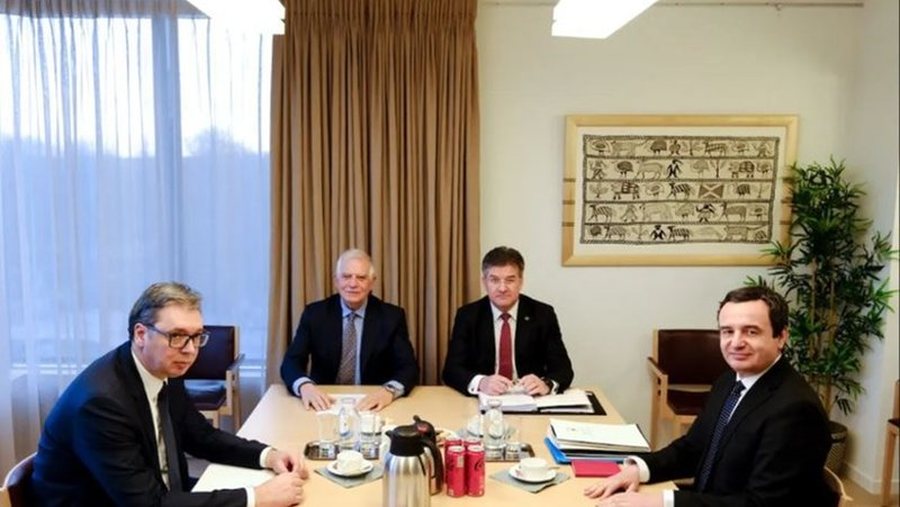
The head of European diplomacy, Josep Borrell, expressed regret that despite the many efforts of the EU, both Kosovo and Serbia have made very limited progress in the implementation of the Ohrid Agreement.
On the 1st anniversary of the Ohrid Agreement between Kosovo and Serbia with the mediation of the EU, the head of European diplomacy, Josep Borrell, said that Kosovo and Serbia should start a new European era. Borrell called on both sides to put an end to crises and tensions.
The non-implementation of the agreement damages the reputation of Kosovo and Serbia
Last year, on March 18, Kosovo and Serbia agreed in Ohrid, North Macedonia, with the annex to the implementation of the agreement on the normalization of relations, but according to Josep Borrell, the implementation has been limited so far. "The EU repeatedly recalled that the Agreement is binding in its entirety according to international law, therefore, any lack of implementation not only endangers the European integration of the parties, but also damages their reputation as reliable partners. It is high time that both Kosovo and Serbia to break the current vicious circle of crises and tensions, and move into a new European era. The agreement offers a better future for the citizens of Kosovo and Serbia and the entire region," Borrell wrote.
In February 2023 in Brussels and on March 18 in Ohrid, North Macedonia, Kosovo and Serbia agreed on a normalization agreement. This agreement does not envisage mutual recognition, but requires good neighborly relations, which include the recognition of documents and symbols and respect for the sovereignty and territorial integrity of the two countries. Also, the agreement foresees that the parties do not hinder each other in the integration processes and the fulfillment of all agreements reached before.
"At a time of unprecedented war on our continent, reaching an agreement promising peace, stability and good neighborly relations was a historic achievement. For the first time during talks facilitated by the European Union, the parties agreed on clear parameters that determine the trajectory of the process for the normalization of their relations. This Agreement and its implementation will clearly show that the future of both partners is in the European Union," wrote the head of European diplomacy Josep Borrell.
EU request for Association - unchanged
The European Union constantly asks Kosovo to establish the Association of Municipalities with a Serbian Majority, which is one of the main points of the Kosovo-Serbia agreement. The authorities of Pristina have not started the work for the establishment of the Association. The Government of Kosovo insists that the agreement reached a year ago must be signed. Serbia has refused to sign the agreement.
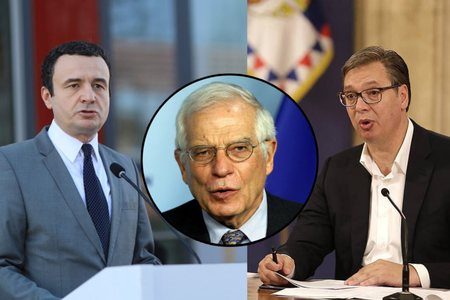
The demands of the European Union are also clear towards Serbia. It must fulfill the points of the agreement that lead to the 'de facto' recognition of Kosovo. Serbia, in a letter sent to the EU, has said that it will not implement anything that leads to the recognition of Kosovo. For this, the president of Serbia, Aleksandar Vučić, said that he expects "only bad news for his country and that Serbia will change its approach in the talks with Kosovo".
"I will explain how we were deceived, where and how some so-called friends lied to us, and many others, and this has to do with Kosovo's membership in the Council of Europe," said Vučić, reiterating Serbia's stance against membership of Kosovo in international organizations, although the Ohrid Agreement clearly states that "parties should not prevent each other from membership in international organizations".
New meeting in Brussels
On Tuesday, March 19, the chief negotiators of Kosovo and Serbia will meet in Brussels to discuss the implementation of the agreement, but the issue of the use of the Serbian dinar will also be of particular importance. According to a regulation of the Central Bank of Kosovo, the use of the Serbian dinar for cash payments in Kosovo is prohibited. Belgrade and the international community do not agree with this regulation. Western diplomats, especially the US, have called on the government of Kosovo to suspend this regulation and give time to the Serbian citizens affected by the regulation to adapt to the new situation. /DW



Lini një Përgjigje