


 Shkruar nga Pamfleti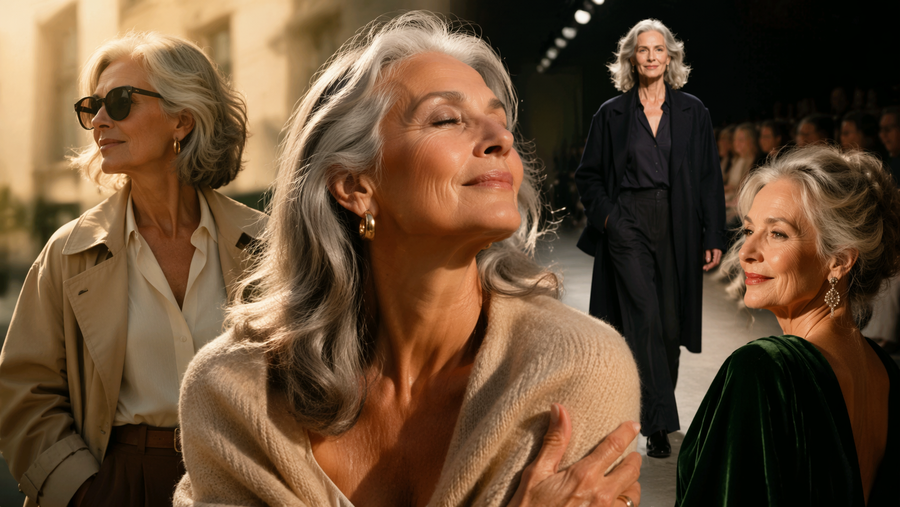
For decades, the fashion industry has been narrowly focused on youth and vitality. On catwalks, magazine covers and advertising campaigns, a narrow standard of beauty has been promoted, with age often seen as a barrier. Modeling has been associated primarily with young women, usually between the ages of 15 and 29 , a period seen as the peak of their careers. Over the years, their presence in the industry has waned significantly.
However, this narrative is changing, and the change is significant. Recently, the prestigious magazine Vogue placed two 76-year-old women on the cover for the first time: Meryl Streep and Anna Wintour. Although this choice had a symbolism associated with the film “The Devil Wears Prada 2”, the message was clear: age is no longer a limit to the acceptance, influence and representation of women in fashion.
Recent fashion shows have seen a significant increase in the presence of models over 40 and 50 , a previously rare phenomenon. Major fashion houses such as Chanel, Bottega Veneta, Givenchy and Balenciaga have increasingly included older models on their catwalks. In some cases, these models have not simply been part of the background, but the main protagonists, such as Naomi Campbell and Cindy Crawford , now undisputed icons of modeling who continue to be in demand.
This change is no coincidence.
It reflects a broader cultural transformation. Society is increasingly challenging the idea that beauty is exclusively associated with youth. Women today are more active, more independent, and more visible in their careers. As the years pass, they not only do not lose their influence, but often strengthen it.
Social media, the media, and consumers themselves play a significant role in this transformation, as they demand more authenticity and real representation. Unattainable ideals are gradually being replaced by figures that better reflect the reality and diversity of society.
Essentially, fashion is rewriting its own rules. Older women are no longer considered the exception, but an important part of the story the industry wants to tell. And for the first time in a long time, that story seems closer to reality than fantasy.
This development is not limited to the world of fashion. It is part of a broader social change, where values, standards and expectations are being reshaped in line with the times and new needs. Modern society is choosing to reflect itself as it is, leaving behind old ideals and building a more inclusive and realistic identity.







Lini një Përgjigje