


 Shkruar nga Paul Valentino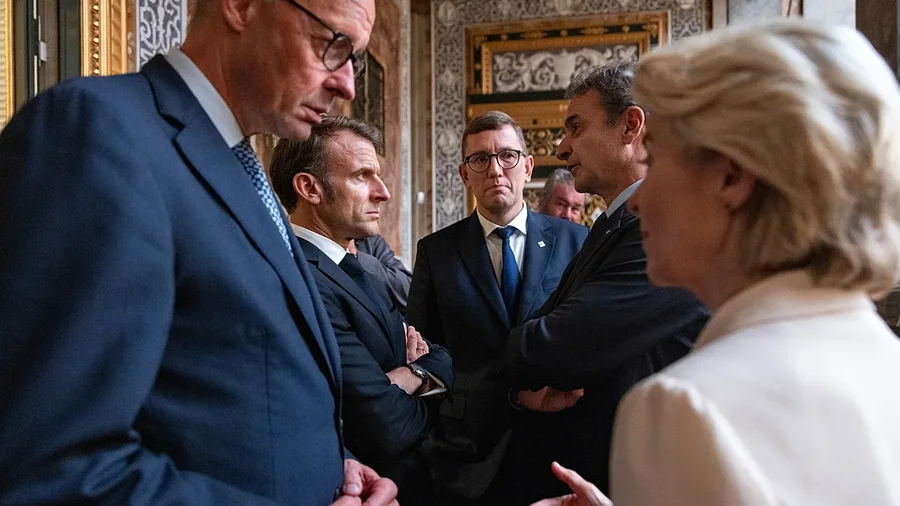
Bruxelles, lasciata sola a sostenere l'Ucraina, dovrebbe essere in grado di negoziare con Mosca...
Ora che Viktor Orbán è stato sconfitto alle elezioni e l'Ungheria ha revocato il veto sul prestito senza interessi di 90 miliardi di euro all'Ucraina, l'Unione Europea sostiene pienamente Kiev nella sua lotta contro l'invasore russo. Il via libera definitivo dato dagli ambasciatori di ventisette paesi è un segnale forte della determinazione dell'Europa a proseguire il suo impegno, di fronte al disimpegno americano e alla crescente offensiva russa contro le infrastrutture civili ucraine. L'adozione del ventesimo pacchetto di sanzioni, che mira a colpire gli interessi economici di Mosca e le sue esportazioni di petrolio attraverso la sua flotta ombra, rafforza ulteriormente l'azione europea, mentre la Commissione di Bruxelles sta già lavorando a una nuova serie di misure di austerità.
Distratti come siamo dal pericoloso gioco che si sta svolgendo nello Stretto di Hormuz, abbiamo quasi trascurato l'importanza di questa svolta nella crisi ucraina: "L'Europa ha dimostrato la sua capacità di restare autonoma, e questo è un grande risultato", afferma un ex primo ministro europeo.
Grazie al sostegno finanziario e militare dell'Unione Europea, che acquista armi dagli Stati Uniti e le fornisce a Kiev, l'Ucraina ora dispone delle risorse e delle capacità per resistere a lungo, un anno o più, impedendo avanzate russe significative e infliggendo pesanti perdite, sia al fronte che nelle profondità delle infrastrutture energetiche.
In altre parole, Kiev non può essere costretta a capitolare alle condizioni punitive e imperialiste richieste da Putin e in parte sostenute dall'amministrazione Trump nella sua disonesta mediazione, guidata da Steve Witkoff e Jared Kushner, attualmente bloccata dagli eventi nel Golfo Persico. Ma è proprio questa negoziazione "a trompe l'oeil" che mette in luce il duplice problema che rischia di minare l'audace impegno finanziario e militare dell'Europa. Il primo è che, per usare le parole di Claudia Major, analista del German Marshall Fund, "non abbiamo una definizione di cosa significhi una vittoria per l'Ucraina. Non è una strategia quella di tenere Kiev in gioco finché qualcosa non cambia a Mosca, qualcuno non muore o non viene espulso, o l'economia non collassa".
Even more important and fundamental, however, is the lack of a diplomatic dimension with Europe at the forefront. Of all the lessons that the great Henry Kissinger has left us, the fundamental one is that war and diplomacy are inextricably linked. Military leverage serves to negotiate from a position of strength, since every conflict must end with an agreement, a treaty, a peace. It is time for Europe to take on a plan, coordinated with Ukraine, and take direct responsibility for negotiating it with Russia. Not to negotiate the transfer of Ukrainian territory, but to insist on essential conditions such as security guarantees for Kiev.
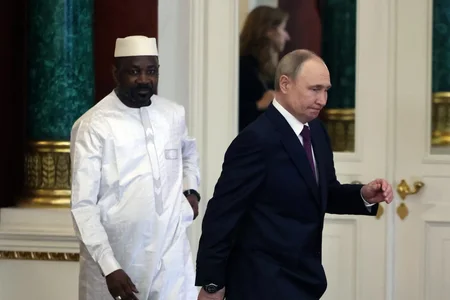
Of course, the Union needs a strategy to sit at the table, as Putin has so far refused. There is a studied boast in the hour-and-a-half-long phone call with Donald Trump, in which the Tsar “generously” offered a ceasefire in Ukraine on May 9. Of course, the prospect of opening a diplomatic channel with the Kremlin is highly questionable. French President Emmanuel Macron tried this in February, sending his top foreign policy adviser, Emmanuel Bonne, to Moscow. This unilateral move, described by Sergei Lavrov as “pathetic diplomacy,” alarmed both Ukrainians and the Baltic states.
But now Europe is in a different position. Stronger and more united. Only by acting together, and above all by using the tools at its disposal, can the Union be taken seriously: military support, sanctions, frozen Russian funds, and diplomacy must advance on different but parallel lines.
Two questions arise from this perspective. First, what should be the objective: A Korean solution with a ceasefire on the current front line would allow Putin to secure de facto recognition of the annexation of Crimea and Zelensky to preserve the fortified strategic line of Donbas, without which he could no longer defend Kiev.
The mother of all questions, however, remains who should take the initiative on behalf of Europe. It is hard to imagine it being the Ursula von der Leyen-Antonio Costa duo. In recent months, several countries, including Italy, have supported opening direct talks with Moscow and raised the possibility of appointing a special envoy for Ukraine. Among the names being floated was Mario Draghi. In February, the idea of a direct channel and an envoy was even supported by the leaders of Latvia and Estonia, usually the most reluctant to start any dialogue with Moscow. But the proposal for an envoy has many flaws, including the powers it would give them.
More feasible and effective would be the idea of a small group of European leaders (two or three, modeled after the Minsk negotiations) acting on behalf of the EU, also seeking the assistance of the US and China, and perhaps other actors such as Turkey, India, and Azerbaijan.
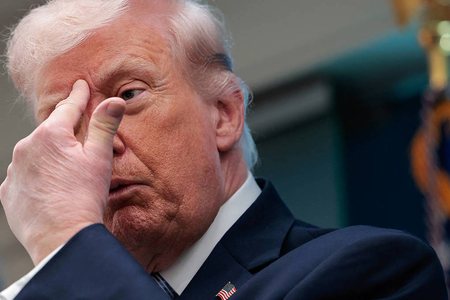
Qualunque cosa accada, l'Europa, che ora si fa carico dell'intero onere del sostegno a Kiev, deve anche dotarsi degli strumenti e di una strategia per comunicare con la Russia. Per parafrasare Clemenceau, la diplomazia è una questione troppo seria per essere lasciata nelle mani di un presidente folle e di due immobiliaristi incompetenti. / Adattato da "Pamphlet" del "Corriere della Sera"


Sllavet qe shtrihen qe nga oqeani Paqesor ne lindje e kane pasur e do e kene qellimin te dalin oqeanin Atlantik. A do tia arrijne? Une them po, sepse jane dhelpra te ideologjise e politikes. "Perqafuan" komunizmin, jo per komunizem, por per tu bashkuar (grusht bashkuar) me njeri tjetrin. Ata nuk bene komunizem por ultrafashizem me diktaturen me te ndyre qe ka vuajtur njerezimi vetem e vetem qe Kremlini te zoteroje boten. Nuk behet stan me lepuj themi ne Shqiptaret kokekrisur. Nuk mund te imagjinohet demokraci e liri, me Hitler, Stalin, Mao CeDun, Trump e kompani, jo. Njerezimi qe kur filloi te njohe pronen u nda ne, ata qe kane e ata qe nuk kane. Edhe ketri mbledh e di ku ka fshehur kokrra deri ne nje mije vende te fshehta qe t'i kete per dite te veshtira. Si i behet, hic si ka shkuar do te shkoje, rrumpalle.
Lufta eshte vazhdimi i politikes me dhune. Politika behet nga diplomatet e salloneve qe artikuljone nje gjuhe mondane e ne fund nuk te con ne zgjidhje paqesore. Diplomacia duhet e kete personel ushtarake qe dine trajtojne probleme lufte e jo biseda te djemve te mamave qe me shume u kushtojne vemendje mbajtjes se gotes se pijes e jo thelbit te problemit, luftes.
Ja fusin pordhes keta taljanet. Kemi Mbretin e Shurrelit. Sot beme nje tjeter xhest te math. Kryefashisti Kanye West, i ndaluar te mbaje koncerte kudo ne Evrope (perfshi dhe ne italine e motres Giorgia) eshte ftuar te mbaje nje koncert ne Tirane. Pra jo vetem ira me Putinin dhe Xi por dhe me fashisto-nazistet, kudo ndodhen!