


 Shkruar nga Pamfleti
A 2020 report from the United States Air Force's National Air and Space Intelligence Center said that if Russia were to successfully field the Burevestnik, it would give Moscow a "unique weapon with intercontinental range capabilities."
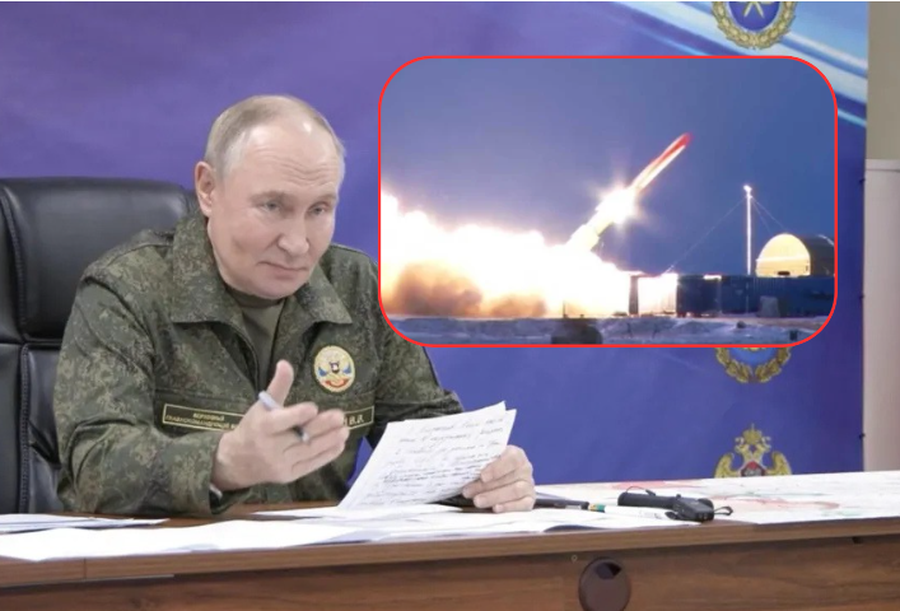
President Vladimir Putin said on Sunday that Russia had tested its Burevestnik nuclear-powered cruise missile.
But what makes this missile so special and invincible, as the Kremlin leader puts it?
The 9M730 Burevestnik, whose name translates as "storm cavity," is a low-flying, ground-launched cruise missile that is not only capable of carrying a nuclear warhead, but is also nuclear-powered.
NATO refers to it as the SSC-X-9 Skyfall.
Putin, who first unveiled the project in March 2018, has said it has an unlimited range and can evade U.S. missile defenses. But some Western experts have questioned its strategic value, saying it would not add capabilities Moscow does not already have and could release radiation along its flight path.
Putin said on Sunday that the weapon was unique. Russia's top general, Valery Gerasimov, chief of the general staff of Russia's armed forces, told Putin that in the Oct. 21 test the missile traveled 14,000 km (8,700 miles) and stayed in the air for about 15 hours.

He said it traveled on nuclear power, could defeat any missile defense, and had an unlimited range.
Its nuclear propulsion is designed to allow it to fly much farther, for longer, than traditional turbojet or turbofan engines that are limited by the amount of fuel they can carry. This would allow it to "loiter" for an extended period before hitting a target.
The Nuclear Threat Initiative, a US-based non-profit security organization, said it could potentially stay airborne for days: "In operation, Burevestnik would carry a nuclear warhead (or warheads), circle the globe at low altitude, evade missile defenses and terrain; and drop the nuclear warhead(s) at a location (or locations) difficult to predict," the 2019 report said.
Alcuni esperti occidentali sostengono che la velocità subsonica del Burevestnik lo renderebbe più visibile e vulnerabile quanto più a lungo rimanesse in volo. In risposta a ciò, l'esperto militare russo Alexei Leonkov scrisse nel 2019 che il ruolo dei Burevestnik sarebbe stato quello di eliminare i "resti" di posti di comando, basi militari, fabbriche e centrali elettriche nemiche dopo che la Russia avesse già lanciato missili balistici intercontinentali, a quel punto i sistemi di difesa aerea avversari non sarebbero stati in grado di fermarli.
Citando una rivista militare russa nel 2021, l'International Institute for Strategic Studies ha affermato che il Burevestnik avrebbe una gittata fino a 20.000 km (12.400 miglia), quindi potrebbe essere schierato ovunque in Russia e colpire obiettivi negli Stati Uniti.
I media russi hanno affermato che la presunta altitudine del missile era di soli 50-100 metri, molto inferiore a quella di un missile da crociera a propulsione convenzionale, il che renderebbe più difficile il suo rilevamento da parte dei radar della difesa aerea.
Un rapporto del 2020 del National Air and Space Intelligence Center dell'Aeronautica Militare degli Stati Uniti afferma che se la Russia dovesse schierare con successo il Burevestnik, ciò darebbe a Mosca un'arma unica con capacità di gittata intercontinentale.
Gli esperti stimano che verrebbe lanciato da un piccolo razzo a combustibile solido per alimentare un motore contenente un reattore nucleare in miniatura. L'aria surriscaldata e potenzialmente radioattiva esploderebbe, fornendo spinta in avanti.
Il Burevestnik ha una pessima reputazione nei test, con molti fallimenti in passato, secondo gli esperti occidentali. Nel 2019, almeno cinque specialisti nucleari russi sono rimasti uccisi in un'esplosione e nel rilascio di radiazioni durante un esperimento nel Mar Bianco, e fonti dell'intelligence statunitense hanno affermato di sospettare che facesse parte di un test del Burevestnik. Putin ha conferito alle loro vedove alte onorificenze statali, affermando che l'arma che stavano sviluppando era senza pari al mondo, sebbene non ne abbia menzionato il nome. Putin ha annunciato il successo del test del missile nell'ottobre 2023./ Reuters







Lini një Përgjigje