


 Shkruar nga voxeurop.eu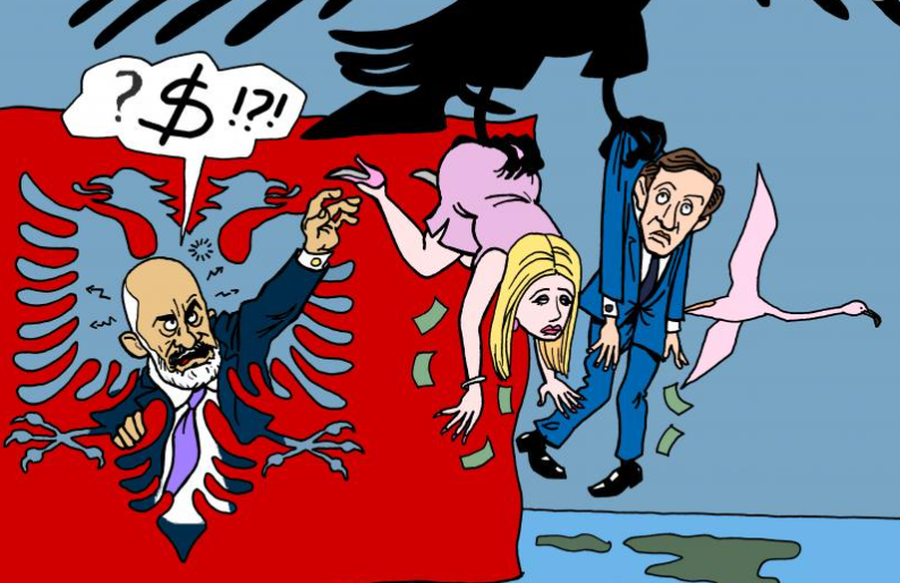
Als Pläne zur Entwicklung einer geschützten Insel in Albanien, die von Jared Kushner, dem Schwiegersohn von Donald Trump, unterstützt wurden, Massenproteste auslösten, geschah etwas Unerwartetes: Eine Generation, die sich darauf vorbereitete, das Land zu verlassen, beschloss zu bleiben und zu kämpfen.
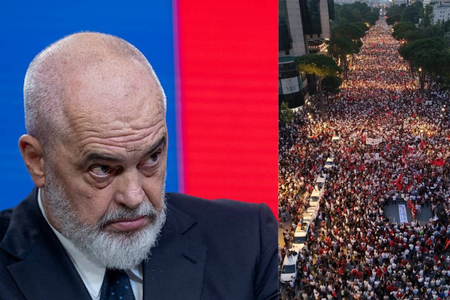
Am 30. Mai brachen in Albanien Proteste aus, die schnell als „Flamingo-Revolution“ bekannt wurden und sich zu einer viel breiteren Bewegung als einer einfachen Bürgerreaktion entwickelten.
Den Anstoß dazu gaben Pläne für großflächige Bauvorhaben auf der unbewohnten Insel Sazan sowie die Absicht, die Küstenlinie von Narta und Zvërnec zu bebauen. Diese Projekte wurden maßgeblich von dem amerikanischen Investor Jared Kushner, dem Schwiegersohn des US-Präsidenten Donald Trump, unterstützt.
Ohne Beteiligung von Parteien und hauptsächlich angeführt von jungen Menschen, die nach dem Fall des kommunistischen Regimes geboren wurden, vereinte die Bewegung Menschen unterschiedlicher politischer Überzeugungen im In- und Ausland um eine einzige Idee: Entwicklung kann nicht mit Massenauswanderung, politischem Nepotismus und einer der Öffentlichkeit verschlossenen Entscheidungsfindung einhergehen.
Der Fall der Investition in Sazan verdeutlicht die Hauptwidersprüche des heutigen Albaniens.
Einerseits wird das Land als die „neue Adriatische Riviera“ beworben. Andererseits sieht sich die Gesellschaft mit einer massiven Abwanderung junger Menschen, einer Wohnungskrise in den Großstädten und tiefgreifenden regionalen Ungleichheiten konfrontiert.
Die Regierung in Tirana steht unter dem Druck zweier Anforderungen: einerseits den Umweltschutz zu gewährleisten, öffentliche Anhörungen sicherzustellen und die Korruption zu bekämpfen, andererseits aber auch ausländische Investitionen ungehindert anzuziehen.
Dieser Konflikt zwischen proklamierten europäischen Werten und einem aggressiven Entwicklungsmodell mit Balkanmerkmalen wird als einer der Hauptfaktoren für die sich im Land abzeichnende politische Krise angesehen.
Zusammenbruch der Regierung?
Ervin Goci, Aktivist und Dozent am Institut für Kommunikationswissenschaft und Journalismus der Universität Tirana, sagt, dass die Proteste als Reaktion auf den Verlust von Hunderten Hektar Land, das durch Stadtplanungspläne geschützt war, begannen, sich aber mittlerweile zu einer größeren politischen Forderung ausgeweitet haben: dem Rücktritt der Regierung.
Mit Blick auf den europäischen Integrationsprozess fügt Goci hinzu, dass sich Albanien an einem Scheideweg der Unsicherheit befinde, betont aber, dass dies nicht von den Bürgern ausgehe, die seiner Meinung nach ganz genau wüssten, was sie wollten.
Das Problem liegt seiner Ansicht nach in bestimmten politischen, wirtschaftlichen und kriminellen Interessen, die die EU-Integration entweder gar nicht wollen oder sie nur oberflächlich unterstützen.
He also criticizes an approach that, according to him, treats integration as a “political bargain”, where membership is sought without accountability for the rule of law. According to Goci, the protest would not have reached this scale without a profound social change: the transition from apathy to civic organization and solidarity, which took place outside institutional control.
"Flamingo represents a new internationalized Albania, but with an alternative and modern identity, in contrast to the official tourist image of the country. Through this movement we are showing that we are not spectators of corruption and organized crime, but masters of our wealth."
"We don't use the national flag because it divides us. Meanwhile, the flamingo has universal symbolism and builds bridges across borders. It is the symbol of the 21st century Albanian in a global world," he says.
People of the protest
Besiana Guri, founder of the environmental organization “Lumi,” has been part of the movement since day one. She says the “Flamingo Revolution” was born from the citizens themselves and that the flamingo symbol was chosen because it represents a species threatened by development projects in coastal areas.
According to her, the movement has united people with different concerns, including those seeking a profound change in the political system and a break from the long post-communist transition.
Guri explains that the main demands of the protesters are related to a new way of governance: more transparency, participation in decision-making and real listening to the voice of citizens. She emphasizes that most of the protesters are young people who until yesterday were planning to emigrate, while now they see an opportunity to stay.
According to her, new political forces could also emerge from this movement, as there is a widespread rejection of discredited elites. "We don't need a leader or a party to lead us; the protest stems from society itself and will produce its own results," she says.
Corruption, black money and tax evasion
A study by the Global Initiative Against Transnational Organized Crime shows that about 59 percent of companies that received construction permits for towers in Albania during 2017-2019 were financed by undeclared or illegal capital.
For the same period, it is estimated that around 1.6 billion euros were laundered in the real estate sector. While a report by the Friedrich Ebert Foundation estimates that between 2015-2024 corruption and tax evasion generated over 8 billion euros in undeclared funds, mainly in construction.
The Special Prosecution Office (SPAK) has launched investigations into property transactions in the Zvërnec area, while banks have frozen suspected funds related to these purchases.
But the "Flamingos" did not remain only in Tirana. Within a few weeks, the symbol of protest spread to the diaspora.
In verschiedenen Städten Europas – von Athen und Berlin bis Wien, Den Haag, Oslo und Bologna – gingen Albaner auf die Straße und riefen unisono: „Albanien steht nicht zum Verkauf!“



Lini një Përgjigje