


 Shkruar nga Pamfleti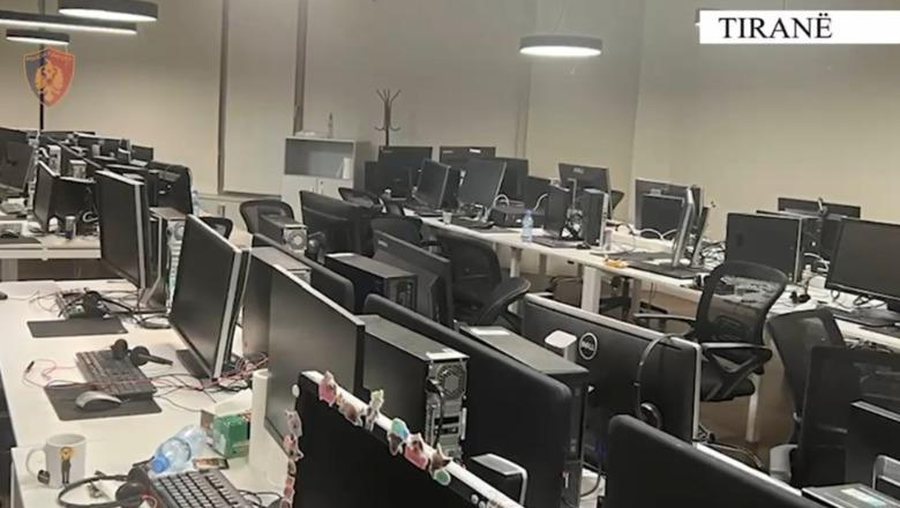
During the operation, computers used for fraudulent activity were found, as well as operators working there.
The action against fraudulent 'mushrooms' called call-centers in Tirana continues. Today, an operation coordinated by the Tirana Prosecutor's Office, in cooperation with the Austrian authorities, was carried out, where two call centers that were used to defraud European citizens and gain considerable amounts of money were hit. This action comes after the call centers owned by Granit Pepnika were hit on April 13 of this year.
The operation took place near the Dry Lake area in the capital, where authorities conducted searches at the premises of two suspected entities. During the operation, computers suspected of being used for illegal activity were found and seized, while operators were also found operating on the premises.
According to investigative sources, the operation was carried out within the framework of international cooperation with Austrian authorities, who are assisting in the investigation of the suspected fraud scheme that targeted citizens of European countries.
The operation, led by the Tirana Prosecutor's Office, in cooperation with Austrian authorities, is considered a continuation of the action launched in April, when three call centers spread across 12 premises in the capital were discovered. At that time, 10 people were arrested and around 900 thousand euros in cash were seized, while investigators raised doubts about the existence of a well-structured organization with international reach.
According to the investigative file, the scheme operated through fake online investment platforms. Victims in Germany, Italy, Greece, Spain, the United Kingdom and other countries were lured by deceptive online advertisements promising quick profits and safe investments. After registering, they were contacted by operators posing as professional financial advisors or brokers.
After gaining the victims’ trust, the operators would convince them to repeatedly transfer money to accounts and platforms that appeared to function as investment exchanges. In reality, the funds were never invested, but instead passed through a chain of companies and accounts controlled by the scheme’s organizers. In many cases, the victims were scammed a second time, after being contacted by people promising to recover their losses in exchange for new payments.
Investigations have revealed that the network operated according to the model of a well-organized corporation. The operators were divided according to the languages and markets they targeted, communicating in German, Italian, Greek, English and Spanish. Each group had a leader, while the activity was supported by special financial, IT and managerial structures.




Lini një Përgjigje