


 Shkruar nga Pamfleti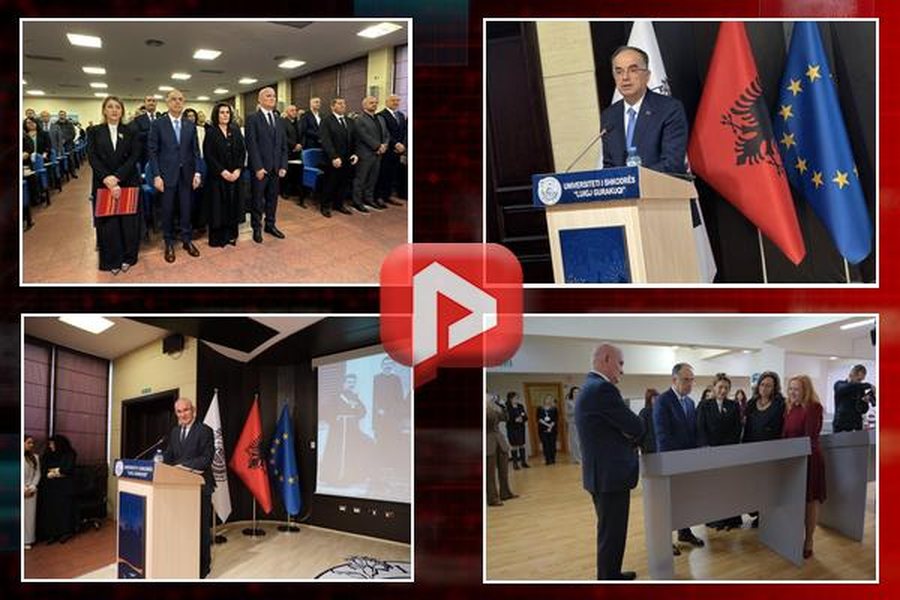
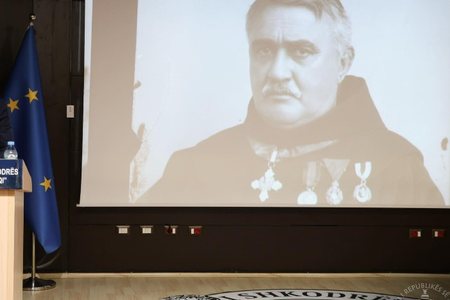
On the anniversary of the Monastery Congress, the Scientific Symposium "The Alphabet that Unites Albanians" was held at the University of Shkodra "Luigj Gurakuqi".
117 years ago, the Albanian alphabet was unified at the Congress of Manastir. The Congress of Manastir is rightly considered the most important national assembly in the political and cultural history of Albanians at the beginning of the 20th century.
It was a national congress, which was held in Manastir from November 14 to November 22, 1908.
Today, after 117 years, this Congress is known and will continue to be known as the Alphabet Congress, the Congress that made a turning point for Albanians and the Albanian language, the Congress from which the unique Albanian alphabet was formed.
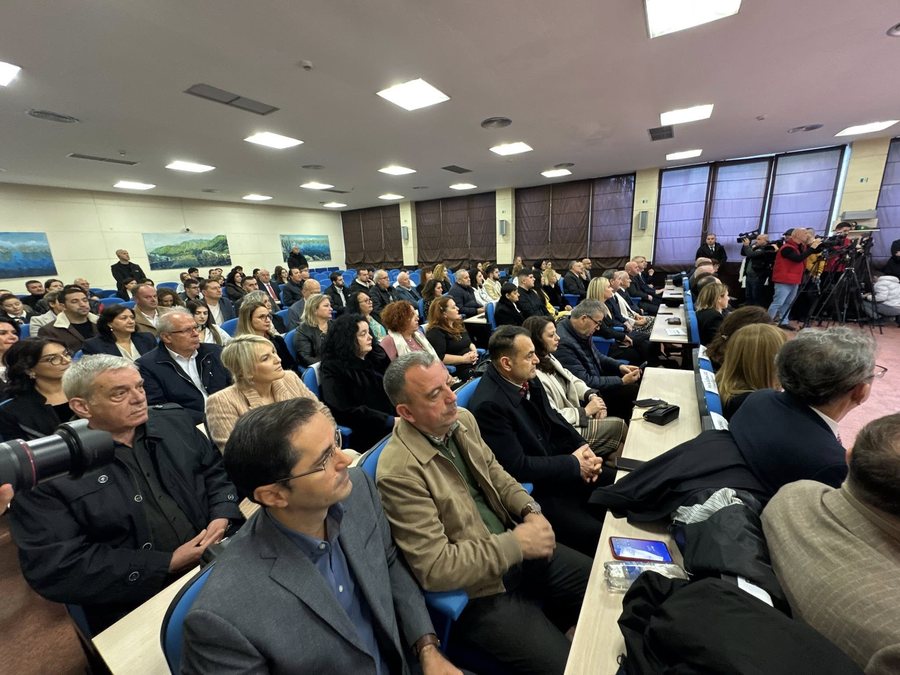
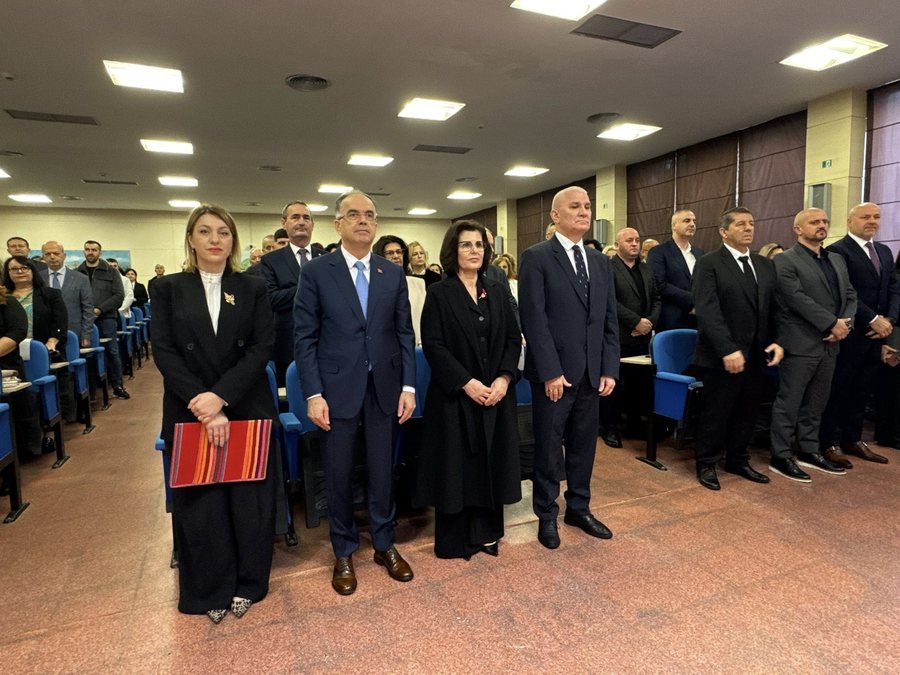
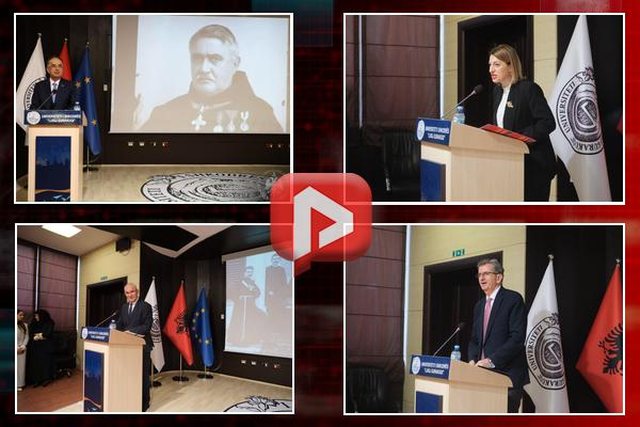
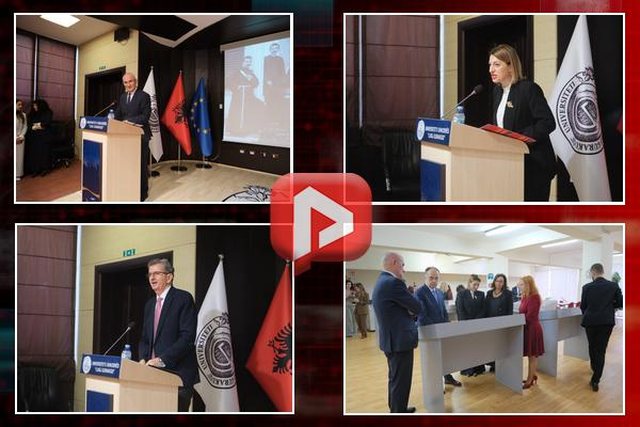
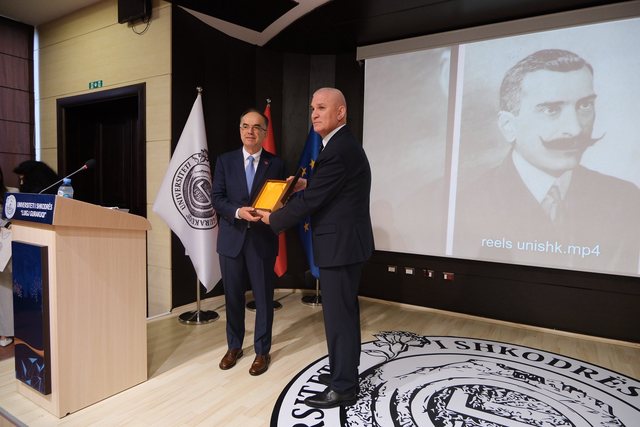
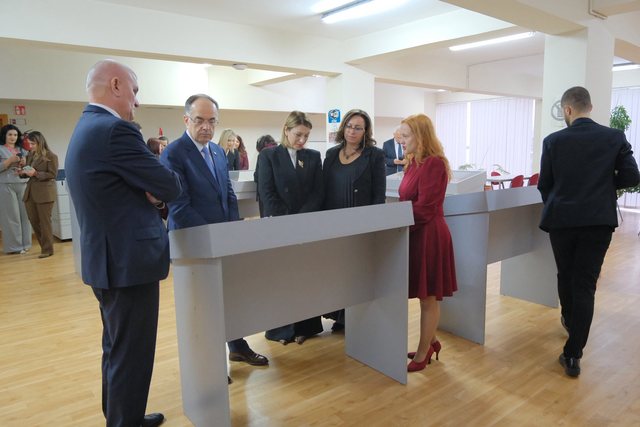
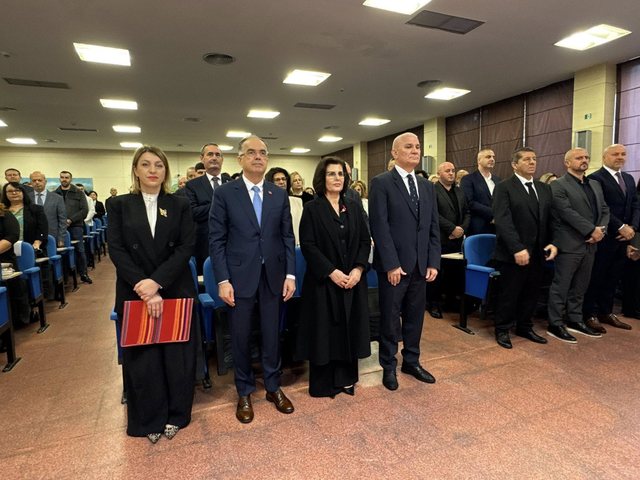
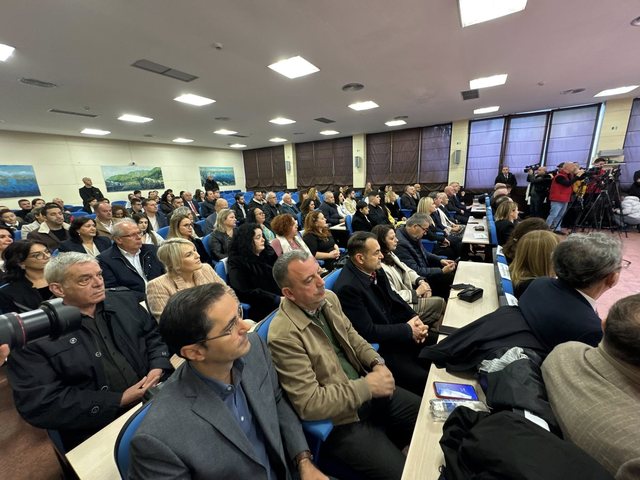
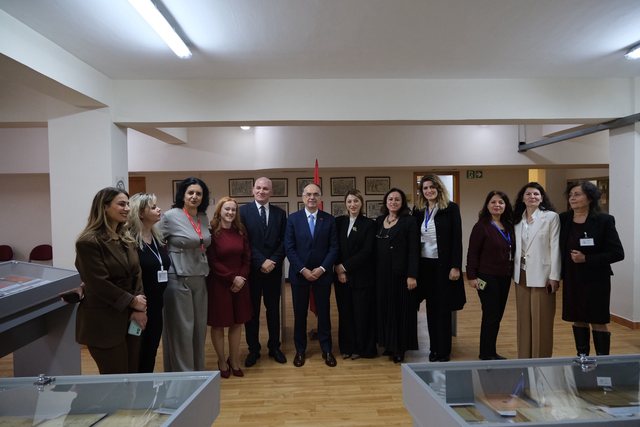
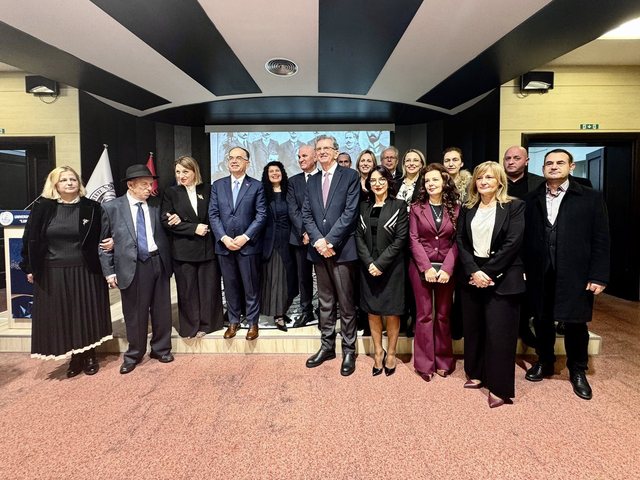
On this important day, the Scientific Symposium " The Alphabet that Unites Albanians " was held at the University of Shkodra "Luigj Gurakuqi". The activity was honored with the broad participation of state authorities, academic institutions and the Shkodra community.

The symposium was attended by: President of the Republic Bajram Begaj, Prefect of Shkodra District, Holta Duda; Mayor of Shkodra District, Edmond Ndou; Deputy Speaker of the Parliament of Montenegro, Nikollë Camaj, MPs and local representatives, as well as teachers, students, pupils and citizens of Shkodra.
The President of the Republic welcomed the symposium, describing Alphabet Day as one of the fundamental moments of Albanian cultural identity and emphasizing the importance of the role of universities in the preservation, study and development of the Albanian language.
Begaj emphasized the importance of the Albanian language across generations, the sacrifices of patriots, and the contribution of scholars to preserving and enriching the spirit of the nation.
" Language is the sign of nationality, it is the soul of a nation. It holds the memory, customs, songs, legends, our way of thinking and feeling. Our Albanian language is one of the oldest languages in Europe, which has survived invasions, prohibitions and attempts to eradicate it. No foreign power could erase it, because it lived in the hearts of people, in the words of mothers, in the songs of the brave, in the stories of the wise. Albanian has kept us alive as a nation when we had no state, when we had no army or defined borders. Therefore, preserving and developing the Albanian language is a patriotic act as important as defending the homeland ," he said.
In the context of the introduction of new words as a result of technological momentum, the Head of State emphasized the enrichment of the language and its transmission to children, especially those of the Diaspora.
" Every language, but especially those spoken by a smaller number of compatriots, such as Albanian, are nowadays at risk, on the one hand from the influence of international languages, and, on the other hand, from the deformations that occur in digital communication. I believe that the esteemed professors of this university know better than anyone that whoever does not speak their own language well will always be limited in learning other languages. Whoever wants to speak a foreign language well must start by learning their mother tongue well and with love ," emphasized the President of the Republic.
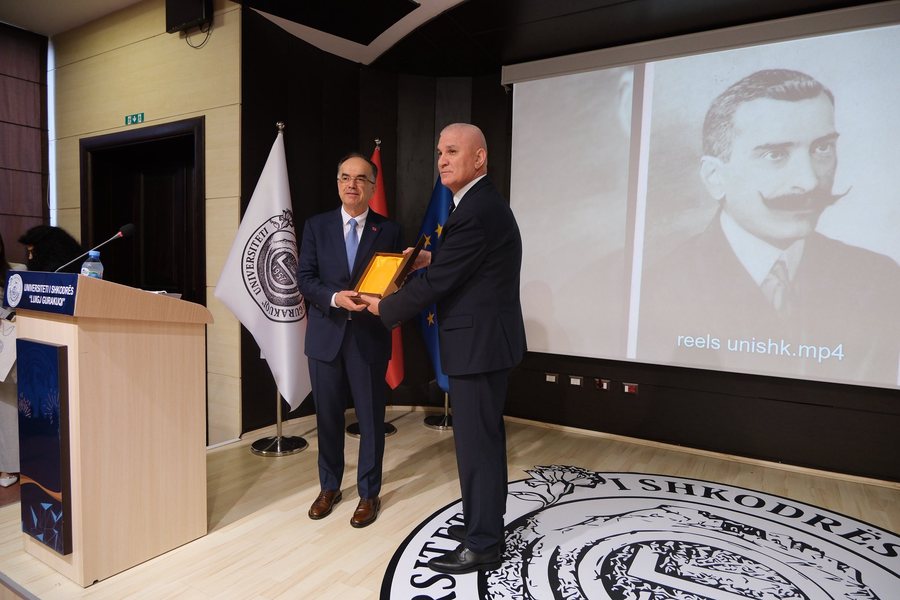
The Head of State honored the historical figures of the Congress of Manastir, and alongside them the contribution of later patriots and researchers. Referring to Shkodra activists, President Begaj praised the figure of Luigj Gurakuqi, whose name the University of Shkodra bears, where Alphabet Day was celebrated, as well as the studies and efforts of the researcher of the history of Albanology, Jup Kastrati, the researcher of the alphabet, Tomor Osmani, and the work of the linguist Bahri Beci.
At the end of the speech, the Head of State conveyed this message along with congratulations on Alphabet Day: " Today, we have everything they dreamed of: we have Albania, we have Kosovo, we have Albanian education, Albanian media, Albanian technology. But we also have a moral obligation: to preserve, protect and further develop this sacred heritage: our language, as the most vivid sign of Albanian identity ."
While Rector Tonin Gjuraj, in his welcoming speech, highlighted the historical importance of the Congress of Manastir and the fact that the unified alphabet served the nation as the most powerful tool of cultural and educational unity. He brought to attention the contribution of great figures such as At' Gjergj Fishta, Ndre Mjeda and Mit'hat Frashëri, recalling Fishta's message that "language work is a noble work". / Pamphlet



Lini një Përgjigje