


 Shkruar nga Pamfleti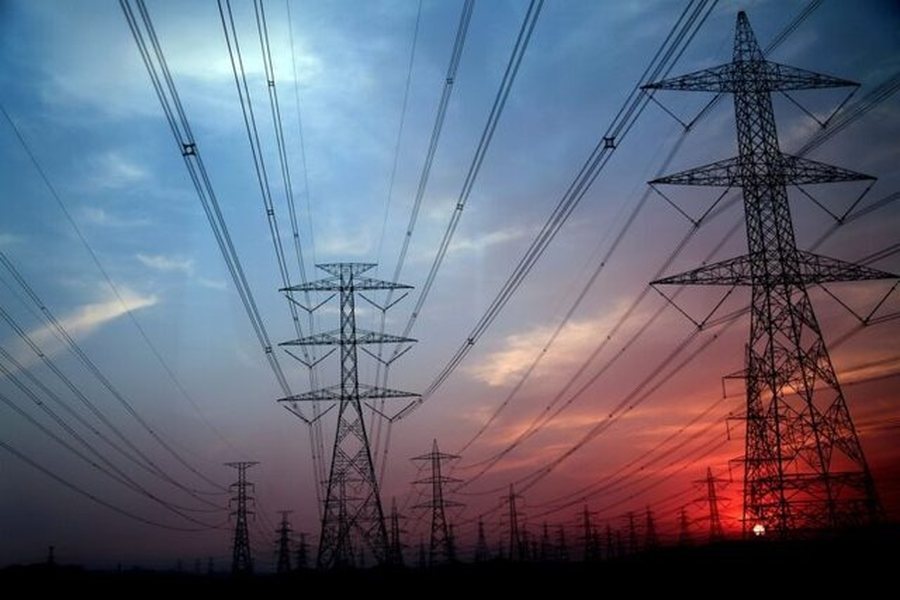
The ENTSO-E Systems Operations Committee will conduct a detailed investigation of this event with the support of experts, which will last 6 months.
The European Commission has announced an international investigation regarding the incident in the energy system network in the south-eastern part of Europe that led to a power outage yesterday in Albania, Montenegro, Bosnia and Herzegovina and partially in Croatia.
Montenegrin officials claim that the interruption of electricity in the region is a consequence of the heavy load and the increase in daily consumption and high temperatures. An investigation by the European Network of Transmission System Operators for Energy (ENTSO) will determine the root causes of the problem.
"On June 21, 2024 at approximately 12:20 p.m., a major network incident occurred in the southeastern part of Continental Europe's power system. The incident resulted in power outages in Albania, Montenegro, Bosnia-Herzegovina and a partial outage in Croatia. The affected TSOs, with the support of neighboring TSOs, restored power to their grids within approximately 2 hours, aiming to minimize the impact of the outage on customers," the ENSO statement said.
ENTSO-E announced that it is collecting all technical data relevant to this event from the affected TSOs and will provide more information as soon as possible.
In accordance with the Incident Classification Scale methodology, ENTSO-E's Systems Operations Committee will conduct a detailed investigation of this event in the coming weeks, with the support of a panel of experts, ENTSO announced.
Montenegro: The defect is not a human factor
The director of the National Dispatch Center in Montenegro, Ranko Rexhiq, said in a press conference yesterday that there is no information on what exactly happened.
"This will be determined by the European Association of Transmission System Operators, which is part of the European Commission. They will have detailed and accurate information after the investigation ," he said.
Redžić said he could not comment on regional media claims that Montenegro was allegedly responsible for the incident. He explained that it was a regional failure and what happened will be shown by the investigation by the EC's official body.
He also stated that the cause of the incident was not the human factor and that "we should not even think about it", and that such a concern has not happened in Montenegro in the last 30 years.
"The reason could also be the green transition (renewable energy sources) because that market is very active ," he said.
The investigation will last six months
Croatian officials, as reported by local media, announced that the theoretical collapse could have hit all of Europe because energy systems are interconnected and that it is irresponsible to make assumptions before the official investigation by European bodies, which usually takes six months.
"We are witnessing a regional breakdown of the power system, and to blame Montenegro for this would be extremely wrong. The problem arose as a result of a very heavy load, an increase in the daily load and very high temperatures. The whole this leads to the fact that the current cannot be transmitted properly and we are coming to what happened today", said the Minister of Energy and Mines of Montenegro Sasha Mujovic in an official speech to the media.
Albania continues to be a high risk area
In Albania, the Minister of Infrastructure and Energy, Belinda Balluku, stated yesterday that the outage lasted about half an hour across the country and confirmed that, according to an initial analysis, high temperatures and a busy transmission system were the causes.
"We managed to recover the situation within 30 minutes throughout the country, and for Tirana in 17 minutes" , she said in a video message.
She stated that Albania continues to be a high-risk area, because the transmission volumes in the interconnection lines are large and the temperatures will remain at record levels in the days to come.



Lini një Përgjigje