


 Shkruar nga Pamfleti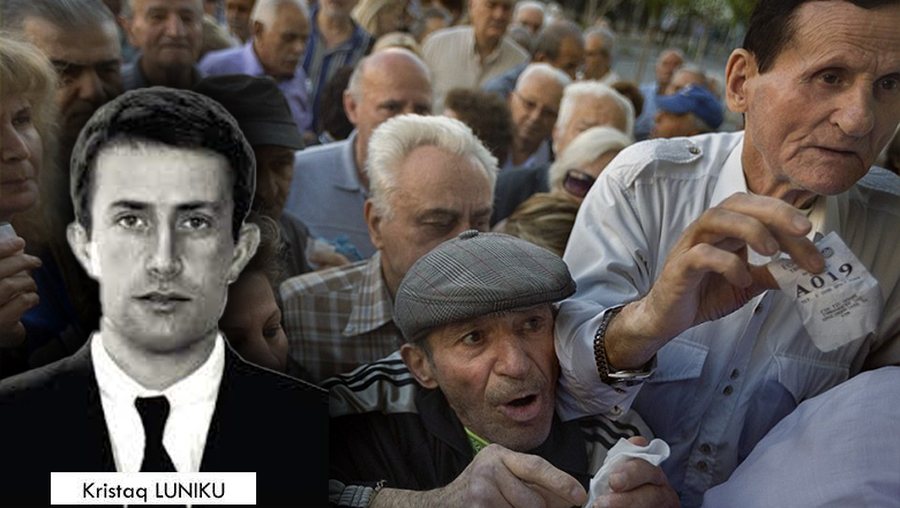
The documents, which are being made public for the first time, say that among the first to raise their voice, about a year before the bankruptcy of Sudes and others, was the Governor of the Bank of Albania, Kristaq Luniku.
In January 1997, Maksude Kadëna, the former worker of a shoe factory, was arrested on the charge of defrauding creditors of significant sums of money. She did not understand how the bankruptcy of the rentier scheme bearing her name had come about.
But Maksude Kadëna was not the only one who did not predict bankruptcy. The collapse of Sudes and its sister rentier schemes - Gjallica, Populli, Xhaferri, Vefa, Cenaj, Kamberi and others, which took with them the whole edifice of the state in 1997, was not foreseen even by its leaders.
So sudden and frightening was everything that happened, that some time later, a good part of the debate among Albanians would insistently seek an answer to the question: Did the responsible bodies of the state function, starting from the Central Bank and going to the Secret Service? Did they timely announce the logical conclusion of the fraudulent rentier schemes?
The documents, which for the first time are made in CRIME STORY, say that among the first to raise their voices, about a year before the bankruptcy of Sudes and others, was the Governor of the Bank of Albania, Kristaq Luniku.
The earliest document in time is dated January 19, 1996. It conveys, to President Berisha, Prime Minister Meksi, Minister of Finance Vrioni and the Chairman of the Supreme State Audit, the Bank's concern "about the developments of the informal market for accepting deposits and the measures that must be taken".
In fact, this communication also talks about an analysis sent earlier, which could move Lunik's alarm even further - to the middle of 1995.
At the beginning of the analysis, Governor Lunik not without purpose considers the story of Hajdin Sejdija's fraud as a "bitter experience", the first in line to start collecting percentage money from Albanians, which once evaporated with the lord.
Initially, Governor Lunik argues that this activity is not called usury. He writes: "...if someone has thought of finding and arguing the legal basis for carrying out and developing this activity, he preferred to call it a foreign activity or usury, referring to the Civil Code of the Republic of Albania. Looking closely at this activity as well as the documentation, if it can be called such, that accompanies these transactions, it is clear that we are not dealing with loans or interest".
The governor further writes that natural or legal persons operating in this market behave like banks even though they are not equipped with a parking license to carry out such activity in a legal and controlled manner.
According to him, the right way is neither the immediate closure of the informal market, which could have unwanted consequences, nor the granting of a license to act as a bank, as they must meet conditions and norms that ensure a sound financial situation.
Here is the alarm of Governor Luniku. dated January 19, 1996. "...it is very important that the state's stance on this problem so far, which shows agreement with the situation and functioning of this market, gives strong signals to both sides in the transaction, as in people, even among those who perform this activity. In case we were to assume the bankruptcy of this market, or of its main players, it would bring a great loss to a significant part of individuals and intertwined with such an attitude, it would bring before the state and the government serious questions : Why was this activity allowed to grow and develop? Why was there no control? Etc"
Governor Luniku writes that the administrators of these annuity schemes must be transparent, reflect why this money is used, how it is administered, where it is invested, with what result, how the return to depositors is ensured and what is the role of the state if it is neglected.
In the end, the Governor of the Bank of Albania writes that the state has a moral obligation to the Albanian public both in the case of the normal functioning of the market and in the case when the activity fails.
Lunik closes the letter dated January 19, 1996 by asking for quick and carefully studied measures in order to resolve the situation.
But despite the repeated alarm of Governor Luniku, President Sali Berisha, Prime Minister Aleksandër Meksi and Minister of Finance Vrioni, do not react. In 1996, their first concern was not fraudulent financial schemes, but the general and local elections to be held within the year.
Furthermore, the flourishing of these fraudulent schemes, which were giving the false impression of well-being to a significant majority of Albanians, began to be sold by the Government as a fantastic achievement of the new democratic system.
These short-sighted accounts led to the collapse of 1997, or in other words, the state's downward spiral.






Lini një Përgjigje