


 Shkruar nga Pamfleti
"La Repubblica" writes that this decision finds Meloni's government unprepared, which had greatly calculated a decision in its favor.

The European Court of Justice (ECJ) has overturned the Italian government's decision to sue the border procedure at migrant reception centers in Albania, writes La Repubblica.
"The designation of third countries as safe countries of origin must be capable of being effectively reviewed by the court," the ECJ has ruled, questioning the full use of the centers set up in Albania, according to what La Repubblica writes.
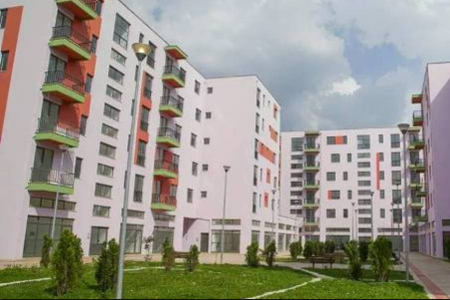
For months now, they have only been used to house 25-30 migrants, while around 400 places remain empty that, according to Prime Minister Giorgia Meloni's initial project, were supposed to house asylum seekers rescued at sea.
What did the court decide?
According to the court, a third-country national may face the rejection of his application for international protection through an accelerated border procedure if his country of origin has been declared “safe” by a member state.
The Court clarifies that such a declaration may be made by means of a legal act, as long as that act can be subject to effective judicial review, with regard to compliance with the essential criteria laid down by European Union law.
Finally, the Court points out that, until the entry into force of a new regulation replacing the current directive, a Member State may not declare as a “safe” country a third country which does not fulfil, for certain categories of persons, the essential conditions for such a declaration.
The new regulation, which will allow for the provision of exemptions for clear and identifiable categories of persons, will enter into force on 12 June 2026, however, the EU legislator may accelerate this deadline.
Lawsuit from Italian courts
Judges of several Italian courts, including the Court of Cassation, to which the Italian Ministry of the Interior addressed itself after repeated decisions to annul the detention of immigrants in Albania (but also in two other centers in Italy for asylum seekers) addressed the Court of Justice of the EU with two questions:
The first question concerned the very definition of a country as “safe”, even when there are categories of people or areas at risk. Although every government has the right to determine the list of safe countries, the inclusion of a country on that list should not occur if it does not meet the relevant conditions.
The second question related to the possibility of including in the list countries where violations of fundamental and non-negotiable human rights have been found, according to the European Convention on Human Rights, to the detriment of one or more categories of people.
The impact of the decision on the government
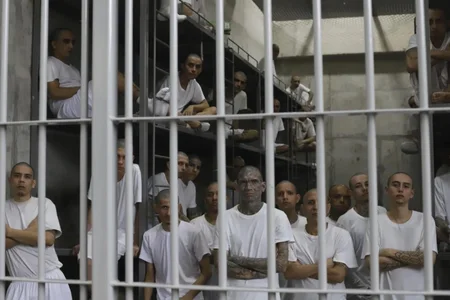
With this decision, it will no longer be possible to return first to the reception center in Shëngjin and then to Gjadra, migrants rescued at sea by Italian military ships and coming from countries that Italy considers safe, i.e. migrants who, according to the government, should be returned quickly to their countries, as soon as the accelerated border procedure is completed.
This was a project that the Italian government had been forced to abandon in recent months, after many Italian judges had considered that the rules were contrary to a previous ruling by the Court of Justice of the EU of October 2024, and had therefore addressed preliminary questions to the Court itself on the correct interpretation of the concept of "safe country".
The interpretation given by the Court of Justice tells Italian judges that their intervention to annul the detention of immigrants coming from a country included by the government on the list of safe countries is legal.
La Repubblica writes that this decision finds Meloni's government unprepared, which had heavily counted on a decision in its favor.
This is also based on what he had seen announced in recent months by the political positions of the majority of states represented in the Court of Justice of the EU, as well as compliance with the new directive on returns, which is expected to enter into force next year, immediately after the implementation of the new Pact on Migration and Asylum.
We recall that in March, the Meloni government decided to change the function of the immigrant centers in Shëngjin and Gjadra.
If they were previously designed to hold migrants rescued in international waters, they are now used to house those who have been denied asylum and are awaiting repatriation.
But even for this, Meloni has encountered trouble after the High Court in Rome requested the opinion of the European Court of Justice on the cases of sending two immigrants, raising questions about the purposes for which this center is currently being used.
In the first case, an opinion is requested on the compatibility of sending rejected asylum seekers from Italy to the Albanian camp for the purpose of repatriation. While in the second case, an opinion is requested on sending asylum seekers who entered illegally to Gjadra.






Lini një Përgjigje