


 Shkruar nga Pamfleti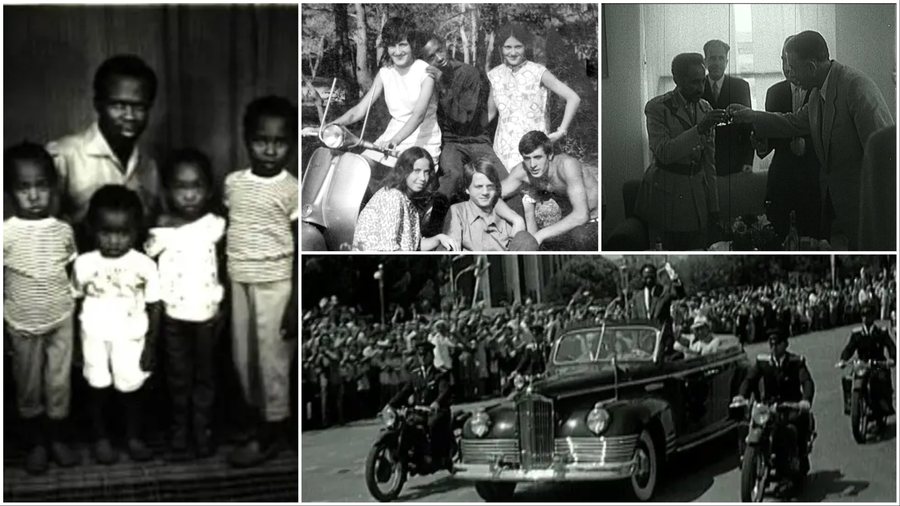
The end of colonial rule in the early 1960s coincided with the deterioration of Chinese and Soviet relations and the breakdown of Albanian-Soviet relations.
Albania strengthened its relations with the People's Republic of China under the leadership of Mao Zedong in an attempt to create a front against Western capitalism and Soviet "revisionist" influence in Africa.
Through diplomats in Accra, the Labor Party of Albania made contact with members of the Union of the Peoples of Cameroon, UPC, Abel Kingue and Ndeh Ntumazah. To support their fight against the neo-colonial regime in Cameroon, the Albanians hosted Ntumazah's children and wife in 1964.
Three years later, in 1967, Albania became the permanent residence of the children of Elise Osendé, who was most likely Osendé's wife Afana. Afana, also from the UPC, was killed in action in 1966.
The Albanian embassy in Algeria served as a point of contact with the Congolese activists. After a Cuban colleague told him about Che Guevara's exploits in Congo, the Albanian ambassador in Algiers recommended that the government in Tirana host three Congolese students who had been expelled from Belgium for political reasons, as well as the wife and child of one of them. The students were advised to go to Albania by Jacques Grippa, the head of the Communist Party of Belgium, who planned to go there for vacation.
Several Congolese students and activists traveled to Albania in the mid-1960s. In 1966, a year after the coup that brought Mobutu to power, 15 Congolese children and one child born in Uganda arrived in Albania. Among them was the child of the revolutionary activist, Willem-Emmanuel Kabasu Babo.
Kabasu Babo, traveled to Tirana in 1967, with Constantin-Marie Kibëe and Thomas Mukwid. In the Albanian capital, they reached an agreement to form a Marxist-Leninist party, which was founded in the Congo, as the Communist Party of the Congo.
Babo returned to Albania in 1970, investigating the conditions of Congolese children, and asked the Albanian government for financial and logistical support, in exchange for diamonds, gold, uranium, mercury and cocaine. The government rejected the request as Babo had been expelled from his party for alleged pro-Soviet leanings.
The Congolese and Cameroonian children were between the ages of 2 and 15 when they arrived in Albania. They grew up without their parents, some of whom were killed in the fighting.
Until the mid-1970s, Albanian authorities paid little attention to them, but interest grew, when most were in their teens and some began to show subversive tendencies.
Në vitet 1974-‘75, krerët lokalë të Komitetit të Partisë së rrethit të Vlorës, u ankuan për “sjelljen e pakëndshme” në bregdetin e Adriatikut, të të rinjve “kongolezë” José (“Zhose” ose “Zhozef” në arkivat shqiptare) Makanga dhe Vitali Pakasa, përkatësisht 15 vjeç dhe 16 vjeç.
Dyshja e kongolezëve u akuzuan për braktisje të shkollës, shoqërim me “elementë të degjeneruar”, në mesin e “rinisë sonë” dhe se ishin të dhunshëm dhe abuziv. Thuhej gjithashtu se; po ndiqnin modën dhe muzikën perëndimore.
Dokumentet arkivore përmbajnë gjurmë të politikës së vazhdueshme të margjinalizimit. Në një letër, termi racist “zezak”, përdoret rëndom prej tyre, kur i referohen Pakasa-s dhe Makanga-s.
Sipas drejtuesve komunistë të Komitetit të Partisë së rrethit të Vlorës, të dy të rinjtë duhet të ishin futur në punë, si gjithë emigrantët e tjerë, ose të dëboheshin nga vendi. Dyshja kongoleze, hodhi poshtë akuzat; Makanga protestoi për trajtimin e keq ndaj tyre dhe të dy u kërkuan autoriteteve lokale, ose t’i kthenin në Kongo, ose t’i fusnin në burg.
Gjendja emocionale e Makanga-s u përkeqësua deri në atë pikë, sa ai preu damarët me një copë xhami. Ai i shkroi udhëheqësit komunist Enver Hoxha, për të denoncuar trajtimin e tij nga autoritetet shqiptare, por letra çuditërisht, mungon në arkivat shqiptare.
Në vitin 1978, një raport i Ministrisë së Kulturës, pranoi se autoritetet lokale, i kishin margjinalizuar fëmijët kongolezë, duke thënë se ata kishin ardhur në Shqipëri, në një moshë shumë të re, por trajtoheshin si të huaj dhe e ndjenin këtë.
Një eksperiencë të ngjashme patën edhe adoleshentët afrikanë, në Elbasan. Në prill 1975, autoritetet komuniste lokale, u ankuan për sjellje të papërshtatshme nga Joseph (“Zhozef” në arkiva) Osendé, djali i Elise Osendé, dhe Jean Mate (“Zhan Mate/Mat” në arkiva).
Të dy kishin lavdëruar Bashkimin Sovjetik. Osendé, i cili dikur jetonte atje, pohoi se të rinjtë, kishin më shumë mundësi për argëtim. Osendé e braktisi shkollën dhe e kalonte kohën, duke lexuar romane, duke luajtur ping-pong dhe duke dëgjuar muzikë në radio.
Autoritetet lokale rekomanduan që studentët “afrikanë”, të largoheshin, sepse ishin “të padëshiruar”. Moneng Charles (“Mon Eng Sharl” në arkiva), një student më i vjetër, tërhoqi vëmendjen e autoriteteve shqiptare në vitin 1976.
Sipas Ministrisë së Brendshme, Charles përhapi literaturë revizioniste dhe propagandoi muzikën dekadente perëndimore, si dhe mënyrat e jetesës. Ai kishte kryer akte “imorale”, me shumë vajza shqiptare e të huaja dhe kishte marrëdhënie me personelin e ambasadave polake dhe bullgare, pretendonte ministria.
Charles u dëbua nga Shqipëria më 27 janar 1977, kur i duheshin edhe dy muaj e gjysmë, që të diplomohej për mjekësi. Para se të hipte në aeroplan, Charles u dha agjentëve që e shoqëronin, një kasetë me një mesazh për Hoxhën.
Appearing to speak on behalf of all Congolese students, Charles dismissed the allegations against him but said he would be grateful to Albania. He also mentioned that he often felt alone in the country and asked the party to take care of other Congolese because they could achieve more than him.
Limited impact on international relations
The spread of communist movements and the end of colonial regimes created forms of solidarity that challenged the racist ideology that characterized relations between Europeans and Africans.
However, the effects of the communist movements were limited at the level of foreign and international relations. They did not touch the intimate structures of socialist society, where foreigners and some minority groups continued to be marginalized because of their ethnicity and race.
This shows the limits of state-driven inclusion politics and sheds light on past and present forms of solidarity between Albanian and African citizens that go beyond institutionalized spaces and relationships. Memory.al







Lini një Përgjigje