


 Shkruar nga Pamfleti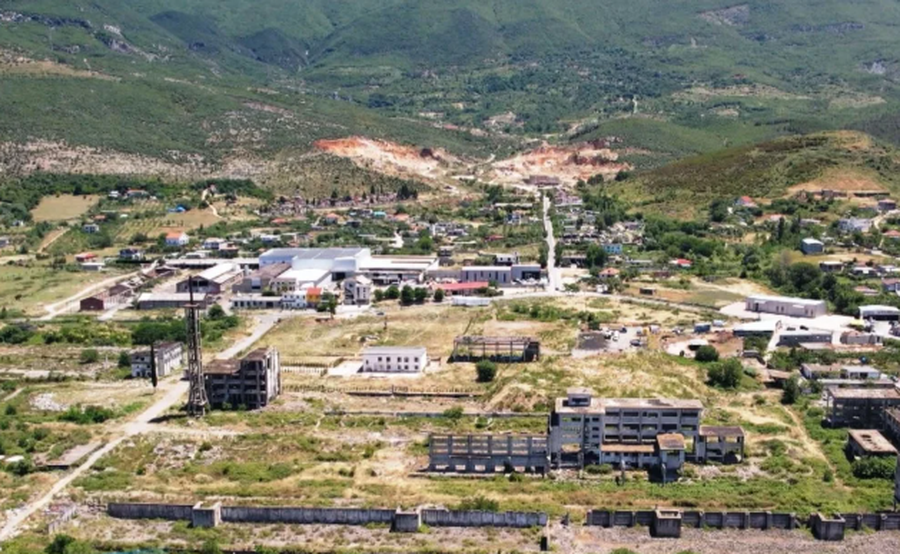
The former Superphosphate Plant in Laç continues to remain an open environmental and safety problem, while the hazardous waste that has been on its territory for years has been left to its fate.
According to a Strategic Environmental Assessment report drafted by the Kurbin Municipality itself, the former plant continues to have a significant negative impact on the environment. The document states that a waste stockpile could release arsenic and copper into groundwater, risking contamination of drinking water sources.
The Laç Plant operated from 1967 until the early 2000s, during which time calcium phosphate was used to produce chemical fertilizers. Today, it is out of operation, while efforts to privatize it have only resulted in the partial sale of assets. On its territory, there are about 300 thousand tons of iron-rich waste, spread over an area of 38 hectares.
The problem is also highlighted in the national report published by the National Environment Agency for 2025, where the former Laç Superphosphate Plant is classified as an area with a high concentration of chemicals and heavy metals.
Although the documentation shows that the territory is preserved, the reality on the ground is completely different. The ruined buildings have been left in oblivion and anyone can enter the territory without any obstacles.
The show Fiks Fare has been dealing with this problem since 2012, when various people entered the plant to take and sell scrap. Just one day after the broadcast of the chronicle at that time, the Ministry of Economy reacted by dismissing the responsible guards. But after 14 years, the demolition has continued and the situation seems to have remained unchanged.
The former warehouseman of the plant, Shkelqim Lama, denounces that currently people are paid to guard the territory, and there is even a director, while no one actually stays at the facility. According to him, this money could be used for people in need and not for employees who do not perform their function.
He adds that over the years, people have lost their lives searching for scrap metal among the ruins in the plant's territory, indicating the danger that the area continues to pose.
Fiksi also contacted Ylli Lama, a former guard at the facility, who in a phone conversation indicated that he worked until 2024 and then left due to non-payment of wages. He stated that he is currently in court proceedings for unpaid wages.
Meanwhile, his nephew, Geraldo Lama, who continues to appear as a guard, admitted that he has not received a salary for a long time and that he is only paid social security. He stated that he passes by the facility from time to time, but does not stay there because the minimum conditions for performing the service are lacking.
The company's director also admitted that there are currently only two guards and one director. According to him, they have not been paid for years and are waiting for the liquidation of liabilities. He explained that since 2016 the company has been operating as a joint-stock company and had the right to self-finance through the sale of assets, but this has not been realized because there has been no interest in purchasing.
According to the director, the Ministry of Economy has recently decided to close five state-owned joint-stock companies and financial obligations to staff are expected to be repaid through the sale of assets.
Thus, while the state owes salaries to the people who were supposed to guard state facilities, the former Superphosphate Plant continues to remain abandoned, unprotected, and a constant risk to the environment and public safety./ TCH








Lini një Përgjigje