


 Shkruar nga Pamfleti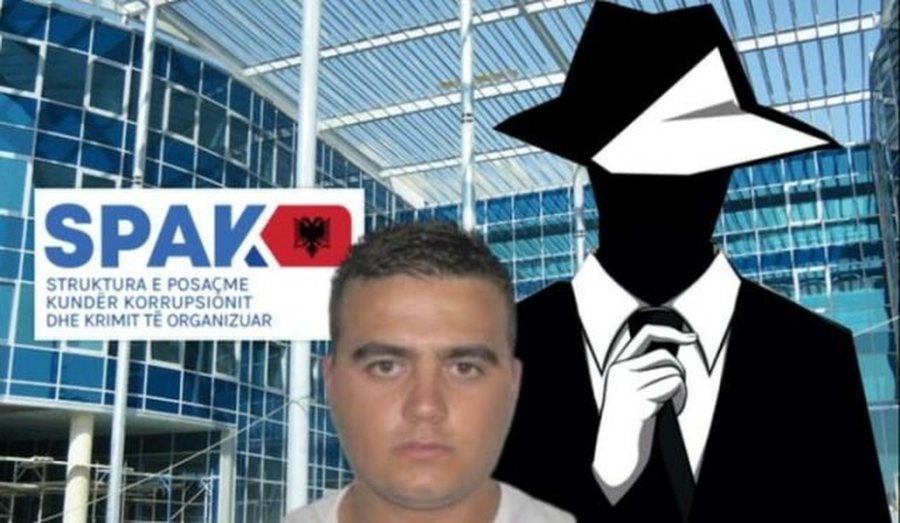
A part of the income obtained from the traffic and sale of cocaine was invested in the purchase of the narcotic substance in the future, in cash savings that were sent to Albania, in registered businesses, as well as to support the operational infrastructure of the organization and the purchase of influence in segments of special aspects of the justice system, police, media and business.
The Special Prosecutor's Office Against Corruption and Organized Crime, SPAK, published on Tuesday, November 26, the results of the investigation into the criminal organization led by Suel Çela, also known as Marius Lulaj, who is accused of attempting to traffic tons of cocaine internationally. for the organization of assassinations against opponents as well as for "a continuous war" for the control of the territory in Elbasan and other cities of Central Albania.
The organization led by Çela is also accused by SPAK of allegedly corrupting officials in the police, the judicial system, and two journalists.
The investigation was based on encrypted SKY/ECC communications and was carried out in cooperation with Eurojust, Europol as well as the justice authorities of France, Belgium, the Netherlands and Ecuador. At the request of SPAK, the Special Court of First Instance has assigned security measures for 21 people; 18 of whom are in prison custody and three others with lighter security measures.
" The criminal organization that was led by S.Ç. in order to control the territory, the main goal was the physical elimination of the members of another structured criminal group which operated in the city of Elbasan and which was considered as an opponent of the criminal organization led by S.Ç ," SPAK said through a press release .
"All the illegal activity in Albania was financed by the money that was profited from the criminal activity of narcotics trafficking from Latin America to countries like; Germany, the United Kingdom, Italy, Belgium and the Netherlands, " SPAK added.
The prosecution claims to have documented five criminal episodes committed by Çela's organization; the remaining assassination attempt by sniper against Ardjan Çapjas that happened on June 8, 2020 in Elbasan, the provision of conditions for two other assassinations in 2020, two attempts to traffic nearly 1400 kilograms of cocaine from Ecuador to EU countries in 2021 as well as exercising influence through corrupt acts in certain segments of the justice system, the State Police and the media.
Suel Çela was accused in 2017 of hitting several State Police employees with an armored car at the entrance to the agro-food farm in Elbasan – owned by his family – but was later declared innocent by the court. The location of Suel Çela continues to remain unknown to the law enforcement structures.
Accusations of corruption
According to the data published by SPAK, the criminal organization headed by Çela had succeeded in corrupting the judge Pajtime Fetahu and the former official of the State Police, Dedan Gjoni, who, using their official position, helped the organization with information, also providing facilities and influence in the judicial system in exchange for favors and material benefits. Fetahu was previously under house arrest, while Dedan Gjoni is also accused of collaborating with another criminal group.
According to SPAK, this organization has had the ability to influence and corrupt representatives of the justice system in order for the latter to facilitate the position of the leader Suel Çela and other members in the criminal proceedings in their charge. On the other hand, SPAK emphasizes the ability to influence the judicial body in order to aggravate the position or the measure of punishment that would be given to the members of the criminal group who were considered as their opponents.
Çela's main opponent in controlling the territory in Elbasan, Ardjan Çapja, as well as members of his family are part of a series of serious events that have happened in Elbasan in the last 16 years. Ardjan Çapja was sentenced on November 15, 2023 to life imprisonment by final decision of the Special Court of Appeal, for a double murder in 2012.
In the SPAK announcement, it is stated that one of Suel Çela's goals has been to manipulate public perception, presenting his rivals as untouchable due to the suspected connections they may have with politics. This strategy for manipulating information and influencing public opinion is considered to bring him double benefits, increasing his positions and harming the interests of his rivals.
SPAK accuses journalists Artan Hoxha and Elton Qyno of having benefited from illegal monetary values from Çela in exchange for their positions in the media as well as publishing articles and videos "that misinformed or manipulated public opinion". The security measure "obligation to appear before the Judicial Police officer" has been imposed on Hoxha and Qyno.
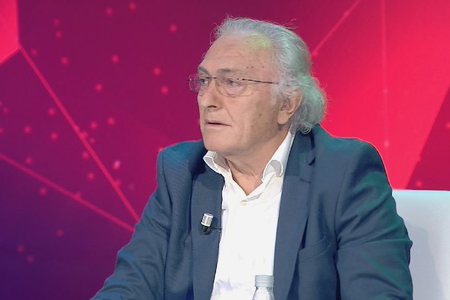
Journalist Artan Hoxha rejected the accusations in a reaction to the show "Opinion" on TV Klan, where he said he was surprised by the measure decided against him.
"I have not committed any crime in my proudly exercised duty at the Shqiptarja.com media group, the school of investigative journalism and black chronicles in Albania, " declared Hoxha.
" They took our phones in the morning and did a house search. They then told us that the control is illegal and they returned our phones, laptops, flash drives, and flash drives, " added Hoxha for "Opinion". Qyno could not be reached for comment.
Cocaine traffic
The investigation has shown that the organization led by Çela has created and implemented a complex closed cocaine trafficking scheme from Latin America to European countries. He achieved this by collaborating with various criminal groups with strong ties in Latin America. The narcotics were ordered by organized Albanian criminal groups linked to local criminal organizations in Latin America.
Afterwards, the amount of narcotics was transported hidden in legal products and transited to several European ports destined for several countries, such as Germany, the United Kingdom, Italy, Belgium and the Netherlands, from where it was extracted, trafficked and sold wholesale. Most of the cargo moved in containers to large ports such as Antwerp and Rotterdam, which served as key points for drug trafficking in the European market. There have also been attempts to transport narcotics through the airports of Belgium and the Netherlands.
A part of the income obtained from the traffic and sale of cocaine was invested in the purchase of the narcotic substance in the future, in cash savings that were sent to Albania, in registered businesses, as well as to support the operational infrastructure of the organization and the purchase of influence in segments of of the justice system, police, media and business./ BIRN


Lini një Përgjigje