


 Shkruar nga Pamfleti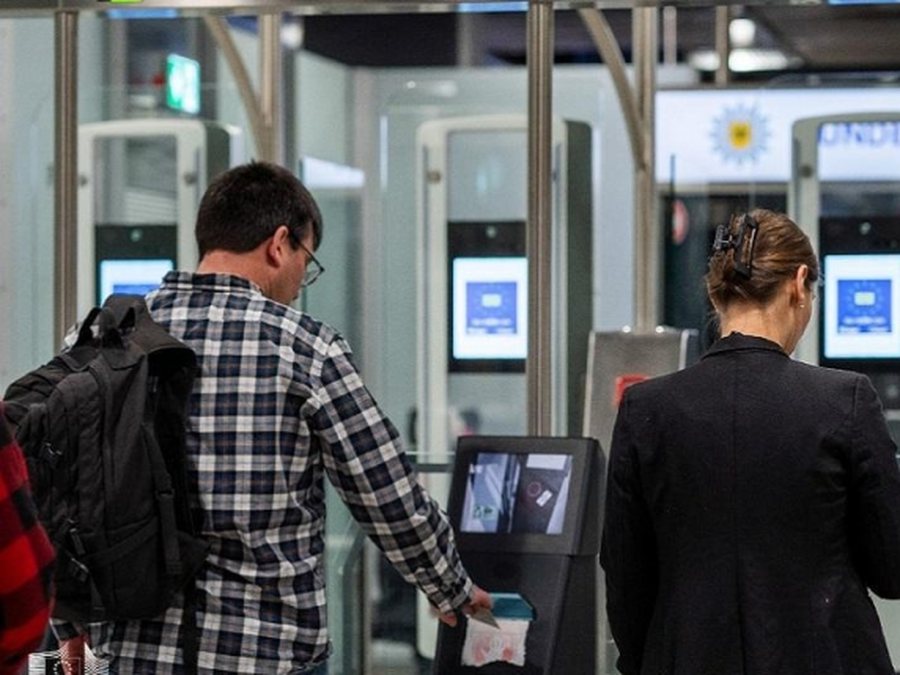
After three years of delays due to technical reasons and privacy concerns, the gradual implementation of the new biometric identification system Entry/Exit System (EES) at airports in European Union countries begins from tomorrow. The system, built on a network of cameras and advanced software, aims to speed up and strengthen border controls for third-country nationals who do not need a visa to enter the EU. The full use of the EES system is expected to start in April 2026.
What changes for travelers?
There is no change for EU citizens. The system only affects travelers from visa-free third countries, such as the United Kingdom, the United States, Israel, Japan, Brazil, the Balkans and others, who enter or exit the Schengen area for short-term stays of up to 90 days within a 180-day period.
The system replaces the manual stamp on the passport with a fully digitalized check, recording:
-biometric data (fingerprints, facial recognition, iris scanning)
-entry and exit data (name, date, location, purpose of travel)
Pre-registration – a mandatory step
Before effectively using the system, travelers must complete a preliminary registration at automatic terminals located in special areas of airports or border crossings.
The procedure includes:
-Passport scanning
-Collection of fingerprints (excluding children under 12 years old)
-Face photography
-Providing answers to four mandatory questions, including: address of residence in the EU and proof of financial means for residence.
How long does registration take?
Entry, exit and refusal data are stored for 3 years. Individual files containing personal data are stored for one more day, after which all data is automatically deleted and registration must be done from the beginning in case of another trip.
Why is this system being implemented?
The main goal of the EES is to improve the control of migratory flows towards Europe. In recent years, the management and security of the EU's external borders has become a strategic priority for Brussels, which has invested over 142 million euros in the development of this technology.





Lini një Përgjigje