


 Shkruar nga Pamfleti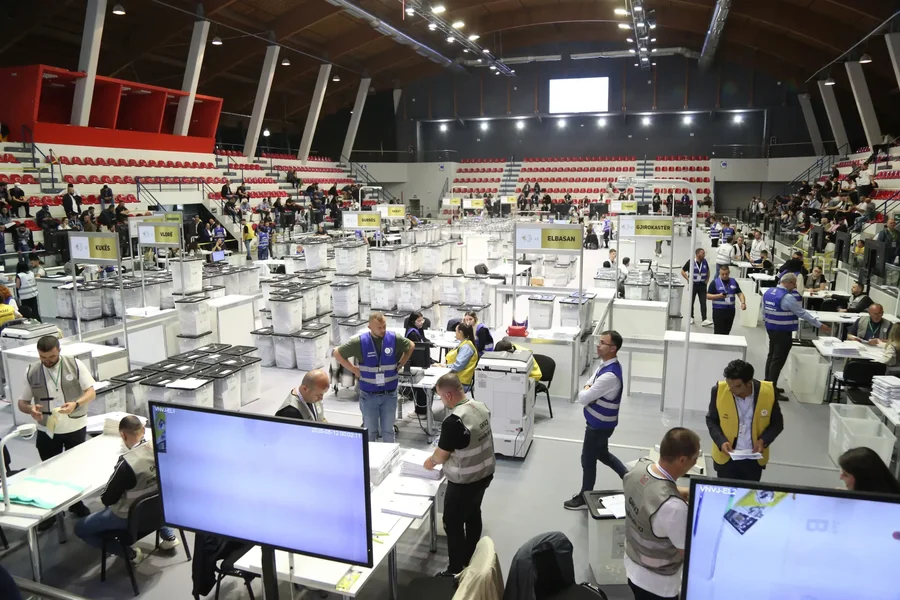
The most significant aspect of the outcome of the May 11 elections seems to be not so much the result itself, but the lack of voters. People who four years ago voted for one political party or another and who, in all likelihood, have left Albania during these four years.
On April 28, 2025, during the electoral campaign, Prime Minister Edi Rama stopped at a rally in the village of Petrelë, Tirana, where he declared that the success of his government's management of the economy was causing many emigrants to return to their homeland.
"...the facts show that what has happened with the development of Tirana has had a very significant impact on the entire rural area and in fact, today we are here in an investment made by a couple who have returned from emigration, have returned from emigration and have made a significant investment, certainly successful, I believe, that a decade ago would have been inconceivable," he declared, according to the speech published on the Socialist Party's website.
The facts actually suggest that the picturesque village of Petrela, where a number of restaurants have long helped the population to secure a normal living, has been affected by a significant population decline, and that the couple returning from emigration, about whom Rama spoke, are likely to be an exception to the rule. Central Election Commission data analyzed by BIRN show that the number of voters in the Petrela administrative unit has fallen by 6% between 2021 and 2025. Petrela has actually seen a relatively contained decline compared to the rest of the country.
It doesn't matter if you look at rich areas or poor areas. It doesn't matter if you look at the urban areas in the center of Tirana or the informal areas on the outskirts, nor whether you look at the coastal areas, where tourism is supposed to bring prosperity, or the mountainous areas, where life is difficult. Wherever you look at the map of participation in the May 11 elections in Albania, you will notice a significant hole, the number of people who did not vote and who, most likely, did not vote because they are no longer in Albania.
The absentee voters, exactly 200,136 people or 12% of the entire voting population present in 2021, suggest that the country has faced an extraordinary wave of emigration over the past four years, a wave that seems to have eaten away at 3 percent of the population per year and that, in all likelihood, will erode the country's ability to produce goods and services and, ultimately, to pay the pensions of an increasingly large generation of elderly people.
The decline in population also seems to explain the consolidation of the Socialist Party's result, which has essentially received fewer votes within Albania and a higher percentage of valid votes than in 2021, while its policy of abusing state resources, such as public sector jobs, offers relatively stable votes against a shrinking population.
BIRN analyzed the data on turnout in the 2021 elections and the nationwide turnout in the 2025 elections, at the district and municipal levels, and separately examined turnout in the administrative units of Tirana City, Tirana Municipality, and several major cities in the country. At the district level, the decline is recorded across the country, with the strongest declines observed in the districts of Elbasan, Berat, and Korçë. Incidentally, these are also the districts where the Socialists' victory in percentage and mandates was most pronounced.
In the Berat region, which lies in central Albania in a mix of fertile plains and hills and mountains, the voting population in the May 11 elections fell to 67,000 from 80,000 in the 2021 elections. The Socialist Party lost 5,500 voters compared to four years ago but its percentage of valid votes improved slightly from 56 to 57.6%. In total, 17% of the region’s voters who participated in the elections four years ago were absent on Sunday, May 11. The municipalities of Poliçan and Skrapar, both in mountainous areas, lost 22 and 20% of their voting population respectively, while the three lowland municipalities of the region, Berat, Dimal and Kuçovë, lost between 14 and 18% of their population. The city of Berat itself counted a total of 18 thousand voters, 16% fewer than in 2021.
In Korça, at the district level, the voting population has fallen by 16% and the Socialists have lost around 3,300 votes compared to four years ago, but their victory has improved from 49 to 54%, as other parties have lost even more voters.
In the Elbasan Region, where the Socialists won 60% of the vote last Sunday, the number of voting population has dropped by 17% and the Socialists' votes themselves have shrunk by 6,000.
In Fier County, which is the second largest county in Albania, the voting population fell by 12%, but here the Socialist Party's votes increased by 5,000 more than they had been in 2021.
Other regions have similar declines in voter turnout, with the lowest decline recorded in Tirana, where “only” 7.2% of the voting population is missing from four years ago. This is the region where the Socialist Party lost 19,000 votes and where its overall result has slightly dropped from 48.7% four years ago to 48%.
Did 50 thousand people leave per year?
Popullsia e Shqipërisë ka pësuar rënie përgjatë tre dekadave të fundit, por përgjatë periudhës 1989-2011, vendi ka përjetuar dy lëvizje të mëdha migratore: njëra, nga Shqipëria për jashtë vendit dhe tjetra, nga zonat periferike apo zonat malore drejt Ultësirës Perëndimore dhe veçanërisht në qendrat e mëdha urbane të vendit, Tirana dhe Durrësi. Lëvizjet migratore nga zonat rurale drejt zonave urbane janë parë gjithashtu edhe në qytetet e tjera të mëdha të vendit si Shkodra, ku një njësi administrative e quajtur “Komuna Rrethina” mori tipar të përzjer urban dhe rural, apo zona e ish-Kënetës në Durrës.
Censi i vitit 2023 vuri në dukje se, ndryshe nga dekadat e mëparshme, lëvizja e brendshme e popullsisë praktikisht kishte mbaruar dhe se përgjatë dekadës pas Censusit të vitit 2011, kanali kryesor i lëvizjeve demografike ishte me drejtim emigrimin për në vendet e tjera.
Censi është një proces që kryhet një herë në dhjetë vjet dhe, ndërsa jep informacion mbi gjendjen e popullsisë në një pikë të caktuar, ofron pak informacion në lidhje me lëvizjet brenda dekadës. Kështu, ndërsa dihet se popullsia ra nga 2.82 milionë në vitin 2021 në 2.4 milionë më 2023, nuk është e mundur të dallohet nëse rënia ishte e njëtrajtshme nga viti në vit apo kishte vite në të cilat, vala migratore ka qenë më e lartë.
Ajo që të dhënat për pjesëmarrjen në zgjedhjet parlamentare të viteve 2021 dhe 2025 tregojnë është që në fakt, me gjasa, Shqipëria ka përjetuar një valë të stërmadhe emigracioni pas vitit 2021. Ndërsa Censi sugjeron rënie të popullsisë me 420 mijë vetë mes viteve 2011 dhe 2023, me një mesatare prej afërsisht 35 mijë në vit, rënia e votuesve përgjatë katër viteve të fundit sugjeron rënie popullsie prej mbi 50 mijë në vit. Afërsisht 1.66 milionë qytetarë morën pjesë në zgjedhjet e vitit 2021 dhe afërsisht 1.46 milionë në zgjedhjet e vitit 2025.
Gjasat janë që mungesa e 200 mijë qytetarëve në zgjedhje të lidhet me emigrimin e tyre dhe jo me ndonjë lloj rritjeje të shkallës së mospjesëmarrjes në votime. Dhe nëse është kështu, afërsisht 2% e popullsisë ose një në çdo pesëdhjetë qytetarë, janë larguar në emigrim gjatë katër viteve të fundit.
Rënie në zemër të Tiranës
Elementi i ri në emigrimin e popullsisë, përveç shtimit të ritmit të largimeve gjatë katër viteve të fundit, është fakti që votuesit në zgjedhjet e së dielës mungojnë gjithkund, përfshirë lagjet më të pasura të kryeqytetit, me përjashtime të rralla.
Detailed turnout data shows that, for example, Administrative Unit 5, which includes the former Blloku area and the Parisit commune neighborhood, saw a 6% drop in voter turnout. Neighborhood 2, which includes Qyteti Studenti and the New Bazaar area, fell by 7%, and neighborhood 3, which includes the Xhamlliku area, also fell by 7%. Unit 11, which includes Lapraka and is widely considered a poor area of the capital, fell by 11 percent, while unit 4, which includes Alliasi and the former Kinostudio, fell by 12%. Unit 6, which includes the other poor area of the former Kombinati, saw a 17% drop in voter turnout, while the former Kashar, Farkë and Dajt communes are the only ones that have seen an increase in voter turnout.
The decline has also included all rural areas of the capital, both in the hilly areas in the west and in the mountainous areas in the east, where, supposedly, the proximity to the metropolis should make life easier.
The voting population in the territory of the city of Tirana, which includes the 11 administrative units without the former municipalities, has decreased by 27 thousand people, while in the territory of the Municipality of Tirana according to the territorial division after 2015, the voting population has decreased by approximately 26 thousand people.
If data for the main cities are analyzed separately, a population decline of 9% is observed in the country's urban areas, while in the rest of the country, which includes rural areas and small towns, the decline was 14%.
The decline in population warns of poor economic performance in the coming years, signs of which have already appeared. As the rural population emigrates, the country's agricultural and livestock production decreases because, apparently, the departing population is not being replaced by agricultural machinery. INSTAT data show that the gross domestic product of the agricultural sector has been declining for four years. Likewise, it is likely that part of the decline in manufacturing, mainly clothing and footwear, a sector that is reflected in the significant decline in exports over the last four years, is also a consequence of population emigration.
Albania’s economy has grown at a significant pace in recent years, which would normally have led to population growth rather than decline. But the fact that 12% of voters apparently missed the May 11 elections also suggests that economic growth, focused on construction and tourism, has not only failed to convince many emigrants to return, but has also convinced many residents to follow the growing diaspora./ BIRN




Lini një Përgjigje