


 Shkruar nga Pamfleti
Today is May 1, the day that marks International Workers' Day worldwide, a symbol of historic efforts for rights at work, better conditions, and dignity for workers.
This day is associated with the union movements of the 19th century, especially with the protests for the 8-hour workday, and today serves as a moment of reflection on the challenges of the labor market, from wages and job security, to the transformations brought about by the digital economy and automation.
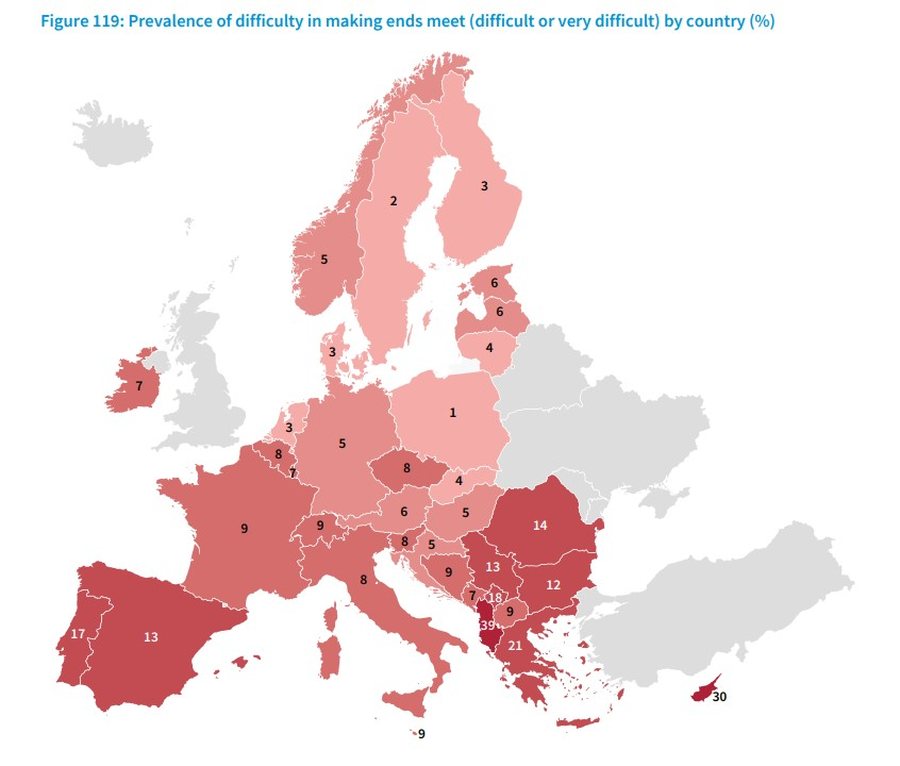
For Albanian workers, there is not much to celebrate this day. Data from a recent report by the European Commission on the survey on working conditions and stable work, which is carried out once every 5 years and was published in April, found that 39% of Albanian workers have difficulty, or a lot of difficulty, in closing the month, compared to 8% which is the European average.
This percentage is the highest in Europe and is very different from other countries. The second place behind us is Greece, where 21% of respondents claim that they cannot postpone the end of the month.
In other countries in the region, the situation appears more moderate, but still above the Western European average. In the region, after Albania, the highest level of difficulties in meeting expenses is recorded in Kosovo, at 18%. Bosnia and Herzegovina also presents a relatively high level, at 13%.
In other Balkan countries, the indicator is lower. Serbia and North Macedonia each report 9%, Croatia 8%, while Montenegro has the lowest level in the region, at 7%.
While North Macedonia and Montenegro are mentioned in the report as countries that have marked significant improvement over the last decade, in Albania the percentage of employees who have difficulty making ends meet continues to remain at record levels.
Respondents are asked to rate how easy it is for their family to meet monthly expenses, considering total monthly income from various sources.
The assessment is made on a six-point scale, from “very easy” to “very difficult”. Overall, 8% of respondents in the EU reported that they found it difficult or very difficult to meet expenses in 2024. Differences between genders were negligible.
The report notes that the survey shows significant differences between countries. The percentage of employees who have difficulty meeting monthly expenses varies significantly, from just 1% in Poland to 39% in Albania, as shown in the map.
europe
Të dhënat nxjerrin në pah edhe një ndarje të qartë gjeografike: vendet skandinave raportojnë në mënyrë të qëndrueshme nivele të ulëta të vështirësive financiare, ndërsa në disa vende të Europës Lindore dhe Jugore pesha e punonjësve që përballen me vështirësi ekonomike është dukshëm më e lartë.
Që nga viti 2010, që përkonte me mesin e krizës ekonomike, përqindja e punonjësve që hasin vështirësi për të përballuar shpenzimet ka rënë ndjeshëm.
Në vitin 2010, rreth 17% e punonjësve deklaronin se e kishin të vështirë ose shumë të vështirë të përballonin jetesën ekonomikisht. Në vitin 2024, kjo përqindje ra në vetëm 8%.
Në të njëjtën kohë, pesha e atyre që deklaronin se ia dilnin lehtë ose shumë lehtë u rrit nga 30% në 40%.
Përmirësimet më të mëdha janë vërejtur në disa vende të Europës Lindore, si Bullgaria, Hungaria dhe Letonia, ku përqindja e punonjësve me vështirësi ekonomike ra me mbi 30 pikë përqindje. Rënie të ndjeshme, me mbi 20 pikë përqindje, u regjistruan edhe në Kroaci, Lituani, Mal të Zi, Maqedoninë e Veriut dhe Rumani.
Asnjë vend nuk raportoi rritje statistikisht të rëndësishme të vështirësive për të përballuar shpenzimet.
Ekziston një lidhje e fortë mes karakteristikave të familjeve të punonjësve dhe nivelit të cenueshmërisë së tyre financiare, në përputhje edhe me gjetjet e studimeve të tjera, thekson raporti. Prindërit e vetëm preken në mënyrë disproporcionale nga vështirësitë financiare: 43% e tyre deklarojnë se kanë vështirësi për të përballuar shpenzimet.
Nënat e vetme janë veçanërisht të cenueshme, me 46% që raportojnë vështirësi financiare.
Punonjësit që jetojnë në familje me fëmijë priren të përballen me sfida më të mëdha financiare, me 31–37% që deklarojnë vështirësi për të përballuar shpenzimet. Pas tyre renditen familjet me një person të vetëm në moshën kryesore të punës, ku 28% raportojnë vështirësi ekonomike.
Të dhënat tregojnë gjithashtu se cenueshmëria financiare ndryshon sipas statusit të punësimit dhe profesionit.
Punonjësit me kontrata me afat të caktuar, me 36%, të vetëpunësuarit e varur ekonomikisht, me 40%, si dhe ata pa kontratë ose me forma të tjera kontraktuale, me 42%, raportojnë përqindjet më të larta të vështirësive për të përballuar shpenzimet.
Punonjësit në profesione me kualifikim më të ulët përballen me vështirësi më të mëdha. Të paktën një nivel vështirësie për të përballuar shpenzimet raportohet nga 49% e punonjësve në profesione elementare, 47% e punonjësve të kualifikuar në bujqësi, 37% e punonjësve në shërbime dhe shitje, si dhe 35% e operatorëve të impianteve dhe makinerive.
Në të kundërt, punonjësit në profesione me kualifikim më të lartë, si menaxherët, teknikët dhe profesionistët, raportojnë nivele relativisht të ulëta të vështirësive financiare, me përqindje nën 20%.
The report emphasizes that these findings confirm already known trends and underline the need for supportive policies to be oriented towards specific groups, including single parents and employees in low-wage jobs, who are often under great financial pressure.
The European Working Conditions Survey 2024, published in April this year, provides a comprehensive picture of the quality of work in Europe, analyzing workforce characteristics, workplaces, job quality and quality of working life.
The survey is an important tool for policymakers, as it highlights the role of job quality in achieving sustainable and inclusive growth in Europe.
The survey findings are based on 36,644 face-to-face interviews conducted in 35 countries. Each interview lasted around 45 minutes, providing a unique insight into the state of work in Europe.
This survey has been conducted regularly since 1990, providing a comparable series of data on working conditions in Europe at five-year intervals./Monitor






Lini një Përgjigje