


 Shkruar nga Ken Silverstein
Speeches cost nothing. The pipeline brings in money. It's not a contradiction, it's a strategy. And it's a dangerous game that Erdogan could lose.
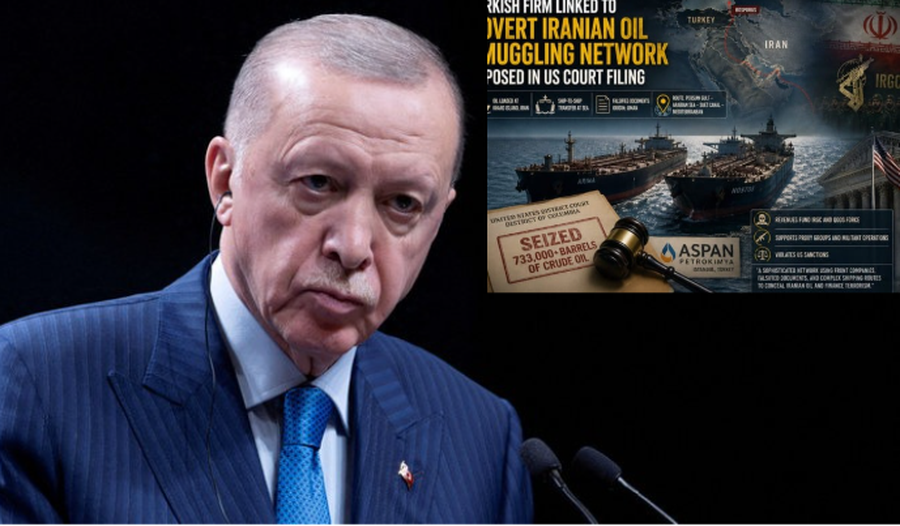
At COP28 (UN Climate Change Conference) in Dubai, Turkish President Recep Tayyip Erdogan condemned Israel's military campaign in Gaza as a "war crime and a crime against humanity." He called for criminal prosecution and urged Muslim countries to isolate Israel.
Meanwhile, oil from Azerbaijan flows through a pipeline that ends at a Turkish port. It is loaded onto tankers and sailed directly to Israeli refineries. Researchers have documented that the oil is being processed for the same F-35 Lightning II fighter jets that carry out the attacks that Erdogan has condemned.
Turkey imposes a tax on each barrel for this, Forbes reports.
This is history. Not rhetoric, but a pipeline. It is difficult to explain how the Turkish president can reconcile such a way of thinking. In fact, energy, arms trade and domestic politics collide within one of NATO's most troubled members.
"Erdogan cannot rely on strong economic performance. Turkish citizens despise his way of governing," said Sinan Ciddi, a senior fellow at the Foundation for Defense of Democracies.
“He is distracting himself by finding an external enemy, although it is difficult to assess how much his citizens will accept this distraction. All he is doing is using harsh rhetoric. He is not closing airspace, not stopping oil shipments, nor disrupting the rest of trade.”
Increased oil supplies
Turkish exports to Israel reached nearly $400 million in the first five months of 2025, while Turkey remained one of Israel's top suppliers, ranking fifth in 2024 despite the official embargo.
Most significantly, for nearly two decades, Azerbaijan supplied about 40% of Israel’s annual crude oil consumption through the Baku-Tbilisi-Ceyhan pipeline, which runs from the Caspian Sea through Georgia to a Turkish Mediterranean port, from where the oil is shipped to Israel. As of January 2024, Israel was the largest buyer of Azerbaijani oil. They imported 523,500 tons worth $297 million that month alone.
By September 2024, long after Erdogan declared a trade embargo against Israel, Azerbaijani exports to Israel had increased to 2.37 million tons in that month alone. This is a fourfold increase since the start of the Gaza war.
The embargo that wasn't
Kur Erdogan njoftoi embargon tregtare në maj 2024, studiues nga organizata të shumta ndoqën lëvizjet e cisternave dhe përcaktuan se dërgesat vazhdonin. Një cisternë bëri 10 udhëtime të dokumentuara midis një terminali turk dhe një porti izraelit. Tetë pas shpalljes së embargos.
Anijet i fikën pajisjet e tyre të sinjalizimit në Mesdheun lindor dhe falsifikuan dokumentacionin. Ato e renditën Egjiptin si destinacion, por zbarkuan në Izrael. Ministria e energjisë e Turqisë pretendoi se nuk kishte kontroll mbi destinacionin përfundimtar të naftës. Ata përmendën një marrëveshje të vitit 1999 që e detyron ligjërisht Turqinë të mbajë tubacionin në funksion pavarësisht konflikteve rajonale.Është një alibi ligjore. Realiteti strategjik është edhe më tregues.
Izraeli është një nga furnizuesit kryesorë të armëve për Azerbajxhanin. Këto përfshijnë dronë luftarakë, artileri me rreze të gjatë veprimi dhe një sistem raketash kundërajrore me vlerë 1.2 miliardë dollarë. Dronët izraelitë ishin vendimtarë në fitoren e Azerbajxhanit ndaj Armenisë në vitin 2020. Gjithashtu, kompania shtetërore e naftës e Azerbajxhanit mori së fundmi një licencë për të eksploruar për gaz në ujërat mesdhetare të Izraelit. Marrëdhënia midis dy vendeve është përshkruar si "më e qëndrueshme" që Izraeli ka me çdo vend mysliman.
Azerbajxhani është gjithashtu aleati më i ngushtë etnik dhe politik i Turqisë. Erdogan nuk mund të ushtrojë presion mbi Azerbajxhanin pa dëmtuar atë marrëdhënie dhe pa prishur bashkëpunimin ushtarako-industrial nga i cili varet Baku. Mbyllja e tubacionit do të godiste aleatin më të rëndësishëm të Turqisë, jo fuqinë ushtarake të Izraelit.
Trekëndëshi duket kështu: Nafta azerbajxhanase shkon në Izrael nëpërmjet Turqisë. Armët izraelite kthehen në Azerbajxhan. Turqia vendos një taksë tranziti dhe Erdogan e dënon të gjithë marrëveshjen në fjalime.
Sinan Ciddinga Fondacioni për Mbrojtjen e Demokracive flet hapur për situatën reale. Ai thekson se Turqia vuan nga inflacion jashtëzakonisht i lartë, papunësi dhe varfëri.
"Azerbajxhani u përpoq të ndërmjetësonte midis Izraelit dhe Turqisë. Nuk mund ta bëjë Erdoganin të zbutë retorikën. Të gjithë mbyllin sytë dhe vazhdojnë përpara. Erdogani e urren Izraelin. Tani ai po përpiqet t'i bindë qytetarët se Izraeli, pas Iranit, ka në shënjestër Turqinë. Ai jeton në një botë kontradiktash sepse si ai ashtu edhe të gjithë në rrjetin e tij të patronazhit përfitojnë nga kjo marrëdhënie."
Presidenti nën presion
Kthimi prapa i Erdoganit u bë i dukshëm në mars të vitit 2025. Qeveria e tij arrestoi kryetarin e bashkisë së Stambollit, Ekrem Imamoglu, rivalin e tij më të fortë politik vetëm disa ditë para se ai të emërohej zyrtarisht si kandidat presidencial i opozitës. Protestat më të mëdha në rrugë në Turqi në më shumë se një dekadë kanë shpërthyer. Përgjigja e Erdoganit ishte intensifikim i mëtejshëm i retorikës anti-izraelite.
"It's a perfect example of Erdogan's desperate situation," Sidi explains.
The hypocrisy extends in many directions. While condemning Israeli military operations, Erdogan has waged ongoing cross-border military campaigns against Kurdish forces in Iraq and Syria. This has led to the displacement of tens of thousands of civilians.
Turkish airstrikes killed 12 people in a single day in October 2024. Their adversary? The US-backed, Kurdish-led Syrian Democratic Forces, a key partner in the fight against ISIS. The logic Erdogan uses, the war on terror and national security, is reminiscent of Israel’s justification for Gaza.
Only the objective and audience differ.
Some analysts argue that Erdogan is trying to find a balance between impossible constraints. Burak Kadercan, a professor of strategy at the Naval War College, describes his approach as an attempt to "strike a balance between domestic politics and realpolitik on the international stage."
However, Turkey is a member of NATO, and the mediator does not call the other side's leader the "butcher of Gaza" or demand a trial in The Hague. Also, a real negotiator does not put the most popular democratic politician in the country in prison the same week he condemns authoritarian violence abroad.
Even the Turkish deputy ambassador reportedly admitted to Israeli officials that Erdogan's harsh rhetoric "stems from his political calculations."
The Baku-Tbilisi-Ceyhan pipeline may be infrastructure, but it casts a dark light on a head of state who has built an image on moral outrage while simultaneously imposing tariffs on the transit of goods he condemns. Erdogan’s political survival depends on voters ignoring the apparent contradictions between his rhetoric and actions.
Turkish officials have recently further escalated their rhetoric regarding Israeli attacks on Hezbollah in Lebanon. They have hinted at the possibility of a military confrontation. Such discourse may resonate in certain circles, but it is problematic for U.S. allies. However, as with Erdogan’s rhetoric on Gaza, the threats outweigh the reality. Oil still flows, trade continues, and basic relations remain intact.
"Erdogan has a dual relationship with NATO. Just like with Israel ," says Professor Sidi.
“Turkey enables the Russian war machine to function. Erdogan likes to be on both sides, which is a problem for allies. It’s all deeply hypocritical and contradictory, but he needs trade and profits.”
Speeches cost nothing. The pipeline brings in money. It's not a contradiction, it's a strategy. And it's a dangerous game that Erdogan could lose.



Lini një Përgjigje