


 Shkruar nga Andrea Muratore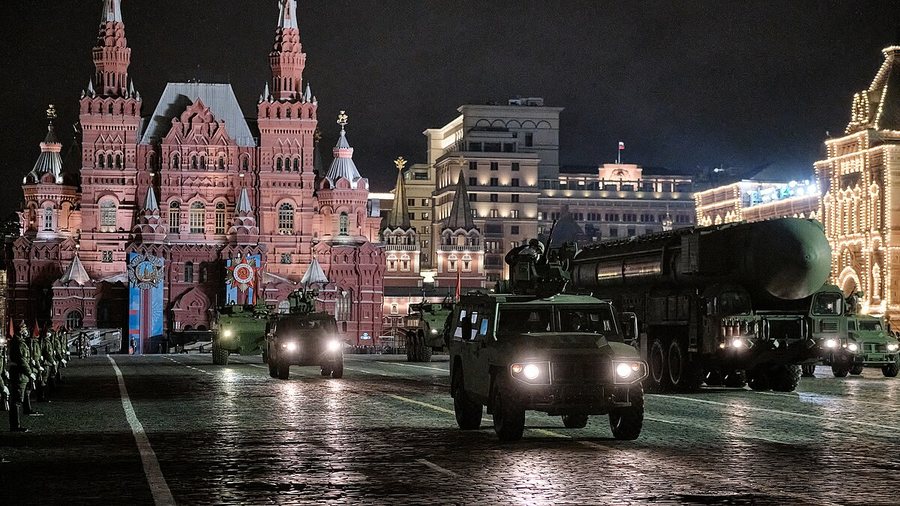
If Russia does not think that after a long, tiring war the occupation of a Donbass turned into ruins is worth nuclear Armageddon, European chancelleries are analyzing the red lines set by Putin, trying to keep him away from the decision that matters , the nuclear one.
Yesterday in the Italian media there was news about a Russian defector who allegedly revealed to the BBC that Vladimir Putin was close to using the atomic bomb in the early days of the war in Ukraine. But is it really? The theme is highly suggestive at a time when Russia is modernizing the doctrine of the use of atomic weapons, lowering the minimum threshold for retaliation against a conventional attack on Russian soil backed by a nuclear power.
A choice that made many think of the example of Ukraine's long-range strikes with Western missiles approved by the United States, the United Kingdom and France.
- "Anton", the Russian deserter from the atomic base
Basically, "Anton" recounts the details of his operations in the days of the attack in Ukraine. He points out that his unit, called to oversee nuclear warheads, took a real turn after Russia's aggression against the neighboring country.
"Anton" speaks of "warheads in place" and atomic forces "ready in theory to go into action." Reading the BBC report we notice interesting details about a combat and emergency unit which is fully operational in the framework of the most important war launched by his country in the last forty years.
Added to this are surprising revelations: "Anton's" unit could not leave the base (we do not know if it was air, submarine or missile) during the weeks of alert, the use of mobile phones was not allowed, by the secret services that watched the entire military perimeter . On this front, nothing shocking. Any officer called upon to manage a strategic base in an emergency, even in places far less impenetrable than Putin's Russia, would probably say the same.
Putin's atomic bluffs
"Anton" most likely refers to the phase in which, after the attack on Ukraine, Putin raised the alert of atomic forces on February 28, 2022. It was the first of a series of maneuvers by which Russia, especially in the difficult first months of the war in Ukraine, he sent messages in the military and above all political and psychological fields to the West, which supported Kiev. In no case has Putin had a real interest in carrying out a nuclear attack, but he has repeatedly raised the possibility of getting the Euro-Atlantic bloc countries to give up and slow down their support for Ukraine.
" Since the outbreak of the war, Putin's repeated attempts to threaten the use of atomic force with bluff and bluff have the West carefully walking a tightrope without crossing it, at least in Moscow's eyes ," he notes. European Leadership Network, (ELN).
ELN recalls how the United States in 2022 “initially took Putin's nuclear threats seriously; "This is not a bluff," Joe Biden said in October 2022 when he talked about Russia's possible reduction in nuclear use in a single bomb "tactic" to stop the advance of Ukrainian troops who liberated the Kherson region.
The think-tank adds how Putin's use of nuclear threats has guaranteed mixed results, in a context in which the West has managed a delicate balancing act by combining various initiatives ranging from communicating with Russia through intelligence channels, to to providing targeted economic aid and supplying Kiev with increasingly advanced weaponry, such as Anglo-French Storm Shadow missiles for Russian targets in Ukraine and F-16 fighter jets.
The use of nuclear weapons would not be suitable for Russia
Moreover, it is not clear why Putin should have used the atomic bomb in the early days of the war, when the doctrine of many NATO countries, with the exception of the United Kingdom, Poland and the Baltic countries, was not oriented towards support of all Ukraine, many, starting from Washington, expected the fall of Volodymyr Zelensky's government and the occupation of the country.
It was Kiev that guaranteed itself with the defense of its territory greater support from the allies. And, moreover, it is not clear why, other than updating the doctrine, the red button should be pushed now that Russia is gaining the upper hand on the battlefield.
Moreover, the update of the nuclear doctrine is only the latest of the psychological-political moves and an example of the fact that Moscow intends to send a signal of renewed competition by using the nuclear deterrent as an instrument of power. Rationally, there is no indication of a possible use of nuclear weapons by Russia or, rather, of a similar US retaliation. If Russia doesn't think that after a long, tiring war the occupation of a Donbass turned into ruins is worth nuclear Armageddon, European chancelleries are analyzing the red lines set by Putin, trying to keep him away from the decision that matters , the nuclear one./ Adapted "Pamphlet" from "InsideOver"




Lini një Përgjigje