


 Shkruar nga Emilian Kavalski & Maximilian Mayer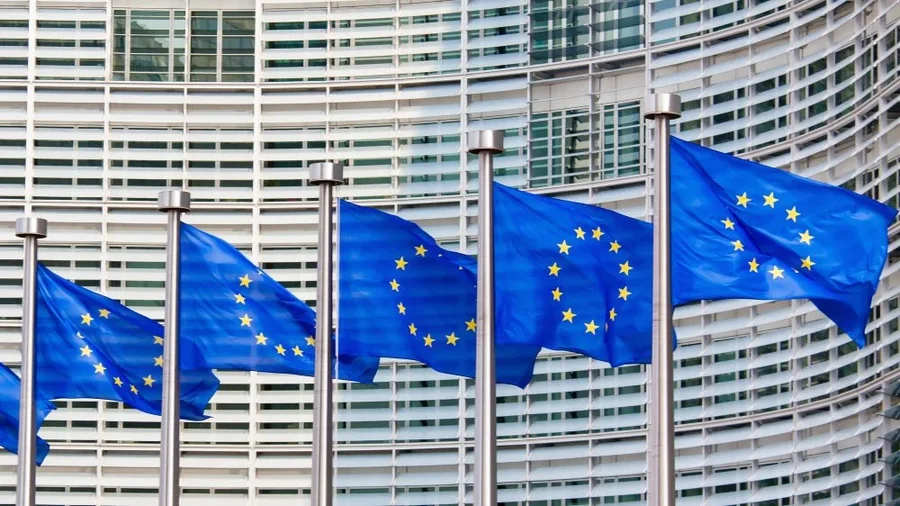
As the war drags on, Ukraine is increasingly becoming a victim of bitter internal polarization in Europe and North America. In Europe, Hungarian Prime Minister Viktor Orban is subjecting the continent to his authoritarian and kleptocratic whims...
The European Union started this year by taking new measures to strengthen its economic security, reducing dependence on countries like China, and protecting key sectors and emerging technologies. This shows that European Commission President Ursula von der Leyen is sticking to her geopolitical commitments, despite the latest appeal from Chinese Premier Li Qiang a week ago at the Davos Forum.
At first sight, this action seems to strengthen the position of Brussels. However, the events in and around it raise quite a few questions about the reliability of European geopolitics. On October 2, 2023, the underwater natural gas pipeline "Balticconnector" connecting Estonia to Finland was damaged.
Evidence gathered from analysis of the debris showed that the pipe had been ruptured from the outside - and possibly intentionally - by a ship's anchor dragged along the seabed.
It was soon discovered that at the time of the damage to the gas pipeline, the container ship "Newnew Polar Bear" registered in Hong Kong and owned by the Chinese company "Hainan Xin Xin Yang Shipping" was sailing in the area.
The ship was photographed shortly after the incident, entering the port of Arkhangelsk in Russia without one of its anchors. This incident should have forced the European Union to show its "strategic autonomy" against such a blatant provocation.
Just a month ago, Von der Leyen declared that the EU was moving towards becoming a full-fledged geopolitical union, through its support for Ukraine and its tough stance against an increasingly aggressive China. Ahead of the EU-China Summit in December 2023, the Balticconnector incident tested Brussels' commitment to holding Beijing accountable for challenging European security.
That incident gave more weight to the thesis that Beijing is not only diplomatically supporting Moscow, but that it is also offering direct economic and technical support for the war it is waging in Ukraine. The EU's response was nowhere to be seen, thus neglecting the support of Estonia or Finland, and leaving the latter to face Beijing alone.
This episode raises serious questions about the EU's geopolitical weight in early 2024. As the war continues, Ukraine is increasingly becoming a victim of bitter internal polarization in Europe and North America. In Europe, Hungarian Prime Minister Viktor Orban is subjecting the continent to his authoritarian and kleptocratic whims.
To counter this, the EU needs to review its decision-making process as soon as possible, and articulate a meaningful new vision for itself and others. Meanwhile in the US, lawmakers who are looking after the potential future administration of Donald Trump are abandoning the principles of American foreign policy, and are sacrificing Washington's global status.
In Europe, policymakers are anxiously awaiting the impending "Trumpocalypse," and engaging in discussions on the future of the transatlantic partnership. These developments are "music" to the ears of Russian President Vladimir Putin and Chinese leader Xi Jinping.
Despite heavy losses in troops and weaponry, Russia appears to be winning the resistance war with Ukraine through a combination of hybrid warfare, people willing to be used as cannon fodder, and the instability of Western will.
The latter will only encourage Jinping to pursue the "China Dream," which includes the elimination of all internal opposition, the homogenization of various ethnic, religious, and linguistic groups, the reunification of the rebellious Taiwan province, and the militarization of the China Sea. Southern.
And what options does Europe have in these conditions? Without drastically revising its approach to foreign and security policy, Brussels has few options left at its disposal. First, Europe's strategic vision suffers from a lack of proper focus.
Although it is necessary to consider various worst-case scenarios with Beijing and Washington, the main priority should be domestic problems. A typical example is Lithuania. In May 2021, it became the first Central and Eastern European country to withdraw from cooperation with China.
This happened as a result of the principle commitment of Vilnius to support "those who fight for freedom from Belarus to Taiwan". Then, in November 2021, Lithuania allowed the opening of a representative office of Taiwan. In protest, Beijing immediately recalled its ambassador and imposed trade sanctions on Lithuania.
In July last year, just a few days before the NATO summit in Vilnius, Lithuania launched the implementation of its ambitious Indo-Pacific Strategy, responding to "global geopolitical changes that have a direct effect on our country and the EU ".
But in November, Vilnius began normalizing relations with China. The Lithuanian government has realized that even if its bureaucracy and that of Brussels publish numerous strategic documents focusing on global issues in distant regions such as the Indo-Pacific, the main focus of geopolitical Europe should be the immediate peripheries of the continent. .
However, Europe is still paying less attention than usual to the countries closest to it.
As in the case of the gas pipeline in the Baltic or the crisis that is spreading in the Middle East, the EU is nowhere to be seen. And such a lack of strategic engagement is as irresponsible as it is short-sighted.
The "Baltic Connector" incident showed that the EU's identity as a self-proclaimed normative power is outdated, and no longer fits the world of turmoil and geopolitical war. Second, the EU must recognize that it is not a global power, but a continental power.
Facing this reality will inevitably require the re-calibration of European strategy and discourse. It should focus on three central points. First, the EU must invest in innovation to help develop European economic sustainability.
Second, it must develop its own military power capabilities. The era of focus on trade and economic power that once allowed Europe to exercise its regulatory norms is now giving way to an era of military power.
EU member states with significant defense capacities, such as France, Germany and Italy, have not yet considered rearmament and expansion of their military-industrial capacities, creating a large strategic gap.
On the other hand, some Eastern European countries, such as Poland and the Baltic countries, have already taken steps to strengthen their military capabilities. Addressing security concerns requires more comprehensive and increased joint efforts at the operational and strategic levels.
Thirdly and perhaps paradoxically, the EU can become a reliable actor at the global level but also in the Indo-Pacific, only by showing its capacity to protect its strategic periphery. The "Balticconnector" incident reinforces the EU's general lack of will and ability to defend itself and its neighbors in the face of war and heavy attacks on important energy and communication infrastructure.
To ensure a "stronger role for Europe in the world", the EU must confirm its capacity and credibility within and around it. Without decisive action, it risks turning into a sunken ship in the turbulent waters of global geopolitics./ Adapted Pamphlet from "National Interest"
Note: Maximilian Mayer, Professor of International Relations and Global Technology Policy at the University of Bonn in Germany. Emilian Kavalski, Bulgarian-Australian political scientist, lecturer at the Jagiellonian University in Krakow, Poland.


Lini një Përgjigje