


 Shkruar nga Max Jeffery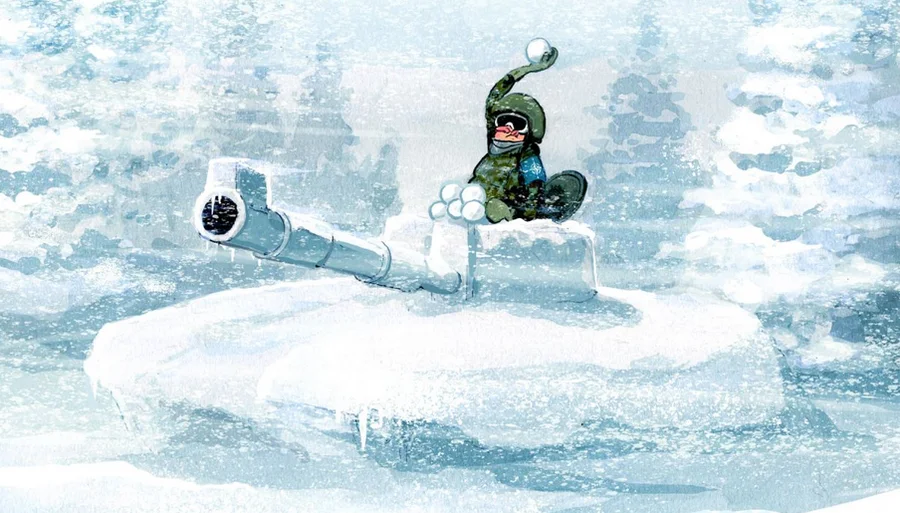
Even if NATO's plans and tactics are correct, the alliance's members are not fully prepared for a full-scale war against Russia.
In a pine forest 2 hours away from Estonia's border with Russia, preparations for war are taking place intensively. British, French, American and Estonian soldiers are testing what NATO would do if Vladimir Putin decided to attack.
They have brought British Challenger II tanks, an F-16 fighter jet and Himars artillery systems - some of the best equipment the West has - for a 2-week exercise. So prepare for trench warfare, with minefields, ambushes and mortar strikes at -20°C and with a snow thickness of over 35 cm.
Not so long ago, the idea of war against Russia was dismissed as a joke. When Mitt Romney ran for president of the USA, he declared that Moscow was a threat to the country, while Barack Obama mocked him saying: "We are not in the 1980s. The Cold War ended 20 years ago!".
It was the mindset of America and Europe that brought about the significant reduction of military budgets by Western countries and the re-focusing of their armies' attention to fight in the Middle East. Only 5 years ago, Emmanuel Macron claimed that NATO was in a "coma state" and said that not approaching Russia would be a "big mistake", as according to him Putin did not want war. Then the latter invaded Ukraine .
" The alliance has been awakened through the strongest possible electroshock " - declared Macron last year. It appears that Russia now has the upper hand on the battlefield, and European leaders are warning that it could soon launch an attack on a NATO member state.
Estonia's Prime Minister, Poland's national security chief and the Danish Defense Minister have all said that Russia could have the soldiers and equipment to launch an attack within the next 3 years. To be ready, NATO conducts this year the largest combat exercises than in any other period since the fall of the Soviet Union.
During this year, about 100,000 troops from the entire alliance will train for the defense of the alliance's territory. In the Estonian forest, most of the foreign forces are operating in the extreme cold for the first time. Sometimes car engines don't start, weapons get jammed, and even simple actions like opening truck doors become difficult. Most equipment is not built to work in these temperatures, and soldiers are not used to this kind of frost either. "The issue is not only physical endurance, but how your mind will deal with these atmospheric conditions" - says Andrus Merilo, the commander of the main brigade of Estonia.
He has just been nominated by Estonia's Minister of Defense, Hanno Pevkur, to take over the leadership of the entire army. If given this post, his sole task will be to thwart a possible Russian invasion. Baltic leaders say the north is NATO's weakest point.
Putin cannot attack by going through Ukraine or the Black Sea. But Russia shares a 1,500-mile border with Norway, Finland, Estonia and Latvia. This vast area is rapidly being militarized. Moscow is creating a large new unit in the rural region of Karelia, which borders Finland and which until 1940 was part of the latter.
The Finns, who joined NATO only last year, are debating whether or not their country should be equipped with nuclear weapons. The three Baltic states have made plans to build hundreds of large bunkers along their borders with Russia and Belarus.
If Putin attacks, NATO's response is already planned by Chris Cavoli, an American general who commands the alliance's military operations. The alliance's "Regional Plans" provide for the deployment of forces in clearly defined locations: X tanks for this city, and Y troops for that city.
The plans, said to be detailed in a 4,000-page document, are top secret but are believed to contain new military tactics based on how Russia has fought in Ukraine. And the NATO exercises this year are about the implementation of Cavoli's plans.
Countries whose last combat experience was against Islamic State terrorists must adapt to very different circumstances. The jihadists had little artillery and an air force that included 3 stolen 1970's aircraft. NATO would have a harder time facing the sheer firepower of the Russian military.
In Ukraine, Russia's 470,000 front-line troops can fire 20,000 artillery shells a day, and most of its air force is still operational. British soldiers in Estonia are training to fight in the trenches, as their ancestors did in Western Europe a century ago.
James Fern, who leads the British unit of soldiers, says that during training he asks his troops to imitate Russian tactics. "So a large use of artillery, increased use of long-range weapons and ballistic missiles" - he emphasizes. In one of the exercises, the British, French and Americans "attack" the Estonians with "Challenger II" tanks and the Himars artillery system.
Meanwhile the Estonians have Swedish CV-90 armored vehicles, a helicopter and XA-188 transport vehicles and are defending 2 roads winding north through the forest. All soldiers wear white camouflage and fire lasers from their weapons at sensors on the enemy's armor.
Armët qëllojnë siç duhet, por tanket dhe artileria bëjnë tinguj artificialë. Kur qëllojnë tanket dhe artileria, mesazhet dërgohen në bazë, ku llogaritet se sa njerëz do të kishin vdekur, dhe ia përçojnë të dhënat e nxjerra ushtarakëve në terren. Më pas nga fusha e betejës largohen “të vdekurit”.
Nëse një pengesë e rreme, si për shembull një fushë e minuar, ka nevojë për pastrim, ushtarët komunikojnë me bazën dhe pushojnë për 10 minuta për të simuluar vonesën reale. Pastaj ata vazhdojnë. E gjithë kjo e bën stërvitjen të qetë dhe të ngadaltë. Ajo nis herët në mëngjes dhe duhet të përfundojë afër mesnatës në luftime të afërta ku përdoren dylbitë speciale për shikimin në errësirë.
E pyes një ushtar britanik nëse ushtria britanike është gati për luftë me Rusinë. “Ne mezi po e përballojmë luftën kundër emigracionit të paligjshëm. Nuk po arrijmë të ndalim as disa gomone”- më thotë ai duke ngritur supet.
A mund ta dijë Cavoli se si do të jetë lufta e ardhshme?
“Ky është një problem i përhershëm. Ti përgatitesh për luftën e ardhshme duke parë atë të fundit”- thotë një zyrtar i NATO-s.
Në fillim forcat amerikane dhe evropiane nuk ishin të trajnuara për të luftuar në përleshjet e vogla që hasën në Lindjen e Mesme, dhe askush nuk priste që në vitin 2024 të stërvitej për të luftuar sërish në llogore. Shumë zyrtarë të NATO-s nuk e besojnë se do të ketë një luftë me Rusinë. “Nuk jam i sigurt se do të kemi një luftë”- më thotë një nga paraardhësit e Cavolit, Philip Breedlove.
Sekretari i fundit i Përgjithshëm i NATO-s nga Britania, George Robertson, është dakord me këtë qasje. “Unë nuk mendoj se Putin ka dëshirë të kalojë vijën e kuqe të Nenit 5”- deklaron Robertson, duke shtuar se Rusia ka më shumë gjasa të sulmojë Moldavinë ose Gjeorgjinë.
Vetë Putini tha në intervistën e gjatë dhënë për gazetarin Tucker Carlson se nuk do të pushtonte Poloninë apo shtetet baltike. “Pse duhet ta bëjmë këtë. Ne thjesht nuk jemi të interesuar. Anëtarët e NATO-s po flasim për një kërcënim imagjinar”- tha ai.
NATO duhet të jetë shumë e shqetësuar nga fakti se kundërsulmi i Ukrainës ndaj pushtuesve rusë vitin e kaluar, duke përdorur taktikat perëndimore, ishte e pasuksesshëm. Koordinimi i zjarrit të artilerisë, raketave dhe lëvizjeve të trupave, rezultoi të ishte shumë i vështirë dhe sulmet me raketa nuk patën aq ndikim sa të zhvendosnin pozicionet ruse.
Për me tepër Putin po ndreq të metat e ushtrisë së tij. Pasi humbi shumë ushtarë dhe pajisje në sulmin e parë të furishëm ndaj Kievit, ushtria ruse ndërtoi fortifikime me disa shtresa për të mbrojtur territorin që pushtoi në Ukrainën lindore. Po ashtu, Moska ka mësuar të bllokojë sistemet amerikane Himars.
Even if NATO's plans and tactics are correct, the alliance's members are not fully prepared for a full-scale war against Russia. For example, the Baltic countries lack missile systems to defend their airspace.
Europe's military reserves are low because defense industries are not producing enough. NATO officials complain that European governments have been too slow to sign new arms orders. But Europe is slowly realizing that it cannot rely on the US to compensate for its lack of weapons./ Adapted Pamphlet from "The Spectator"



Lini një Përgjigje