


 Shkruar nga Pamfleti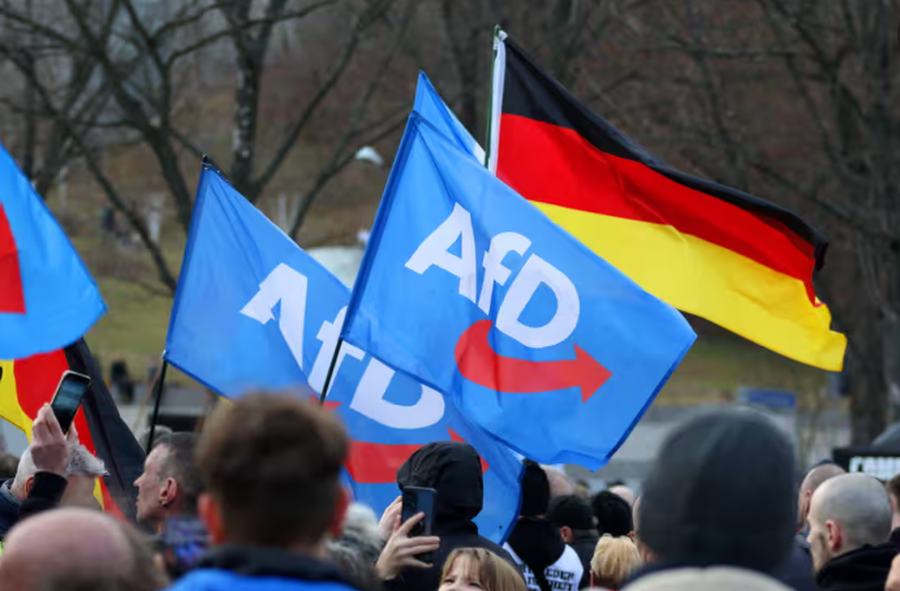
The BfV said it had concluded that the racist and anti-Muslim stances advanced by the AfD, based on an "ethnically derived understanding" of German identity, were "incompatible with the free democratic fundamental order" set out in the country's constitution...
Germany's domestic intelligence service has designated the far-right Alternative for Germany (AfD), the largest opposition party, as a "confirmed right-wing extremist" force, meaning authorities could increase their surveillance, while critics are calling for it to be legally banned.
The Federal Office for the Protection of the Constitution (BfV) previously considered the anti-immigrant, pro-Kremlin party a "suspected" threat to Germany's democratic order, with three of its regional branches in eastern states and its youth wing classified as confirmed extremists.
The AfD, which came second in February's general election with just over 20% of the vote, said it would challenge the BfV's decision in court.
The BfV said it had concluded that the racist and anti-Muslim stances advanced by the AfD, based on an "ethnically derived understanding" of German identity, were "incompatible with the free democratic fundamental order" set out in the country's constitution.
The BfV added that the party “aims to exclude certain population groups from equal participation in society, to subject them to unconstitutional unequal treatment and thus to give them a legally invalidated status.”
The decision will pave the way for tougher measures to monitor the party for suspected illegal activities, including tapping telephone communications, observing its meetings and recruiting secret informants.
The AfD is led by Alice Weidel and Tino Chrupalla, who have called for the "emigration" of people they consider "poorly integrated", including German citizens with roots abroad.
In a joint statement, Weidel and Chrupalla called the BfV's decision "politically motivated" and a "serious blow against Germany's federal democracy."
They said that "the AfD will continue to defend itself legally against these defamatory statements that endanger democracy."
The party has faced growing calls from opponents to outlaw it on the grounds that it seeks to undermine democratic values, including the protection of minority rights. Such a ban could be sought by the lower house of parliament - the Bundestag or Bundesrat - or by the government itself.
The German parliament can now use the BfV decision to justify an attempt to cut or block public funding for the party.
But Olaf Scholz, the outgoing Social Democratic chancellor, is against the rush to outlaw the AfD.
Next week, Friedrich Merz, the leader of the Christian Democratic Union, will be sworn in as Germany's new chancellor after his conservative bloc won a snap election in February. However, his party has lost ground since the vote, with some recent polls showing the AfD in first place.
Merz will lead a center-right government with the Social Democrats. Their coalition agreement prohibits any explicit or tacit cooperation with the AfD, a policy that all major parties have called a critical “bulwark” to protect German democracy.
However, Merz has faced calls from within his party to treat the AfD as a normal opposition force, in order to prevent it from being portrayed as a political martyr.
Merz himself faced harsh criticism in January for accepting the AfD's support for motions in parliament to restrict migration, which Scholz called an "unforgivable mistake" before the election.
The AfD won a record number of seats in the election, theoretically giving it the right to chair several key parliamentary committees. However, the BfV's decision may now make other parties less willing to lend their support to such an outcome.
Analysts say the new government will have a limited window to regain voters' trust or risk the AfD winning outright in the next general election, scheduled for 2029. /Adapted from Pamphlet/








Lini një Përgjigje