


 Shkruar nga Pamfleti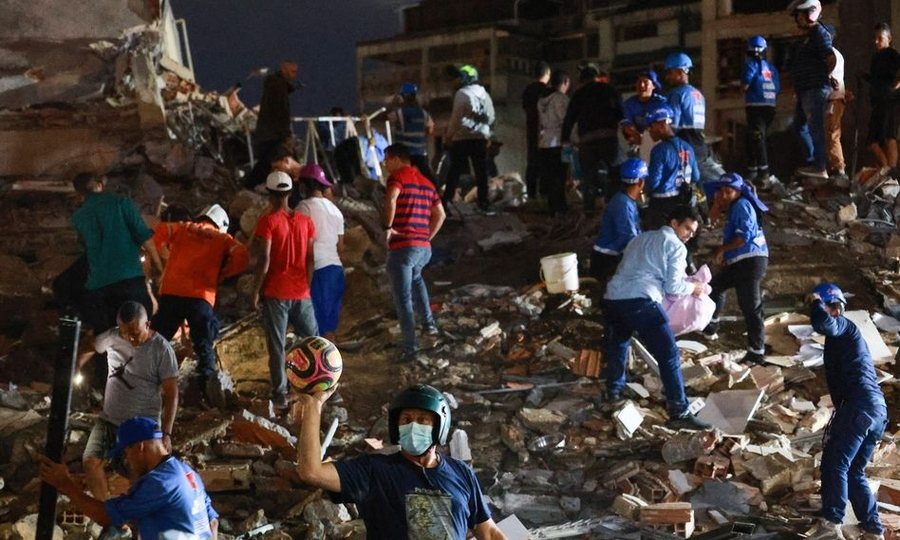
Citizens and police, with minimal equipment, are digging by hand in earthquake-hit neighborhoods in Caracas, in an attempt to find survivors, hours after two powerful earthquakes struck Venezuela...
Citizens and police officers, with minimal equipment, are digging by hand in the Los Palos Grandes and San Bernardino neighborhoods, while thousands of people refuse to return to their homes for fear of aftershocks.
Caracas resembles a war zone. At night, people were on the streets, walking with bags, suitcases, dogs, bird cages and cats, looking for a place to spend the night. The earthquake shook the city, and the fear of returning to the buildings that were still standing forced them to leave.
Two earthquakes, measuring 7.2 and 7.5 on the Richter scale, struck northern Venezuela just 39 seconds apart at around 6:00 p.m. local time on Wednesday (early Thursday). The quake hit the capital, Caracas, in particular, but information about the event remained limited and there was still very little official data four hours after the tremors.
The epicenter was located northwest of the municipality of Montalban, in the state of Carabobo, at a depth of only 13 kilometers, which increased the intensity of the tremors on the surface. The earthquake was felt from Trujillo to La Guaira and reached Caracas, about 300 kilometers away. This is considered to be the most severe earthquake to hit the capital since 1967, when a 6.7-magnitude earthquake left 236 dead and about 2,000 injured. Acting President Delcy Rodríguez declared a state of emergency.
Andres Escobar, a 60-year-old taxi driver, had just dropped off some passengers at a hotel in Caracas when the ground began to shake beneath his feet. His car was crushed in the middle by debris.
"Stones and pieces of the building were flying everywhere. The impact was terrible," he recounts, his hands bruised.
A few meters away, on First Street in the Los Palos Grandes neighborhood of Caracas, one of the towers of the Petunia housing complex collapsed completely. The collapse occurred in almost the same place where, almost 60 years earlier, other buildings collapsed during the 1967 earthquake. Throughout the area, houses were flattened, while collapsed walls left living rooms exposed.
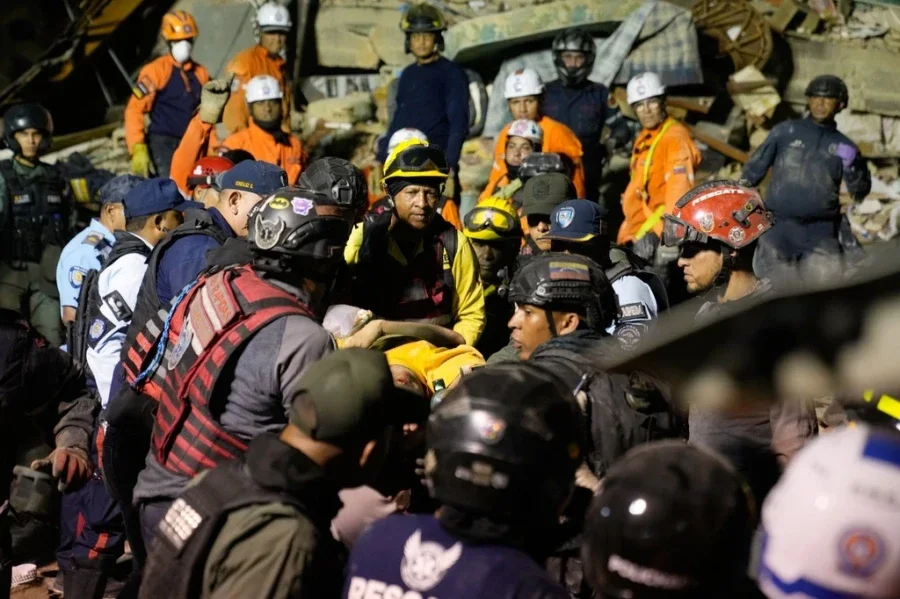
Near the ruins of the Petunia building, neighbors and rescue teams, mostly police officers without special equipment, are trying to pull out trapped people. They are looking for ropes, flashlights and water. There is not even a ladder at the scene. Evacuations have been ordered in neighboring buildings for fear of further collapses, while water pipes, damaged by the earthquake, are making it difficult for residents to leave.
Michael Alicastro, who lives in one of the buildings, now cracked by the earthquake, helped pull five people and a pet out of the 14-story building that collapsed. "We were on the street and had to hold on to cars," he describes.
Family members of residents call out the names of their loved ones from the edge of the rubble. "Antonio is alive!", a woman manages to shout after communicating with a person trapped under the rubble.
Some neighbors have gone into the rubble themselves to search for others. At least 20 aftershocks were felt after the main earthquake. Citizens have mobilized to help firefighters and rescue teams in search and rescue operations.
In San Bernardino, another neighborhood of Caracas, a human chain passes buckets of construction debris in an attempt to remove the mass of concrete under which the residents of the Juvenal building are trapped, a six-story building in the north of Caracas, which, like Los Palos Grandes, is located in one of the capital's seismic zones.
Three hours after the earthquake, a crane arrived at the scene to move the heaviest slabs of a building built more than 60 years ago, so that the operation could begin to extract victims and survivors.
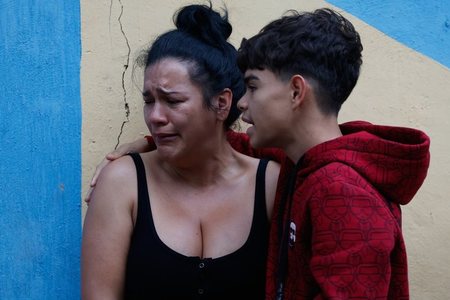
Residents shone flashlights through the mountain of rubble, searching for their loved ones. Around them, family members waited and cried. One woman didn't even make it to her daughter's house; she collapsed to the ground after suffering a nervous breakdown when she learned that her daughter was trapped under the rubble.
"Stethoscope!", rescue teams can be heard shouting.
"Quiet!" come the cries from among the piles of concrete that once formed the Juvenal building.
Rescue teams are deployed on the ground with stretchers. Up until that point, they had not recovered any bodies, but there are still signs of life.





Lini një Përgjigje