


 Shkruar nga Alek Buttermann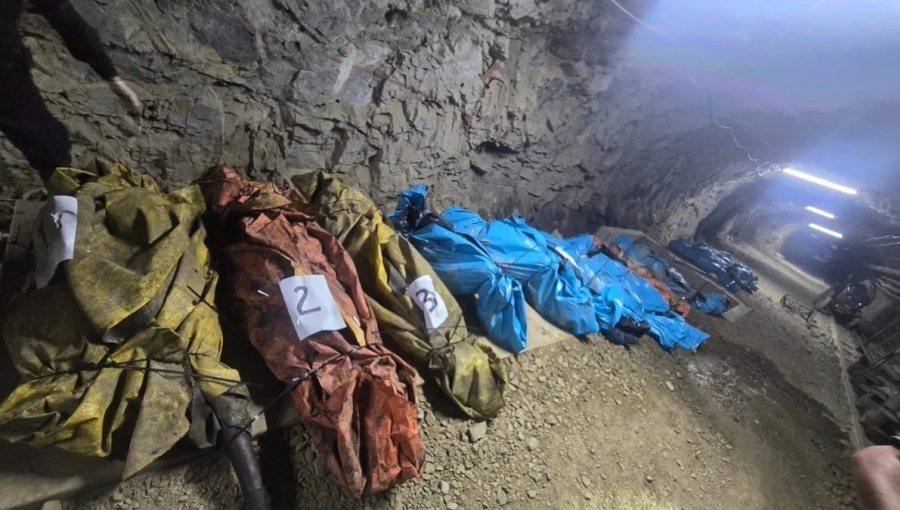
On May 4, 13 workers employed by the contractor R&R, which operates with the mining company Poderosa, were found dead after being kidnapped a week earlier to be tortured and immediately executed...
The killing of 13 miners in Pataz, a remote province in Peru's La Libertad region, is not just a tragic and unfortunate event.
It is the brutal manifestation of a state powerless to enforce its own laws, hijacked by criminal economies and complicit politicians. In a country where politics has long favored lawlessness, the dividing line between miner and mafioso has almost completely disappeared.
The latest atrocity was not unforeseen. In fact, it had been predicted for years by systemic neglect, corruption, and short-sighted legislation. On May 4, 13 workers employed by the contractor R&R, which operates with the mining company Poderosa, were found dead after being kidnapped a week earlier to be tortured and immediately executed.
A chilling video later circulated showing the victims forced to kneel before being shot directly in the neck. The killings were allegedly orchestrated by a notorious criminal, 'Cuchillo', whose organization, like many others in the area, operates with relative impunity.
The state reportedly had prior information about the kidnapping, including a video of the execution. However, no action was taken. According to multiple sources, including family members of the victims, the police were aware of the whereabouts of the captives but failed to act. Whether this failure stemmed from negligence or full cooperation remains unclear, but the consequences were undoubtedly deadly.
An emergency in name only
Pataz has been under a declared state of emergency since February 2024, with military and police forces reportedly deployed. But this has done little to stop criminal control in the region. Since 2020, mining firm Poderosa has reported 39 murders of its employees, repeated sabotage of its operations, and large-scale theft of gold.
The government’s response has ranged from the effective to the counterproductive. Instead of tough surgical measures prompted by intelligence, authorities have imposed blanket curfews and banned motorbikes: measures that largely punish the local population while leaving organized crime untouched. One particularly bizarre policy was a 30-day suspension of official mining operations in the area, which effectively handed control to illegal groups.
Prime Minister Gustavo Adrianzén admitted that there was poor cooperation regarding the massacre, but failed to explain why no preventive action was taken. The Ministry of Justice is now offering legal support to the victims' families, although this is cold comfort in the face of what the National Coordinator for Human Rights has described as "a collapse of state presence."
The law as a shield against criminality
At the heart of Peru’s failure is a legal framework that protects, rather than penalizes, illegal miners. The Registro Integral de Formalización Minera (REINFO), originally intended as a transitional mechanism for the formalization of miners, has become a legal haven for criminal operations. Since its inception in 2017, REINFO has been extended six times—the most recent to November 2024—despite the fact that less than 3% of its 84,000 registered entities have been properly registered.
According to the Ministry of Environment, REINFO now perpetuates “a framework of impunity.” It allows registrants to operate without environmental assessments, permits the sale of inputs and machinery, and effectively shields operators from prosecution. Criminal gangs exploit these well-known legal loopholes to launder gold, evade taxes, and launder money through shell companies, real estate, and even political campaigns.
Surprisingly, it is Congress itself, dominated by parties such as Alianza Para el Progreso (APP), Fuerza Popular, and Acción Popular, that has supported these expansions. Eduardo Salhuana, President of Congress in 2024, has spearheaded pro-REINFO legislation while simultaneously meeting with informal mining lobbyists. The Observatorio de Minería Ilegal notes that such legislators have prioritized “private interests over constitutional rights,” actively facilitating the destruction of ecosystems and communities.
A state in the shadow of gold
The mining mafia's reach extends far beyond Pataz. In Madre de Dios, another hotbed of illegal activity, over 6,000 hectares of rainforest are deforested each year, with REINFO permits used as cover. In regions like Loreto and Ucayali, indigenous territories are invaded under the same legal pretexts.
And the consequences are not just environmental. According to investigative reports, the illegal gold economy supports a sophisticated money laundering network. The gold is sold to acopiadores (middlemen) with dubious credentials, then “legalized” through forged invoices and shell companies. From there, it is exported through trading entities that claim to have obtained it from REINFO-registered miners. In Pataz, luxury villas—some uninhabited, many with no apparent source of income—stand as grotesque monuments to this illicit wealth.
The political silence is deafening. César Acuña, Governor of La Libertad and leader of the APP, has faced growing criticism for failing to address the crisis in his region. Accusations, although unsubstantiated, circulate that APP operators receive support from informal mining interests.
Cynicism in Congress, fear has gripped power
The lack of real political will was epitomized by an image from a recent congressional session, where lawmaker Jorge Montoya was photographed dozing off while the interior minister explained the details of the Pataz massacre. It was another embarrassing display of elite indifference to a crisis that was devouring the country’s rural heartlands.
Meanwhile, while the government feigns concern, grieving families bury their dead and local leaders plead for help. Aldo Carlos Mariños, mayor of Pataz, burst into tears as he condemned the central government's abandonment of his province. Threatened with death, he declared that he would rather be killed than become an accomplice to the corruption and inertia of the Peruvian state.
The National Association of Mining, Petroleum and Energy has called for an urgent government strategy that includes intelligence operations and institutional strengthening. However, so far, all that has materialized is empty words and superficial actions.
The Pataz massacre is not an isolated tragedy; it is the visible disintegration of a corrupt state caught in the grip of gold. When criminal syndicates operate under legal cover, when legislators legislate for the mafia, and when law enforcement turns a blind eye, the result is not simply a lack of law - it is a failed republic. / Adapted Pamphlet from Intellnews /







Lini një Përgjigje